
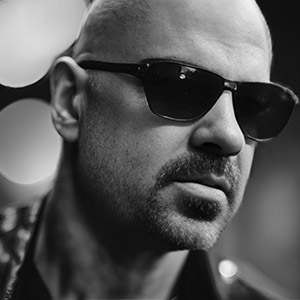
Revisiting the raw transcripts from our 2012 conversation with Mastodon’s Brann Dailor offers a potent snapshot of a band at a crucial pivot point. They were deep in the touring cycle for The Hunter, an album that had successfully shattered the prog-metal mould they’d perfected on Crack the Skye. But success didn’t mean the grind had stopped. Far from it. When we connected with Dailor, he was in Calgary navigating the familiar gauntlet of Canadian touring, a process he painted with a mix of affection and pure bureaucratic exasperation.
The Canadian border looms large in Mastodon’s history, a recurring antagonist in their road stories. This wasn't just a minor inconvenience; it was a defining part of their experience north of the 49th parallel. Dailor spoke with the weary resignation of a seasoned veteran about the systemic friction. “It's tough to get into the Canadian border because of, I think, Reagan in the eighties with the War on Drugs implemented much stricter border patrols on the U.S. end of things, and they repaid the favor, and it has never been restored to the original 'come on in,'” he says. It’s a sharp observation that cuts through the usual touring pleasantries.
But it gets worse. He recounts a maddening tale of mistaken identity where a clerical error attributed another member’s criminal record to his name. The result was a two-hour interrogation and a multi-thousand-dollar legal bill to prove his own innocence. “I ended up having to pay an attorney something like $2,500 or $3,000 to get, like, to go to each state that I've lived in as an adult and get a criminal record from them saying that, you know, I didn't do any of these things,” he explains. This is the unglamorous reality of international rock ‘n’ roll, a story of expensive administrative nightmares that never makes it into the music videos.
That friction even cost them a sold-out show in Winnipeg during their early days. Denied entry, they turned their van around and drove into the American heartland. Their response was pure punk rock resolve. “We said to each other, the first bar that we see, we're gonna pull in there,” Dailor recalls. That bar was the Bison Sports Bar in Fargo, a place that looked anything but promising. They played a full set to an emptying room for no money, just chicken sandwiches and beer. A moment of defeat was salvaged by sheer force of will.
And yet, this conversation wasn’t just about border hassles. 2012 was also the year of Feistodon, the celebrated Record Store Day split 7-inch with Canadian indie darling Leslie Feist. The collaboration was born from the uniquely eclectic green room of the BBC’s Later... with Jools Holland, a show that placed Mastodon alongside artists like the legendary Rat Pack-era crooner Buddy Greco and a then-ascendant Bon Iver. It was a collision of worlds that felt both improbable and perfect.
Dailor admits he initially saw the idea as a “pipe dream” given the logistical nightmare of two bands on opposite ends of the sonic spectrum coordinating schedules during their respective album cycles. It was bassist Troy Sanders who mentioned it to the press, forcing their hand and turning a casual conversation into a tangible project. The result was a brilliant piece of cross-genre alchemy.
Mastodon’s cover of Feist’s “A Commotion” was a masterstroke of adaptation. They saw the raw material and instinctively knew how to remould it. “I can, you know, we, we can all sort of hear ourselves in that, you know. Oh, I could, we could do this and, you know, double bass and make it heavy,” Dailor notes. It wasn't just a cover; it was a translation, a testament to their ability to find the heaviness inherent in any composition.
What really made Metallica so endearing to everyone was the fact that they look like, you know, the older kids that live down the street... that's really where we come from.
He was equally impressed with Feist’s haunting reinterpretation of their track “Black Tongue”. His analysis is spot-on, comparing its vibe to Tom Waits’ avant-garde Black Rider era. “It carries the weight of the original without being, you know, loud, you know, metalized, but she still is able to maintain the intensity of the original with a softer version,” he says. “It was very eerie and creepy the way she did it, so I, I love it.”
This spirit of collaboration was clearly in the air. Dailor also mentioned a desire to work with Wayne Coyne and The Flaming Lips, another seemingly bizarre pairing that made perfect sense if you understood Mastodon’s psychedelic undercurrents. Looking back, we know this seed grew into their 2013 split EP. It was a period where Mastodon was actively seeking to broaden its creative horizons, refusing to be penned in by genre expectations.
The interview also captures the band’s philosophical shift following The Hunter. After a string of dense, critically lauded concept albums, they had intentionally stepped back. Dailor was noncommittal about returning to that format, emphasizing the need for organic inspiration. “I feel like it's very important to let time pass and let, let yourself be inspired naturally by, by your life that happens, you know, and not push things too much,” he states. This was the sound of a band breathing again, free from the pressure of crafting the next grand narrative.
Their artistic evolution, he insists, is entirely natural, not a calculated career move. In his view, stagnation is the only manufactured state. “If there's anything that's, that's, that's pushed or manufactured as, as something not growing and not changing and not evolving, that means, I feel like, that means that there's nothing new there,” he argues. It’s a core tenet of the band’s identity: move forward or die.
This ethos extends to their stage presence. Mastodon has always eschewed the traditional metal theatrics of spikes, leather, and overt posturing. Dailor grounds their aesthetic in the authenticity of their own influences, from the sludge of the Melvins and Neurosis to the grunge explosion. But his key reference point is classic Metallica. They were the blueprint for being heavy without the costume.
“What really made Metallica so endearing to everyone was the fact that they look like, you know, the older kids that live down the street,” he reflects. “We had Cliff Burton in a pair of, you know, a jean jacket and a Misfits T-shirt and some jeans, bell bottoms. The same thing you'd see him wearing at a party... that's really where we come from.” It’s a no-bullshit approach that has allowed them to remain relatable even as their music has grown more complex and ambitious.
The conversation took place just as their debut album Remission was turning 10. Dailor looked back on its creation with pride, remembering it as “pretty ferocious” and a document of four friends discovering something new and working relentlessly to build a career from scratch. The idea of performing the album in its entirety was floated, something that would become a staple of the touring industry in the years to follow.
Even their two Grammy nominations at that point were met with a healthy dose of cynicism. Dailor appreciated the nod but saw the institution for what it was: a machine built to reward commercial popularity, not artistic merit in niche genres. “It's all kinda monetarily based,” he says bluntly. “It's all about money and these, these groups of people that are working together to form an artist to, to sell the people.” It’s a clear-eyed assessment from an artist who never courted mainstream acceptance but was slowly earning it anyway.
Ultimately, this 2012 interview reveals Mastodon as a band comfortable in its own skin, yet keenly aware of the absurdity of the world they occupied. They were celebrated collaborators and Grammy nominees who could still be treated like criminals at a border crossing. They were architects of sprawling concept albums who found liberation in writing straightforward rock songs. They were a modern metal band whose identity was forged in the punk clubs and grunge scenes of a previous era. And they were just getting started.
519 Magazine Archive: We are thrilled to officially unearth the 519 Magazine Digital Vault. This isn't just a re-post; it's a high-fidelity restoration of a pivotal era in music journalism. By pairing original print dates with modern retrospectives, we’re bridging the gap between historical rock-and-roll grit and the lightning-fast performance of today’s web. These stories—once locked in physical print and lost URLs—are now back, fully searchable, and optimized for a new generation of fans.
We are thrilled to officially unearth the 519 Magazine Digital Vault. This isn't just a re-post; it's a high-fidelity restoration of a pivotal era in music journalism. By pairing original print dates with modern retrospectives, we're bridging the gap between historical rock-and-roll grit and the lightning-fast performance of today's web. These stories—once locked in physical print and lost URLs—are now back, fully searchable, and optimized for a new generation of fans.