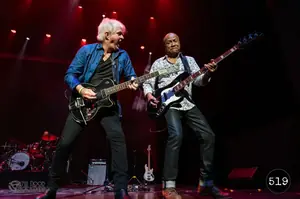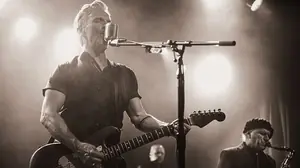
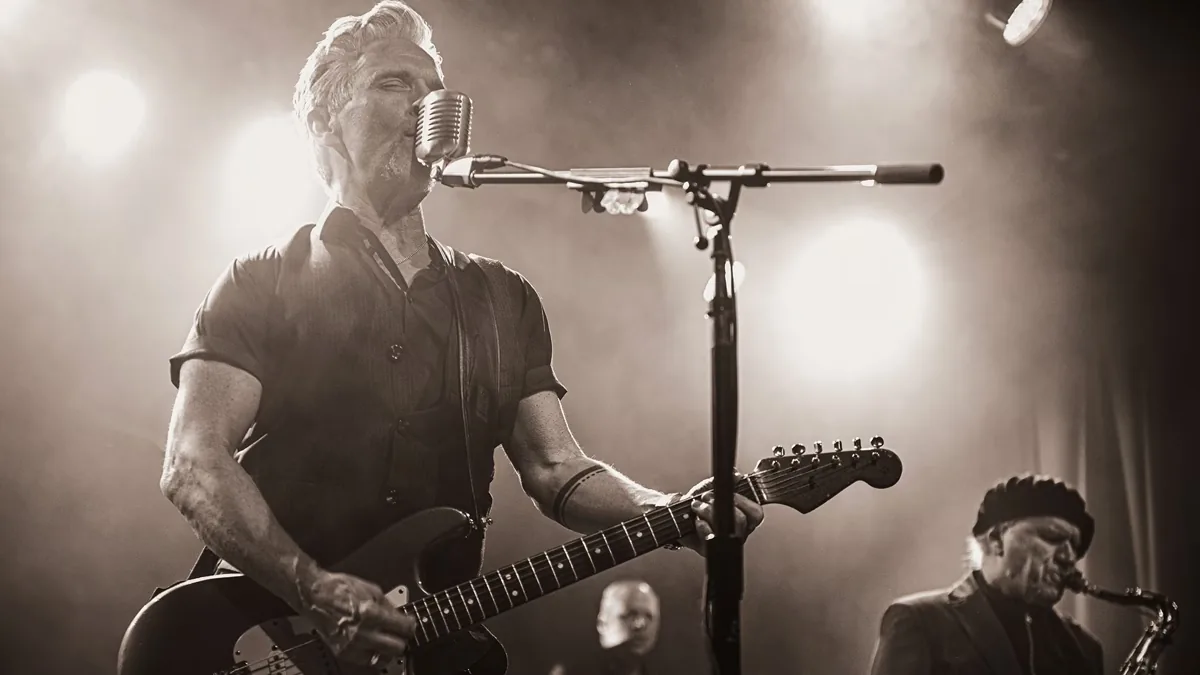

Looking back at the raw transcripts from this late 2018 conversation with Colin James is to look at an artist fully comfortable in his own skin. The occasion was the 30-year mark since his debut album dropped but James wasn't in the mood for a victory lap. No champagne. No retrospective box set. Just work. And that ethos says more about his career than any gold record ever could.
He was about to drop his 20th record Miles to Go and the conversation naturally veered back to the very beginning. To 1988. But even before that first full-length album there was an EP that set the stage. That early effort was with Bob Rock, a producer who would soon become a titan shaping the sound of Bon Jovi, Metallica, and Mötley Crüe. For James it was a formative moment. He recalls, "that was the first time I really went in with a serious producer... I remember just being young. I think I was around 20. And it was kind of a big deal."
But hindsight is a brutal critic. James looks back on those early recordings with a sharp ear for his own artistic evolution. It’s not regret but a candid assessment of a young artist finding his footing. "You know, when you're starting out, you emulate other singers that you love and you probably emulate too much and you don't just get comfortable in your own voice," he says. It’s a confession many artists would shy away from but James owns it completely.
He notes the impossibly high register of his early vocals, a stark contrast to the seasoned, gravelly delivery that would become his signature. "I hear those early records and I sound so high. My voice is so high," he admits. "I just think I grew in to be a better singer over the years. I think, you know, in the initial days, I was kind of a guitar player who sang. And then as time went by, singing became much more important to me." That transition is the central narrative of his career: the journey from a prodigious guitarist who could sing to a vocalist who wields his guitar like a second voice.
This maturity also reshaped his relationship with his own back catalogue. For years a chasm existed between the artist he was and the hits people demanded. Songs like “Just Came Back” and “Voodoo Thing” became both a blessing and a creative straitjacket. And for a while he simply refused to wear it.
"There's been some times in my life where I was like, 'that was a Voodoo Thing. I'm not playing it anymore,'" he confesses. "I think I went through a few years where I would refuse. When I was doing the Little Big Band records, of course, I didn't have to do it because we were doing a whole another thing." It was a necessary rebellion. A way to clear the decks and redefine his own terms of engagement with his audience.
But time softens the edges of artistic defiance. The rebellion gave way to a pragmatic appreciation for the songs that built his house. "I think as time goes on, you realize how lucky you were to get songs like that... that really connected with people. So, you know, you end up being kind of less weird about it as time goes by." It's not about capitulation. It’s about recognizing that the connection those songs forged is a rare and valuable thing in the music business.
By 2018 James was deep into a blues renaissance with back-to-back records steeped in the tradition that first inspired him. This wasn't a nostalgic detour; it was a homecoming. He’d always had one foot in the blues but the industry often demanded he plant his other foot firmly in the world of rock radio. A world that was, by his own estimation, vanishing.
I think I went through a few years where I would refuse. When I was doing the Little Big Band records, of course, I didn't have to do it because we were doing a whole another thing.
The fight was real. "There was always a bit of a fight there between the blues and the rock thing, you know," James explains. "And, you know, really, for someone like me now, there's really no more rock radio. As you know, classic rock is kind of really shut down and just plays recurrents... including me playing my old songs, but they won't play my new songs." It's a damning and accurate critique of a formatted world that celebrates history but has no room for the present.
That industry shift however provided an unexpected liberation. With the pressure of chasing rock radio hits gone he was free to be exactly who he wanted to be. For the Blues Fest in Windsor that summer he promised a blues-focused set, a reflection of where his head was at. He was leaning into the identity he was carving out on the American blues cruise circuit, a world away from Canadian rock radio playlists.
This freedom harkens back to the most commercially successful gamble of his career: the Little Big Band. In 1993, at the height of the grunge era, releasing a jump blues and swing album was commercial suicide. Or so everyone thought. James saw it as an act of artistic survival. "It was a chance for me to show that I really had a connection with that music without worrying about the commerciality of it," he says. "And ironically, it did almost better than any other record I've ever done."
The industry was baffled. James wasn't. "Often when you're not looking for the obvious and you're really just trying to reaffirm your love of something without being confined by the business, it's that's it's been where the magic happened," he reflects. The album sat dormant for six months before swing societies in California picked it up, creating a grassroots phenomenon that took him all the way to opening for The Rolling Stones.
That tour became legendary for its artistic purity. James fronted a band of America's finest swing players including Chuck Leavell from the Stones on keys. He had to honour the moment. That meant shelving the hits. "This is not gonna be the same old thing," he says of his mindset then. "This is gonna be me trying to stretch out a little bit." It was a bold move that solidified his reputation as an artist driven by instinct, not obligation.
That instinct was forged on the Canadian Prairies. He’s long been a resident of Vancouver but Regina, Saskatchewan is where his artistic identity was born. He left at 16 but the isolation of the place gave him something a bigger city couldn't. It gave him space to be different.
"I was about the only one of two bands that played blues in the city when I was 16 years old," he remembers. "And I firmly believe that had I been somewhere else, I might not have had those opportunities to open up for John Lee Hooker when I was 16... There was something about being the only one of two blues bands in Regina, Saskatchewan that gave me a sense of individuality that I kinda carried with me."
This wasn't a chip on his shoulder. It was a badge of honour. In a city without a dominant scene he wasn't pressured to join a cover band playing The Cars. He could be himself. That sense of self allowed him to navigate a career of constant stylistic shifts from opening for ZZ Top to sharing folk festival stages with John Prine and John Hiatt.
These detours were never random. They were essential. They were the mechanism that prevented burnout and kept the music fresh. The ability to pivot from an acoustic record to a full-throttle rock tour is a luxury few artists have and it's one James has cultivated with deliberate care.
Even his connection to broader Canadian culture like a memorable appearance on Corner Gas has a deeper history. He notes that the late Janet Wright who played Brent Butt's mother on the show had directed him in theatre years before. It’s another thread in a career woven deeply into the national fabric.
As the summer of 2018 unfolded with its run of outdoor festivals James was in his element. The grind of the two-year album cycle was on the horizon but for the moment it was about the vibe of playing under the stars for audiences who were there for the music not just the hits.
Revisiting this moment it's clear Colin James had found a kind of peace. He’d outlasted the trends, outmanoeuvred the industry gatekeepers, and learned to embrace every chapter of his own story. The fight between rock and blues was over. The blues had won not by knockout but by a quiet and confident endurance.
519 Magazine Archive: We are thrilled to officially unearth the 519 Magazine Digital Vault. This isn't just a re-post; it's a high-fidelity restoration of a pivotal era in music journalism. By pairing original print dates with modern retrospectives, we’re bridging the gap between historical rock-and-roll grit and the lightning-fast performance of today’s web. These stories—once locked in physical print and lost URLs—are now back, fully searchable, and optimized for a new generation of fans.
We are thrilled to officially unearth the 519 Magazine Digital Vault. This isn't just a re-post; it's a high-fidelity restoration of a pivotal era in music journalism. By pairing original print dates with modern retrospectives, we're bridging the gap between historical rock-and-roll grit and the lightning-fast performance of today's web. These stories—once locked in physical print and lost URLs—are now back, fully searchable, and optimized for a new generation of fans.