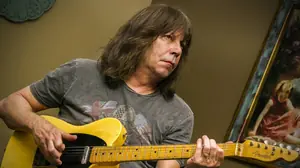


Listening back to this raw archival tape from 2011, the voice of Ian Anderson comes through with the same clipped, intellectual precision that defined Jethro Tull’s sound. The occasion was the 40th anniversary of Aqualung, an album that has stubbornly refused to become a museum piece. And as Anderson unpacks its creation and legacy, it becomes clear why. This wasn't just music. It was a searing social critique wrapped in progressive folk-rock, delivered by a man who was, and remains, utterly allergic to the conventions of stardom.
Time, for Anderson, is a fluid concept. When asked if it really felt like four decades since the album’s release, his answer was a study in pragmatism. “It’s only as old as the last time I played it,” he says, grounding the legendary track in the immediate present. But the real gut punch came from a walk through London. “I was walking through the streets of London yesterday and walked past a homeless person sitting on the street begging for money and the song vividly came to mind,” he recalls. That’s the brutal, enduring power of Aqualung. It’s not a nostalgic trip. It’s a headline from yesterday’s paper.
But the creation of this masterpiece was anything but glorious. Anderson paints a picture of pure misery. The band was holed up in the brand-new Basing Street Studios, a cavernous, converted church owned by Island Records. It was a disaster. “It was cold, it was miserable, it was rather dank and weird working in a church that was still essentially a disused church inside it,” he says. “It didn't have a good feeling about it at all.”
This wasn't just a vibe problem. The studio was a technical nightmare, plagued with shakedown issues and awful acoustics. A beautiful, grand room that sounded, in his words, horrible. The irony is almost too perfect. While Jethro Tull was upstairs fighting a cold, unforgiving space to birth one of rock’s most iconic albums, another band was tucked away downstairs, having a much better time. “Ironically, Led Zeppelin, who were recording an album in the small studio in the basement, they were fine,” Anderson notes. That album was Led Zeppelin IV. Two definitive records of the 70s, forged in the same building under wildly different circumstances.
The album’s themes are as relentless today as they were in 1971. Take “Locomotive Breath.” It’s not some abstract rock anthem. It’s a prescient howl about the crises we now face daily. Anderson saw it coming. “It was a song essentially about runaway populations and runaway explosive economics and civilization being on a crazy out of control locomotive unable to stop,” he explains. He wrote it when the global population was just over half of what it is now, a chilling forecast of resource depletion and a system spinning out of control. “We are the species that ate ourselves. That's the bottom line. That's what ‘Locomotive Breath’ is about.”
It’s a cheerful subject, he jokes, but that willingness to tackle uncomfortable truths is what set Tull apart. While his contemporaries were singing about free love and cosmic journeys, Anderson was writing about societal decay. And he has no regrets, taking a sharp jab at the disposable pop of the era. “I'm very thankful that I'm not the guy who wrote, ‘If you're going to San Francisco, remember to wear flowers in your hair.’ I mean, it wasn't me, thank goodness.” That brutal honesty is pure Anderson.
Then there’s the album’s famous critique of organized religion, particularly on songs like “My God.” This isn't the simple rebellion of a young rocker. It’s a deeply philosophical stance from a man who respects the institution but rejects the dogma. He reveals he’d just been to a church service, not as a convert but as a supporter of a tradition he finds valuable to society. “I am officially not a Christian,” he states plainly. “However, I'm not a homosexual either, but I thoroughly support the gay community and I thoroughly support the Christian community because I think the world is a better place with those traditions as they now are.”
But it was a song essentially about runaway populations and runaway explosive economics and civilization being on a crazy out of control locomotive unable to stop... we are the species that ate ourselves. That's the bottom line.
This is the central paradox of Ian Anderson. He’s a man who will play benefit concerts to help maintain the very cathedrals whose theological authority he questions. He doesn’t believe in an “interventionist God” but supports the rights of those who do with a fierce intellectual loyalty. It’s a nuanced position that defies easy categorization, much like his music.
This fierce independence bleeds into every aspect of his professional life. The interview reveals a man who has actively waged a war against the tropes of rock superstardom. He finds the entire apparatus repulsive. “The idea of having a private jet or bodyguards or factotums who follow me around and do everything for me is utterly repulsive,” he says, the disgust palpable in his voice. “I hate people doing things for me that reduce my role in life to being an airhead.”
He’s not just talking. He walks the walk. Anderson is the guy who books the flights, issues the contracts and sets the rehearsal schedules. He fired his manager in 1974 and hasn't had one since. He even got rid of tour managers about 15 years ago, arguing the internet made them obsolete. It’s a level of hands-on control that is almost unheard of in the industry.
His disdain for the learned helplessness of his peers is biting. He speaks of artists who have no clue about their own finances or contracts, deferring everything with a dismissive, “I have someone who takes care of that for me.” Anderson finds it tedious and appalling. He even uses his son-in-law, actor Andrew Lincoln of The Walking Dead fame, as an example of a creative type so used to being handled that he’s incapable of booking his own airline ticket. It’s a harsh critique, but it underscores his core belief in personal responsibility and intellectual engagement.
This contrarian streak defined Tull’s next move after Aqualung. The follow-up, 1972’s Thick as a Brick, was a commercial smash, hitting number one on the Billboard charts. But for Anderson, it was an elaborate joke. “It’s a pastiche of prog rock being in the form of a bit of a satirical or what's the word, a kind of a spoof really of the concept album genre,” he explains. He was prodding the self-importance of bands like Yes and Emerson Lake and Palmer, creating what he called “the mother of all concept albums” as a parody. “It was kind of a pre-Spinal Tap moment really,” he says. The fact that many fans and critics took it completely seriously only makes the joke better.
His attitude towards accolades is just as dismissive. When the topic of Jethro Tull’s infamous 1989 Grammy win for Best Hard Rock/Metal Performance—beating out Metallica—comes up, he’s completely nonchalant. He views them as self-serving industry trinkets. While acknowledging that peer group awards are welcome, he’s hardly polishing a trophy case. “I currently do not know where my Grammy is,” he admits. “I think my son took it and put it somewhere.”
Even his relationship with his signature instrument, the flute, is unconventional. For years, he deliberately avoided becoming too proficient, wanting to keep its sound “gritty and edgy.” He didn't want to be a polished virtuoso. It was a tool for a specific sound, not an end in itself. Only in the last 20 years, he confesses, has he taken it more seriously, practicing daily as a way to keep his mind and body coordinated as he ages.
It’s a discipline he sees as vital. He compares the longevity of a musician to that of an athlete, whose career is brutally short. An instrumentalist, he reasons, can keep going well into their 70s, a path he was clearly charting for himself even back in 2011.
Listening to this conversation years later, Anderson emerges as one of rock’s great intellectuals and pragmatists. He’s a man who dissects his own mythology with the precision of a surgeon, who values the mundane labour of washing his own clothes on tour as a
519 Magazine Archive: We are thrilled to officially unearth the Rockstar Weekly Digital Vault. This isn't just a re-post; it's a high-fidelity restoration of a pivotal era in music journalism. By pairing original print dates with modern retrospectives, we’re bridging the gap between historical rock-and-roll grit and the lightning-fast performance of today’s web. These stories—once locked in physical print and lost URLs—are now back, fully searchable, and optimized for a new generation of fans.
We are thrilled to officially unearth the 519 Magazine Digital Vault. This isn't just a re-post; it's a high-fidelity restoration of a pivotal era in music journalism. By pairing original print dates with modern retrospectives, we're bridging the gap between historical rock-and-roll grit and the lightning-fast performance of today's web. These stories—once locked in physical print and lost URLs—are now back, fully searchable, and optimized for a new generation of fans.