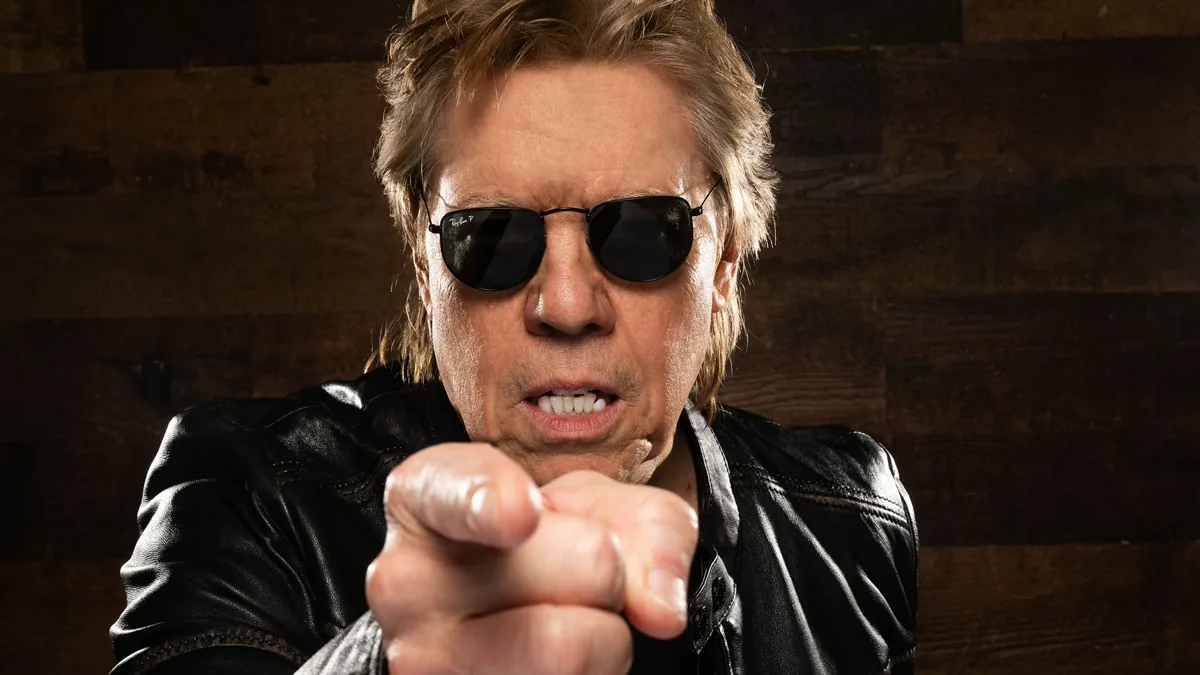

Looking at the raw transcripts from our March 2020 conversation with George Thorogood is to peer into a time capsule. The world was just days away from a seismic shift but on the line from somewhere in America the blues-rock lifer was exactly as you’d expect: flinty pragmatic and utterly allergic to nostalgia. He was promoting another Canadian tour a run that would soon be wiped from the calendar by forces no one could predict. But the man himself remained a constant.
The call kicks off with the obligatory pleasantry. When asked how he is his one-word reply is a growl. “Bad.” It’s the setup and the punchline all in one delivered by a man who has built a five-decade career on a three-word slogan. He’s not being difficult; he’s being on-brand. It’s a performance but it’s also the core truth of his entire operation.
When the topic of a milestone birthday comes up he dismisses it with the wave of a veteran’s hand. “Every birthday is a milestone,” he says. “I never understood what that milestone thing meant. I just kinda keep plugging away.” This isn’t false modesty. It’s the ethos of a working musician who knows that sentimentality doesn’t pay the bills or sell out theatres. The job is the job. The next gig is the only one that matters.
And that job is inextricably linked to one song. A cultural behemoth. When asked what “Bad to the Bone” means to him today after a lifetime tethered to its iconic riff his answer is pure Thorogood. Brutally honest and hilarious. “Means I can still get work.”
There’s no flowery talk about its legacy or its artistic merit. It’s a tool. It’s the key that keeps starting the engine of the tour bus. He shows a surprising detachment from its use in pop culture particularly its scene-stealing placement in Terminator 2: Judgment Day. “That’s your option you know April,” he deadpans. “There’s probably a lot of people to turn it down too.” He’s not being coy. He’s acknowledging the transactional nature of his art once it leaves the studio. It belongs to the world and what they do with it is their business.
But to understand the business you have to understand the foundation. Thorogood’s entire career is a masterclass in American blues filtered through the high-octane lens of rock and roll. He correctly identifies the blues as the bedrock of everything that followed. “The blues is a foundation of all rock music,” he explains. “That’s where it came from. So I started with that just like anybody else… It’s like going to elementary school or something you know before you start moving on.”
He didn’t just stumble into it. He found his lane after trying and failing at other instruments. The guitar and specifically the raw electric boogie of artists like John Lee Hooker provided the perfect vehicle for his energy. “I was playing a John Lee Hooker song,” he recalls of his early days. “I was able to adapt to that pretty pretty good. So I just kinda took it from there.”
I just hope nothing goes wrong and nobody gets hurt.
This wasn’t some isolated stroke of genius. He was following a well-trod path laid by the British blues explosion a decade earlier. He’s a student of the game and knows his history cold. “I mean did Eric Clapton start by listening to Robert Johnson?” he asks rhetorically. “Did Canned Heat start by listening to John Lee Hooker? So I wasn’t doing anything unique really.” He’s right. His uniqueness wasn’t in invention but in curation and amplification.
This is where the conversation gains its deepest insight. Thorogood reveals the shrewd strategy behind his catalogue of killer covers. It was less about artistic homage and more about market research. He approached it like a restaurateur designing a menu. Find a dish the public craves that no one else is serving.
“First of all I try to do some research and see that there’s not too many other bands or no other bands that have already covered them,” he says. “The Rolling Stones and John Hammond and other bands really pretty much cleaned out the cupboard so there was very few pickings left. So I had to dig real hard.” He was looking for songs that legends like Ten Years After or Savoy Brown had missed. It was a calculated hunt for overlooked gems that could be polished into bar-room anthems.
That pragmatism extends to his view on recording. He is notably dismissive of his 2017 solo acoustic album Party of One an album that for many critics showcased a raw and compelling side of his musicianship. Does he enjoy recording on his own? “No. Not particularly. No. I like playing with a band.” It’s a shame he feels that way. While the Destroyers provide the thunder the solo record revealed the lightning rod at the centre of the storm. A necessary and vital look under the hood.
He pushes back hard against the idea that blues is unique in its ability to age well. For him greatness is the only metric that matters. “Anything that’s good is gonna be better as time goes on not just blues,” he argues. “Is ‘Whole Lotta Love’ still on the radio? Is ‘Jumpin’ Jack Flash’ still on the radio? Because it’s great. Stuff that’s good will last.” It’s an undeniable truth. He put his own work in that category and the enduring ubiquity of his catalogue proves him right.
The persona is consistent to the end. His favourite drink? “Water.” The reason? A geopolitical lesson on Canada’s natural resources. What goes through his mind on stage? “I just hope nothing goes wrong and nobody gets hurt.” It’s the mantra of a foreman not a rock star. A guy who understands the mechanics and risks of putting on a show every single night.
His memories of touring Canada are broad but affectionate recalling the shock of the warm reception on their first trip in 1978. But he quickly pivots away from his own experience redirecting the focus to the audience. “The idea is not for me to have great memories April. It’s for the fans to have great memories,” he insists. “Remember we’re just servants of the people. We’re like a waiter in a restaurant… The idea is for them to have great memories not for us to have great memories.”
And will there be any new songs for those fans to make memories with? A definitive and final Thorogood-ism. “I hope not.” When pressed he counters with a simple question that defines his entire philosophy. “Don’t you like the songs we have? So let’s play those.”
It’s not laziness or a lack of creativity. It’s a profound understanding of his contract with the audience. They come for the hits. They come for the swagger. They come for the feeling they got the first time they heard that slide guitar riff. George Thorogood’s job is to deliver. Nothing more nothing less. And for nearly 50 years he’s never once failed to clock in.
519 Magazine Archive: We are thrilled to officially unearth the 519 Magazine Digital Vault. This isn't just a re-post; it's a high-fidelity restoration of a pivotal era in music journalism. By pairing original print dates with modern retrospectives, we’re bridging the gap between historical rock-and-roll grit and the lightning-fast performance of today’s web. These stories—once locked in physical print and lost URLs—are now back, fully searchable, and optimized for a new generation of fans.
We are thrilled to officially unearth the 519 Magazine Digital Vault. This isn't just a re-post; it's a high-fidelity restoration of a pivotal era in music journalism. By pairing original print dates with modern retrospectives, we're bridging the gap between historical rock-and-roll grit and the lightning-fast performance of today's web. These stories—once locked in physical print and lost URLs—are now back, fully searchable, and optimized for a new generation of fans.