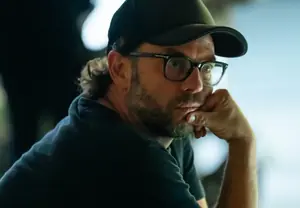


Listening back to this raw archival tape from Jan. 26, 2012, the voice on the other end is unmistakable. It’s John Wetton. Grounded, professional and candid, he sounds like a man comfortable in his own skin, a veteran who had stared down his own mortality and come out the other side with a renewed sense of purpose. He was promoting his solo record, Raised in Captivity, but the conversation quickly became a sprawling look at his process, his influences and the surprising second act of his arena-rock behemoth, Asia.
The album itself, released in late 2011, was already garnering the kind of industry buzz that eludes many legacy artists. Wetton sounded pleased, almost relieved. He notes, “It's been very, very positive so far. It's almost universally positive.” For a musician who had navigated the treacherous waters of prog-rock royalty and the slick commercialism of the 1980s, fan and critical approval was never a given. But he knew the score. “Normally they will let me know in no uncertain terms if they don't like it,” he says with a dry wit that colours the entire interview.





The record was a success, he suggests, because of its environment. And this is where the conversation gets interesting. Wetton reveals a core truth about his own writing, a self-deprecation that feels utterly genuine. “If I sit at home with my piano or my guitar, I tend to end up writing dreary ballads or folk tunes,” he admits. The secret sauce for Raised in Captivity was ditching his “sleepy little town on the South Coast of England” for the relentless energy of Los Angeles and producer Billy Sherwood.
It was a calculated culture shock. He paints a vivid picture of the contrast, a key insight into how geography shapes sound. “When I get out of bed in the morning, I'm faced with police sirens and helicopters and I go into a studio with a guy who drinks too much coffee and it kind of gives me a different perspective on it,” he explains. This wasn't just a change of scenery; it was a sonic transplant. The L.A. chaos gave his introspective English folk melodies a hard, guitar-driven edge.
This solo outing was long overdue. It had been eight years since his last, a lifetime in the music business. In the interim, he had been prolific, churning out five studio albums with Asia or his ICON project with Geoff Downes. His manager had been pushing for a solo record for years, but Wetton always had an excuse. The real reason for the project, however, was artistic necessity. It was a vessel for the stories too raw and personal for a band dynamic.
“All of the solo albums I do go to territory that I wouldn't want to take any band that I'm playing with,” he states plainly. He draws a sharp line between the universal themes of Asia and the diary-like confessions of his solo work. The title track of Raised in Captivity, which explores his childhood, was simply off-limits for the band. “I wouldn't want to drag them into my corner when I'm recording an Asia record,” he says. It’s a mark of respect for his bandmates and a fierce protection of his own narrative space.

The entire album was recorded and mastered in about a month, a blistering pace that speaks to the chemistry between Wetton and Sherwood. It was just the two of them, building the tracks from the ground up before bringing in guest soloists like Steve Morse and Mick Box. This speed is both the album's strength and its one minor flaw. The energy is undeniable, a direct result of its rapid creation. But in a few spots, one wonders if another week of polish might have elevated a good idea to a great one. The raw immediacy, however, is a valid artistic choice.
Nowhere is his process more evident than in the story behind the song “Steffy’s Ring.” The anecdote is pure gold for anyone fascinated by the creative spark. Tasked with buying a lover's knot ring for a friend in a Shanghai street market, inspiration struck. “A sort of a tune came into my head. I had to leap outside into the street, turn on my cell phone, and start burbling this tune into my phone,” he recalls, laughing at the image. The moment is a perfect snapshot of the modern songwriter, no longer tethered to a 24-track Studer.
The studio has never been easy for Asia. It's the one place where we are most likely to get into a fight... we took steps to prevent any flash points and we used a producer that could act as a referee.
He fully embraces the technology. “If I don't put it down then it's gone and I've lost it,” he insists. The resulting track became a sort of medieval love song, its Chinese origins completely disguised by his melodic sensibilities. “It was a song that started its life in China written about a German woman by an English bloke,” he muses. “It's kind of world stuff, isn't it?”
This confessional style wasn't born in a vacuum. Later in the conversation, he makes a stunning admission, citing a completely unexpected influence for a prog-rock titan: Joni Mitchell. He talks about hearing her for the first time and being floored by her candour. For him, much of the 1970s art rock scene was about observation, about telling other people's stories. Joni changed the rules.
“It was shocking that she could write such honest, kind of brutal, brutally honest stuff,” he says, the admiration still fresh in his voice decades later. “Nobody had really ever done that before. Maybe Bob Dylan, but no female had ever done that.” He continues, “Along came Joni Mitchell and she's talking first person... and I'm thinking, wow, that's cool. That is very, very good.” It was a permission slip. From that point on, especially after the first Asia record, his writing became deeply personal. If there was pain, it had to be his pain.
Of course, there are rules. He protects the people in his life, using anonymity as a shield. He’ll change names and obscure details, but the emotional core remains untouched. No subject is too grim or too lurid. He’s an open book, but one with the names redacted.
The conversation inevitably turns to Asia. The reunion, which began in 2006, was now six years strong and had defied all industry expectations for a nostalgia act. Wetton is fiercely proud of what they’d become, drawing a hard line in the sand about the band's history. When the interviewer brings up the Asia albums made without him, his response is swift and dismissive. “That wasn't really Asia, was it? It's a tribute band... I don't even consider it to be Asia, personally.”
He speaks of the reunited lineup with an almost defiant energy. “We're a real band. We put out records and we do tours and we write music,” he declares. “We're not a tribute. We're fully functioning and we're better on stage than we were 30 years ago. That's a fact.” This wasn't just a tour; it was a reclamation. The original four members had found a way to be better people and, consequently, a better band.

It wasn't always smooth. He’s brutally honest about the studio dynamic. “The studio has never been easy for Asia. It's the one place where we are most likely to get into a fight,” he confesses. The pressure cooker of creation could make tempers flare. The solution was a pragmatic one. “We took steps to prevent any flash points and we used a producer that could act as a referee.” It’s a stark reminder that even supergroups are composed of volatile, passionate human beings.
What started as a tentative 17-date American tour had snowballed into a global enterprise with new albums and yearly treks across continents. He recounts a recent show in Caracas, playing a beautiful amphitheatre under the palm trees. Seeing thousands of smiling faces, he says, is the ultimate reward.
“What other job can you do where you get that result and you're getting paid for it?” he asks, a sense of genuine wonder in his voice. “I can't believe how lucky I am sometimes.”
He also offers a concise and surprisingly accurate breakdown of progressive rock's evolution, identifying three distinct generations. He sees the original wave—King Crimson, Yes, Genesis—as the pioneers who eventually moved mainstream. The second wave, for him, included bands like Marillion and Dream Theater. And he viewed the then-current third wave as being closer in spirit to the 1970s originators. His own definition is simple and elegant: “It's just rock and roll that somehow hit classical music and it all got kind of mixed up.”
Looking back, this 2012 interview captures John Wetton at a creative peak. He was balancing the deeply personal solo work with the stadium-sized demands of a legacy act, navigating both with grace and a clear artistic vision. He was a survivor, a craftsman and a songwriter who, thanks to Joni Mitchell, found the courage to put his own heart on the line, for all the world to hear.
519 Magazine Archive: We are thrilled to officially unearth the Rockstar Weekly Digital Vault. This isn't just a re-post; it's a high-fidelity restoration of a pivotal era in music journalism. By pairing original print dates with modern retrospectives, we’re bridging the gap between historical rock-and-roll grit and the lightning-fast performance of today’s web. These stories—once locked in physical print and lost URLs—are now back, fully searchable, and optimized for a new generation of fans.
We are thrilled to officially unearth the 519 Magazine Digital Vault. This isn't just a re-post; it's a high-fidelity restoration of a pivotal era in music journalism. By pairing original print dates with modern retrospectives, we're bridging the gap between historical rock-and-roll grit and the lightning-fast performance of today's web. These stories—once locked in physical print and lost URLs—are now back, fully searchable, and optimized for a new generation of fans.