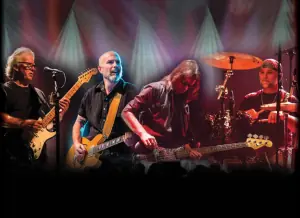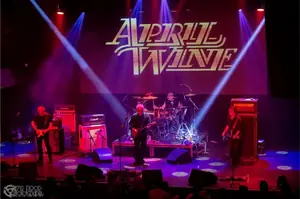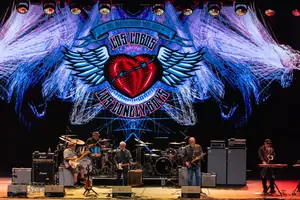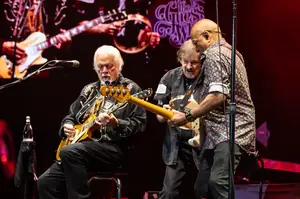

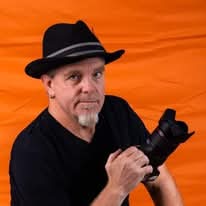
Brian Greenway has been playing guitar with April Wine for nearly 50 years. He's been in arenas with Rush and Styx and Foreigner. He's watched the music business get torn apart and reassembled twice. He's outlasted most of his peers and buried his closest one. And right now, somewhere in the middle of a major North American tour with Triumph, he says he still has to pinch himself.
"I'm loving it," Greenway says, speaking from Atlanta the morning after a show. "It's what makes the dream happen. I miss it. Going back to all these arenas and amphitheatres. And the crowds are loving it too. It's so nice to see. I pinch myself."
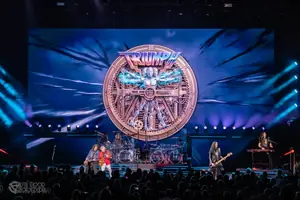
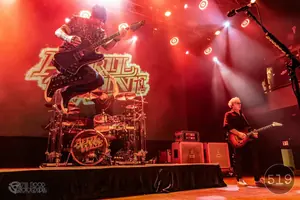
The 50th Anniversary Tour puts April Wine in a rare position — not the headliner, but not an afterthought either. Night after night, opening for Triumph, they're playing to packed rooms full of people who grew up on these songs and their kids, who apparently did too. Greenway, the longest-serving member of the band and the last remaining link to the classic three-guitar lineup that produced Roller, I Like to Rock and Sign of the Gypsy Queen, doesn't compartmentalize the crowd by age.
"I think there are a lot of generations there," he says. "I don't think of it as getting old doing it, but yeah, you think back — thirty years since we've been here, forty years since we've been here. I was thinking today, oh yeah, Peachtree Plaza. I remember staying at a hotel here, a room on the 73rd floor. That was back in the early eighties, late seventies. And it seems like yesterday, but it's far from it when you think of all the things that have happened to you in between."
Greenway joined April Wine in 1977, brought in specifically because the band needed someone who could play guitar, handle keyboards and sing. His addition changed the band's trajectory in a way nobody quite anticipated. With Greenway, Gary Moffet and Myles Goodwyn all on guitar, April Wine developed the layered, hard-edged attack that defined their commercial peak. They toured arenas with the biggest acts of the era. One of those acts was Triumph.
"I remember playing Texas with them in San Antonio," Greenway says. "And then we didn't see them for quite a long time, with us living in Montreal and them living in Toronto, and the tours didn't cross paths. I didn't realize how big they were in the US until last year when we started talking about doing this."
Nobody was more surprised by the Triumph reunion than Greenway. Gil Moore and Rik Emmett had said for years they were finished touring. "I never would have put money on it happening," Greenway says. "I said, 'Oh, good for them! Get out there and do it again. You're going to find it interesting, you know, after thirty years. It's changed, and it hasn't changed.'"
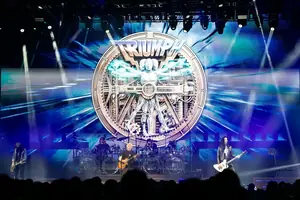
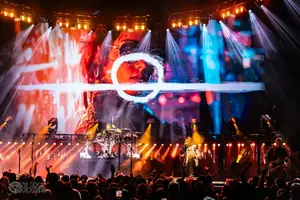
What has changed is the technology. Sound systems have gone fully digital. Lighting rigs are computer-controlled. The big screens behind the stage project images that would have been impossible in 1979. "There is a lot more tech to it," Greenway says. "A lot of the places we play are not made for music. They're made for sports. But the sound system, the digital screens, everything that comes out of those trucks now is so different. The tech is great, and it's really benefited what the show can project to the people out front because it sounds so much better."
What hasn't changed is the basic problem of making a stage monitor sound like something you actually want to hear. Greenway has gone back and forth on in-ear monitors his entire career. On this tour, he's back in them — custom-moulded ones, which make all the difference. "I fight with the in-ears to get it sounding like I want every day," he says. "So you hope for the best and look forward to those nice sunny days that happen inside your ears."
The set pulls from the full catalogue. In Canada, April Wine opens with Oowatanite — the fire bell intro lands like a shot in the arm. In the US, it's a different calculation. "The recognition factor of just that fire bell really works in Canada and nowhere else because Oowatanite was one of those Aquarius albums that wasn't released in the UK, Europe or United States," Greenway explains. "It's a Canadian staple. Down here if you start off with that, they wouldn't know what it is. What's with the fire bell? Is there an emergency somewhere? No."
Roller broke out of Saginaw, Michigan. The guy at Capitol Records jumped on it. Michigan was the state that broke us with that record.
South of the border, Roller and I Like to Rock do the heavy lifting. And the story of how Roller got there is a piece of Canadian rock history that still makes Greenway smile. "Roller broke out of Saginaw, Michigan," he says. "The guy at Capitol Records, Mike Diamond, he was the man I remember from Capitol in Detroit. They jumped on it. Michigan was the state that broke us with that record."
It wasn't the obvious bet. "It was the third single off First Glance. The first two, I forget what they were. I think one of them was Rock and Roll's a Vicious Game as a single, and I remember being told that radio did not want to play it. One of the excuses was because it has the words rock and roll in it." He laughs. "So then we released Roller, and nothing happened in Canada. But it sure happened in Michigan. And then from there it snowballed right across the country. Next thing you know, we're getting invited on these tours as an opening act for Rush, Foreigner, Styx."
Speaking of Rush — the other great Canadian comeback story of 2026 — Greenway was watching the Junos in March when Geddy Lee and Alex Lifeson took the stage in Hamilton with new drummer Anika Nilles and played Finding My Way for the first time in decades. The reunion was reportedly nudged along, in part, by a backstage conversation at the Taylor Hawkins tribute concert in London in 2022, where Paul McCartney told both Lee and Lifeson they had no business staying off the road. Greenway takes that motivation seriously.
"If Paul McCartney told me to do anything, I'd probably listen," he says. "I think it's great. When they played at the Junos, my hair was standing on end watching it. Nobody expected it. And to see them with the new lineup and Anika playing so great — and Geddy and Alex, jeez. I thought, wow, this is so cool. I remember night after night, we did a tour for about three months with them all over the US, and I'm glad they're back. Triumph and Rush being back — it's like all is well with the world again."
The broader conversation about why classic rock is filling arenas in 2026 fascinates Greenway and he doesn't pretend to have the full answer. "I don't know, but I'm sure happy about it," he says. "Is it the fact that they could never make a simulator or an app to represent a guitar like they did with everything else? Is it the fact that guitar gods look really cool up there doing it, like when I was a kid seeing Hendrix and Clapton and Blackmore doing all that stuff? I don't know why, but I'm happy."
What he does know is what this particular tour sounds like. "You've got four great guitar players with Rik and Phil X and Marc and myself," Greenway says. "It's a real guitar show. All you hear is guitars. You don't hear keyboards. Guitars and drums — that's where it's at. They've tried everything else, but we were always bubbling under and now we're back up again."
He's been in a reflective mood about the instrument itself. About what makes one guitarist sound different from another, even on identical gear. "Every sound is personal, and it's such a personal thing that everybody has their own sound and it all comes from the hands," he says. "You can use the same amps and pedals and guitar, but I guarantee you if you sat down five guys on one guitar setup, they're all going to sound different. They'll all sound like themselves."
The elephant in the room during any April Wine conversation right now is the absence of Myles Goodwyn, the founder, chief songwriter, singer and driving force of the band for more than 50 years. Goodwyn's health had been declining for years — diabetes making the road increasingly brutal — and he stepped back from touring in 2022, personally selecting his replacement before his death in December 2023. That replacement, vocalist and guitarist Marc Parent, has been with the band for a few years now and Greenway is unequivocal about what he brings.
"We were all getting older doing this, but Myles was not feeling well with his diabetes, and it was bugging him traveling. So I can understand how he wasn't running around the stage and how things were slowing down," Greenway says. "Marc just brings that energy right back and inspires us all on stage to be that way too. It's infectious, and it's infectious for the audience. He's a real Duracell battery up there."
There are corners of the catalogue that get complicated without a third guitar in the room. The King Crimson cover Twenty First Century Schizoid Man — which Greenway sang on the recording, and which appeared on the 1979 album Harder...Faster — has had a strange life in April Wine's live set. Record companies tried to block it from the original album. Promoters have asked the band not to play it at shows. And as the lineup contracted from three guitars to two, the song slowly lost its teeth.
"Over the years, when we went down from three guitars to two, the song got more and more boring, where it went from all the little sections of solos — like little mosquitoes and bugs flying around — to just Myles doing a long solo, then I would do a long solo, and it became boring," Greenway says. Asked if a third guitarist would ever come back into the fold, he laughs. "I would love to, but nobody wants to sit in that middle seat in the back of the car."
That might change. Greenway is already planning ahead. He'll be celebrating his 50th anniversary with the band in 2027, and in 2028, April Wine intends to start marking the album anniversaries — beginning with First Glance. "We want to do the whole album," he says. "For that, we will need a third guitar player, and we're talking about adding another fellow who also can play keyboards." He pauses. "Kind of like when I joined the band in '77, they wanted to add another guitar player that could play keyboards and sing. So we're kind of looking for another me, fifty years later."
The question of new music is thornier. Goodwyn was the band's primary songwriter and his estate and family now control the April Wine name. The legal picture isn't resolved yet. "I'd like to say yes," Greenway says carefully, "but right now, because of Myles' death and the estate and his family owning the name, we can't carry on forward until we sit down and talk about how we're going to proceed on that. In the meantime, Myles wanted the band to continue, and the family wants the band to keep playing."
When the Goodwyn era of April Wine slowed down, Greenway fed his hunger to play with a side project called The Blues Bus. Right now that project is parked. The tour schedule doesn't leave room, and when he's home he'd rather be tackling the chores that have been backing up than booking rehearsal space. "If we rehearsed all the time, it'd be great," he says. "But to just go out and play four shows a year, it's hard to do. There's no crew, there's no agencies, you're doing it on your own." He thinks about it for a second.
"Why? Because it's fun. I wish I could. But right now, I'm not going to question what's going on here because this is the bigger fish."
The Tour stops at Michigan Lottery Amphitheatre at Freedom Hill in Sterling Heights on Sat., May 30 at 8 p.m. Michigan, for April Wine, is not just another market. It's where everything changed.