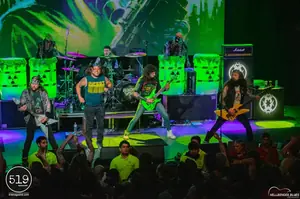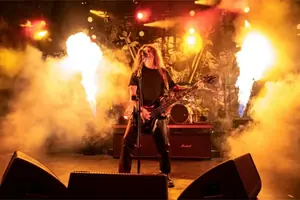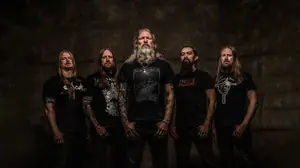
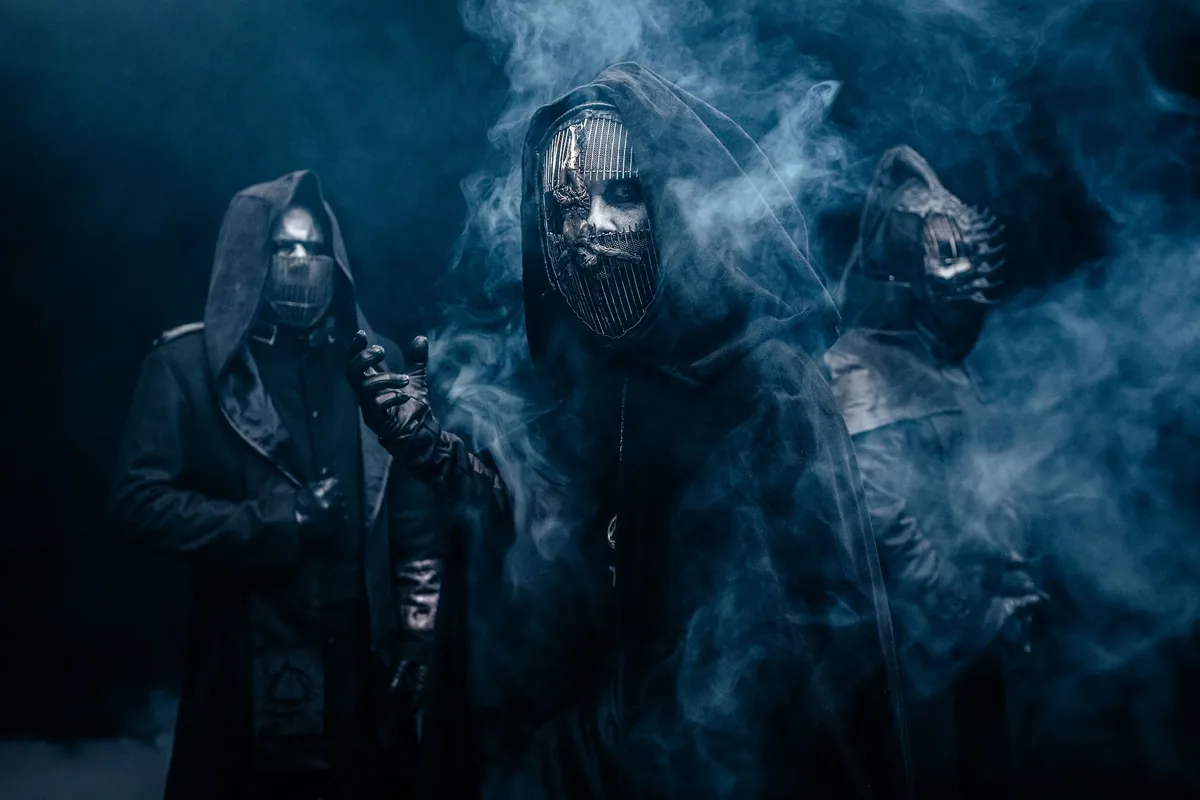

Looking back at these archival tapes from the summer of 2009 always feels like cracking open a time capsule. The hiss on the line from the Rockstar Weekly call can’t obscure the raw, unfiltered ambition crackling in Nergal’s voice. He was on the road for the Mayhem Festival tour in the US, a victory lap that also served as the opening salvo for what would become a defining moment in Behemoth’s career: the release of their ninth studio album, Evangelion.
This was a band at a critical apex. They had already clawed their way out of the Polish underground and delivered two monoliths of modern extreme metal with Demigod and The Apostasy. But Evangelion was different. It was the sound of a band not just arriving, but conquering.
Speaking from the chaos of a tour bus, Nergal immediately zeroes in on the stability that made this record possible. “This is the ninth record in our career. The third one that we recorded in the same lineup pretty much, so it's the longest existing lineup.” That core of himself, Orion on bass and the inhuman Inferno on drums was the engine. It was a machine honed on countless stages, and that road-tightened chemistry bleeds through every track on the album.
And the industry was finally catching up. New deals with Metal Blade for the US and Nuclear Blast for Europe weren't just record contracts; they were coronations. This was the big league, the global stage Behemoth had been fighting for since they were kids in a Gdansk basement. They had the machine behind them now.
A huge part of that next-level push was the sonic architect they brought in to shape the album’s sound. The name Colin Richardson was, and still is, legendary. His work with bands like Carcass, Napalm Death and Machine Head defined the sound of heavy music for a generation. Getting him to mix Evangelion was a statement of intent.
Nergal knew exactly what Richardson brought to the table. “On Evangelion, we stayed organic, but we just have more attack on this album,” he says. “And for some reason, I know what the reason actually *is*. It's Colin Richardson who mixed the record in the end. And, you know, he's the one that actually made it sound so fucking big.” He wasn't wrong. The album sounds colossal. It has a clarity and punch that slices through the density without sacrificing an ounce of the band's trademark ferocity.
But the album’s title itself, Evangelion, was the mission statement. It’s a Greek term for spreading the gospel, a concept Nergal gleefully subverted. “Obviously, we're not spreading the word of God. We are spreading the word of ungod,” he explains, the conviction in his voice cutting through the tour noise. “We are spreading the gospel of *against* God, I would say.”
I really wanna have my reasons to be angry. The country that I live in, the government, the mentality of the society gives me way enough reasons to write music that is just fucking crazy, insane, tough and furious.
This wasn't just cheap shock value or juvenile Satanism. This was the articulation of a philosophy he had been honing for years. “This one is dealing basically with a human being and its potential that we consider a divine potential. So basically, the title and the whole idea behind the title and the album is like a challenge... against god or death or any kind of supernatural higher powers,” he continues. It was a declaration of human sovereignty, a theme that has become the central pillar of Behemoth's artistic and philosophical identity.
When asked about his specific inspirations, Nergal deflects with the practiced ease of a veteran artist. No single book, no single band. It was life. But his next admission is far more revealing, offering a rare glimpse of artistic self-critique. He was already looking back at their recent work with a surgeon's scalpel, particularly The Apostasy.
“There were, like, some accidental stuff that we just did that would just *all appear* on the record,” he admits. “The Apostasy had a lot of, like, American influences, I'll say, on it. It was still, like, very European oriented extreme metal, but there's some stuff that I don't like at all these days.” This is the key. Evangelion was a course correction, a purification of their sound. It was about stripping away anything that felt forced or foreign and embracing their primal core, exemplified by tracks like the monolithic ‘Lucifer’.
Of course, no conversation with Nergal in this era was complete without touching on his notorious legal battles back home in Poland. The infamous Bible-tearing incident had made him a folk devil for the country's conservative establishment, personified by the relentless Ryszard Nowak and his Committee Against Sects.
Nergal sounds almost weary, yet defiant, when recounting the story. “He kept calling me a criminal in the public... It's the nature of our brand, of who we are. And some governments, some politicians, some organizations, or institutions, they just find dangerous people who question things,” he states flatly. “We question things. We rebel against systems, religions, politics. Pretty much everything that pisses us off is the reason to make angry music.”
The irony, as he saw it, was that this opposition was a creative fuel source. When asked if he wished things were different in Poland, his answer is immediate and sharp. “You know what? Now I don't really know because I really wanna have my reasons to be angry,” he confesses. “I need to stay angry and to be pissed off. And the country that I live in, the government, the mentality of the society gives me way enough reasons to write music that is just fucking crazy, insane, tough and furious.” It’s a fascinating symbiosis: the system he despises is the very thing that powers his art against it.
Meanwhile, America was becoming a second home, a market they had painstakingly conquered. He remembers the early days vividly: “playing in some shitholes and touring in a van, getting paid, like, maybe $200 a night and just, you know, eating, like, cold pizza.” But by 2009, they were a main stage attraction on one of the biggest metal tours in the country. The US was their biggest market, the centre of their operations with their label and management based there.
Yet, he remained staunchly European. The idea of moving to the States is dismissed out of hand, though he toys with the idea of a Manhattan apartment. “I got family and, you know, friends and a girlfriend back in Poland. So it wouldn't be the best idea,” he says. He was a product of his environment, for better or worse, and he knew it.
Listening to this tape now, over a decade later, is to hear a man on the cusp of a new reality. He was about to release the album that would cement Behemoth’s place in the global metal pantheon. Shortly after, he would face down a leukemia diagnosis with the same defiance he showed the Polish courts, and win.
The interview captures the precise moment before all of that. It’s the sound of a general surveying the battlefield just before the final, decisive charge. Evangelion was that charge. And the metal world was never quite the same.
519 Magazine Archive: We are thrilled to officially unearth the Rockstar Weekly Digital Vault. This isn't just a re-post; it's a high-fidelity restoration of a pivotal era in music journalism. By pairing original print dates with modern retrospectives, we’re bridging the gap between historical rock-and-roll grit and the lightning-fast performance of today’s web. These stories—once locked in physical print and lost URLs—are now back, fully searchable, and optimized for a new generation of fans.
We are thrilled to officially unearth the 519 Magazine Digital Vault. This isn't just a re-post; it's a high-fidelity restoration of a pivotal era in music journalism. By pairing original print dates with modern retrospectives, we're bridging the gap between historical rock-and-roll grit and the lightning-fast performance of today's web. These stories—once locked in physical print and lost URLs—are now back, fully searchable, and optimized for a new generation of fans.