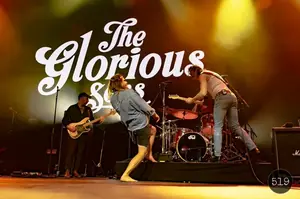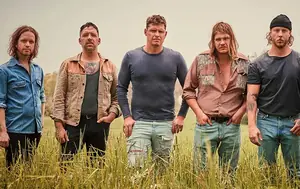
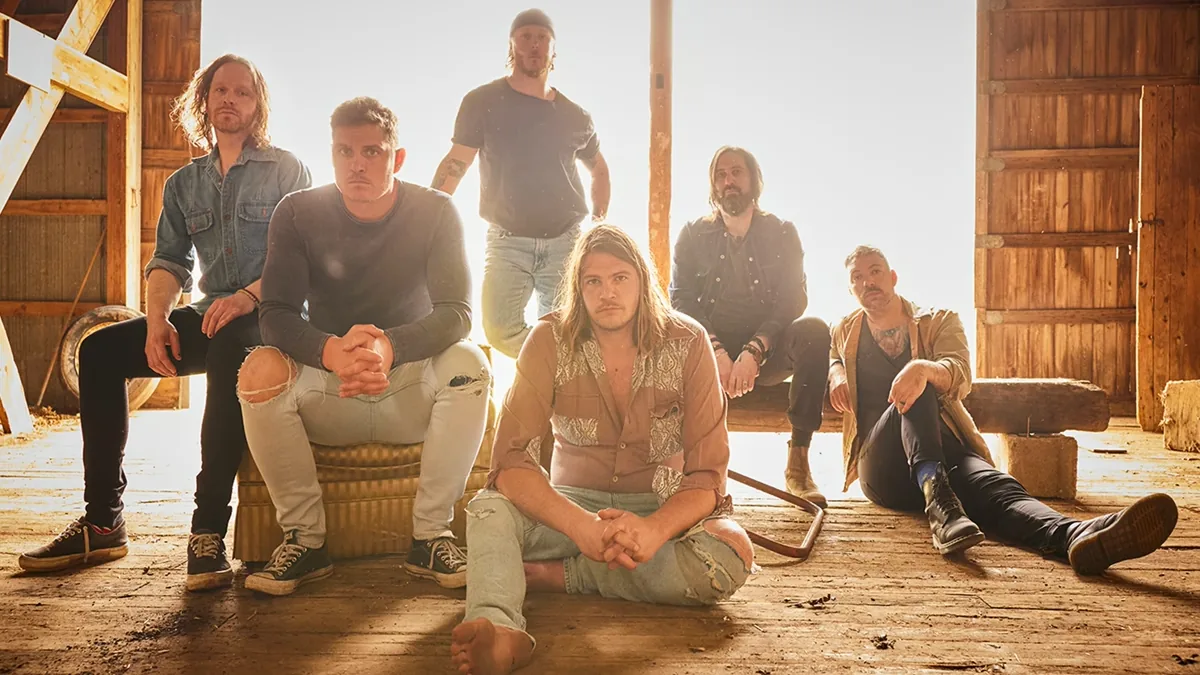

Revisiting this conversation from Aug. 27, 2019 feels like peering into the eye of a hurricane. The Glorious Sons were on the absolute verge of dropping A War on Everything, the album that would cement their status as Canada’s most vital rock export. Frontman Brett Emmons, caught in the pre-release press cycle, was already contending with the narrative forming around his new body of work. The title alone was a provocation and the media was eating it up.
But looking at the raw transcripts from that era, Emmons seems almost taken aback by the interpretation. When asked if he was ready to declare war, he sounds hesitant. “I don't necessarily know if that's... I mean, everybody's been kind of saying that and the press the way that they're wording it. I'm not sure that was what was intended necessarily but sure.” It was a classic case of an album title taking on a life of its own, a marketing hook that perhaps overshadowed the nuanced chaos brewing within the tracks themselves.
That chaos was immediately apparent to anyone with ears. The new songs were wired differently, crackling with a nervous energy that felt more jagged and unpredictable than their previous output. Call it angst or ADHD, the diagnosis was manic. And Emmons agreed.
“I think it could come off as a little more manic than some of the other tracks that we've released in the past for sure,” he admits. “There's definitely some anger there. I think that there's some happiness too... I think it's kind of a very eclectic, manic album, to be honest.” This wasn’t just a collection of songs; it was a psychological snapshot. It was the sound of a band that had spent two relentless years on the road, absorbing the world’s friction and channelling it directly into the recording studio without a moment to decompress.
This creative process was intrinsically linked to Emmons' own well-documented journey. Following the release of Young Beauties and Fools, he had been open about his desire to improve his mental and physical health. Two years on, the battle was ongoing, redefined by the very success he was fighting for. The cyclical nature of touring presented a unique challenge, a distortion of time and reality that made stability elusive.
“I have a lot of troubles myself coming off the road,” Emmons confesses. “When you've been on the road for a month, two months at a time, and two thirds of the year and you get home for two weeks at a time and go back out, it can be hard to kind of relate with the pace of, I guess, home life.” It’s a candid admission that speaks volumes about the unseen labour of a rock and roll life. The war wasn’t just on everything; it was on the internal dissonance created by the job itself.
Nowhere was this internal conflict rendered more vividly than on the album’s lead single “Panic Attack.” The track is a full-bore sonic assault, a piece of music that structurally and sonically mimics the claustrophobia of its subject matter. It wasn't an abstract concept for Emmons; it was autobiography.
“I've dealt with panic attacks, you know, for a very long time,” he states plainly. “The chorus turned into the verse that... that ‘I'm losing air.’ I've had that for, like, I don't know, four or five years just because that is a very specific thing that at least a lot of people go through.” The song was a Frankenstein's monster of lyrical fragments and musical ideas honed over years, finally stitched together with the explicit goal of creating a hard-hitting album opener. A barn burner.
I need to correct you. It poses the question, 'Who killed the rock and roller?'... I think a lot of people are maybe misinterpreting the message of that song because of the title.
What he didn't anticipate was the song becoming an anthem for the anxious, a therapeutic tool for fans navigating their own mental health struggles. In his mind, he was just writing what he always wrote: dark, honest lyrics. “A lot of people like to characterize our music... as, you know, sometimes happy sounding and a lot of sad sounding, but with very dark undertones,” he reflects. The fact that this particular combination of chaotic music and raw lyrics resonated so deeply seemed to be a happy accident rather than a calculated design.
The album’s vulnerability reached a different kind of peak on “Pink Motel.” The track begins as a wistful, almost beautiful ballad before it completely self-destructs in its final moments, with Emmons screaming raw, unfiltered accusations and frustrations over a collapsing soundscape. It’s a shocking and brilliant piece of arrangement that captures the ugly reality of a relationship’s end.
It was, as suspected, deeply personal. “I guess I was kinda going through a breakup when we were in the studio,” he says. The song’s explosive outro wasn't planned. It was a spontaneous purge. “I was sitting there with the lyrics, I finished writing them. And then I just started writing, you know, the things that I wanted to say. And it kinda poured out of me and kinda like, I guess, it's me trying to have the last word selfishly, if you will.” Selfish or not, it remains one of the most brutally honest moments in their entire catalogue.
But the album’s most misunderstood track was surely “The Ongoing Speculation Into the Death of Rock and Roll.” The title was pure catnip for rock critics, but they were all sniffing up the wrong tree. Emmons is quick to correct the premise of the question itself. “I need to correct you. It poses the question, ‘Who killed the rock and roller?’” A crucial distinction.
This was never a song lamenting a genre. How could it be? “I'm up on a stage with, you know, gigantic amps and electric guitars, you know, pretty much five nights a week. I believe in rock and roll,” he insists. The song was a tribute to the archetype of the rock and roller—the free spirit, the iconoclast—and how that spirit is often corrupted or destroyed by the very machine that elevates it. He saw the same tragic arc in figures far outside the genre.
“It mentions Marilyn Monroe and Tupac Shakur as well,” he explains. “What's more rock and roll than people just trying to be free? That's always kind of how I've interpreted rock and roll... Slowly, it seems like, you know, that gets kind of infected, whether it's money or greed or bad management or whatever.” It was a sophisticated thesis on fame freedom and martyrdom, using the language of rock and roll to tell a universal story of corrupted purity.
This reverence for the institution of rock and roll was put to the ultimate test when The Glorious Sons were tapped—twice—to open for The Rolling Stones. The final North American date was at Burl's Creek Event Grounds in Ontario, a home-province coronation of sorts. The scale of it was almost incomprehensible.
“Just being in front of 71,000 people is electric,” Emmons recalls, the awe still evident in his voice. “There's not really a word to describe what it's like to look out and see the outline of people, you know, slowly blend together because there's so many people.” It was a moment of arrival, playing before their heroes for a sea of faces that literally faded into the horizon. A stressful, nerve-wracking, and ultimately transcendent experience.
And yet, for all the talk of stadium gigs and manic new albums, Emmons remained grounded by the memory of the grind. As he prepared for the tour kick-off at ParkJam in London, Ontario, he was reminded of a far less glorious gig in the same city years earlier. It’s a story of youthful hubris and instant karma.
“It was our first tour ever. And we started drinking really early in the day,” he begins. After forgetting to set up their gear while opening for The Balconies, they scrambled onto the stage after The Motorleague. “We got on stage, and I said, ‘Give it up for Motorhead.’ And the whole crowd started laughing... It was one of the most sobering experiences of my life.”
That anecdote is the perfect bookend. It’s the journey in miniature: from getting wasted and flubbing a club show in London to preparing to play a festival in that same city as conquering heroes on the cusp of releasing a monster album. The war on everything was about to begin. And Brett Emmons, whether he intended to or not, was leading the charge.
519 Magazine Archive: We are thrilled to officially unearth the 519 Magazine Digital Vault. This isn't just a re-post; it's a high-fidelity restoration of a pivotal era in music journalism. By pairing original print dates with modern retrospectives, we’re bridging the gap between historical rock-and-roll grit and the lightning-fast performance of today’s web. These stories—once locked in physical print and lost URLs—are now back, fully searchable, and optimized for a new generation of fans.
We are thrilled to officially unearth the 519 Magazine Digital Vault. This isn't just a re-post; it's a high-fidelity restoration of a pivotal era in music journalism. By pairing original print dates with modern retrospectives, we're bridging the gap between historical rock-and-roll grit and the lightning-fast performance of today's web. These stories—once locked in physical print and lost URLs—are now back, fully searchable, and optimized for a new generation of fans.