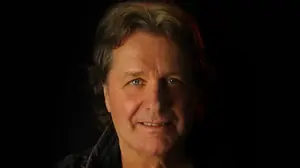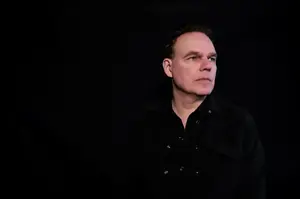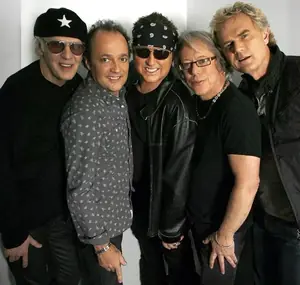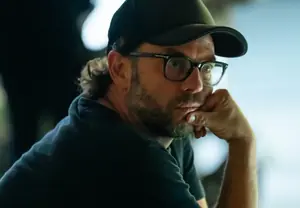
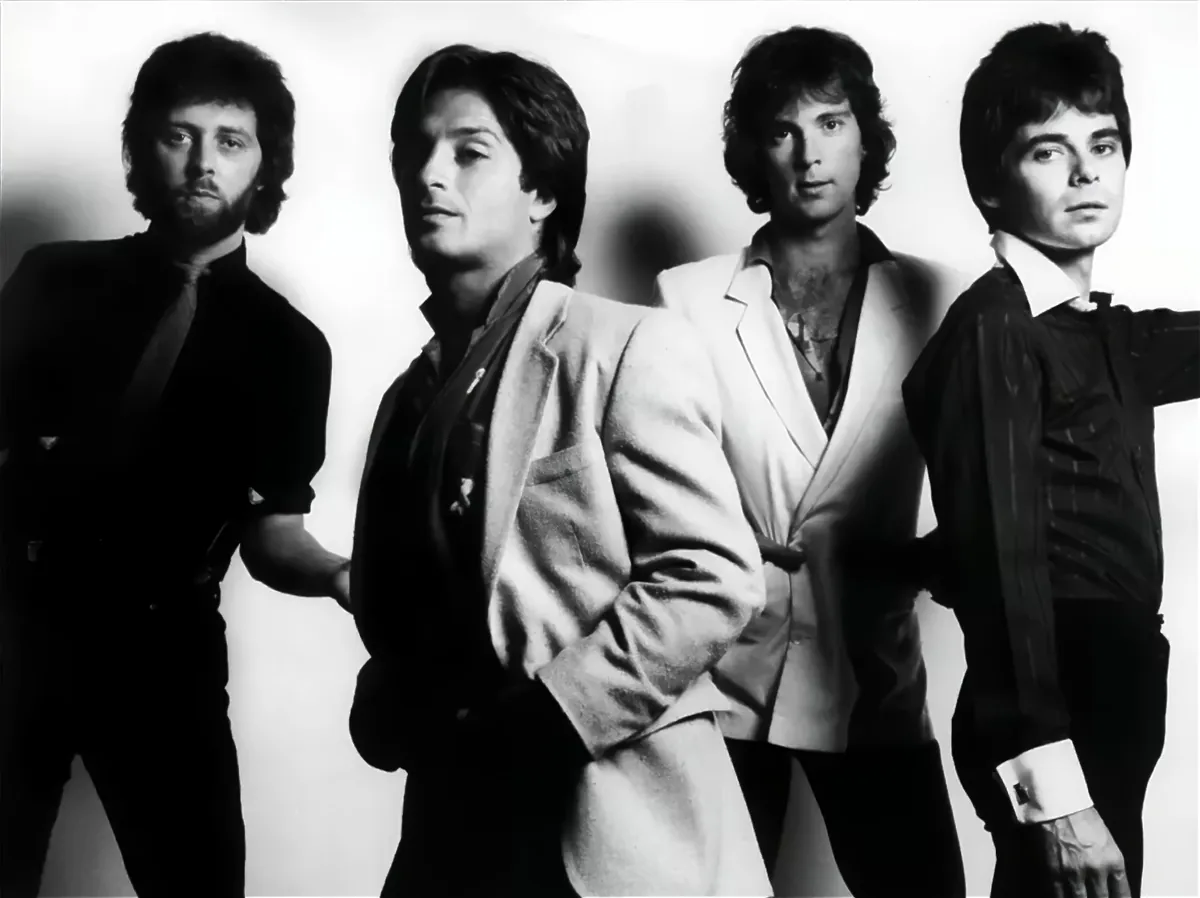
Listening back to these archival tapes from our 2009 sit-down with Al Harlow, the word that comes to mind is ‘survivor’. At the time, Prism was back with Big Black Sky, their first studio album in what felt like an eternity. But the conversation, as it always does with Prism, quickly veered into the tangled, glorious and often tragic history of one of Vancouver’s cornerstone rock outfits. It’s a story of immense talent, terrible timing and the sheer will to keep the amplifiers humming.
The gap before Big Black Sky was a chasm. For a band that lived and died on the road, the studio silence was deafening. Harlow is direct about it. The band was, first and foremost, a touring machine. But the real reason for the return to tape was simpler. The lineup finally felt right. “The band lineup has always changed and morphed a little bit over the years,” Harlow says, his voice clear on the old recording. “And suddenly I realized that this is the band, this is the version of the band that I wanted to make that album.”
That says everything you need to know about the internal dynamics. For Harlow, Prism wasn’t a static entity but a living, breathing organism that needed the right chemistry to create. Big Black Sky was his vision, a record he admits he had gestating for years. It was him at the helm, finally steering the ship into a port of his own design. This wasn't a committee decision. This was an auteur project hiding in plain sight.
And the album shows it. It’s got Harlow’s fingerprints all over it. While nodding to the past, his personal leanings pull the sound in a different direction. “My own direction has always been a little rootsier,” he admits. “I tend to that kind of delta blues background for myself. Any slide guitar that you’ve ever heard on a Prism record has been myself, so there’s a little more slide guitar on this one.” It was a conscious move away from pure AOR gloss and into something with a bit more grit.
But he didn’t abandon the mothership. He points to the album’s seven-minute closer, “100 Years,” as a direct link to their progressive past, calling it “a big chunk of music in the same way I suppose you could say ‘Armageddon’ is a big chunk of music.” It’s a savvy comparison. He understood that you couldn’t just jettison the past; you had to build a bridge from it. The track’s talkbox guitar solo and sprawling structure were a clear message to long-time fans: we haven’t forgotten who we are.
Looking back at the band’s peak is to look at a different world. A world where Canadian rock bands could dominate North American airwaves. Harlow remembers the rush vividly. “All the boyhood dreams coming true finally,” he recalls. “All of a sudden I’m in front of 18,000 people and they’re all singing along and swaying back and forth. I remember those kinds of adrenaline rushes.” It’s a reminder that before the industry fractured, radio was king, and Prism sat firmly on the throne.
One of the more bizarre footnotes in their history was the case of mistaken identity with American prog-rockers Styx. Harlow laughs about it, but pinpoints the source with technical precision. It was the gear. “Prism and Styx had the very first German Oberheim synthesizers,” he explains. That signature, fat analog sound defined tracks like Prism’s “Flying,” a song so heavily rotated in the US that fans were running to record stores asking for the new Styx single. It was a happy accident of technology and timing.
The band’s origin story is, itself, a convoluted Vancouver tale. Harlow clarifies a key point: he was there from the genesis, even if he momentarily stepped away. The band morphed out of two groups, his Seeds of Time and Bruce Fairbairn’s Sunshine. “In the very moment when those two bands meshed, I was on the other side of town,” he says. He and drummer Rocket Norton were roommates, comparing their separate studio sessions nightly. The tracks Norton brought home became the first Prism album. The tracks Harlow brought home ended up on the second. It was that close.
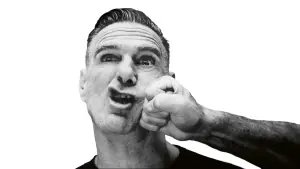
I remember Bryan being 16 years old and a pimply faced kid, but he had a very good talent for hanging around and not getting in the way.
Of course, no conversation about Prism is complete without Ron Tabak. The man with the voice. Harlow speaks of him with a mixture of awe and melancholy. “He was the man with the golden throat,” Harlow states, the reverence still palpable after all these years. “He just had this voice that just made everybody stop and pay attention.” Tabak was younger, less experienced, an outsider. But he possessed that indefinable magic that elevated the band from great to iconic.
His firing, and subsequent tragic death in a cycling accident, remains the band’s deepest scar. Harlow is candid about his opposition to the decision. “I was one of the few dissenting voices,” he says. “My sense at the time was to just chill for a breather and regroup.” The irony is crushing; the original lineup was in the process of reforming when Tabak died. It’s the great ‘what if’ of Canadian rock history. A reunion that was tragically, permanently shelved.
The interview then pivots to the ecosystem that created Prism: the hyper-talented, incestuous Vancouver scene of the 1970s. On a young Bryan Adams, Harlow is hilarious and insightful. “I remember Bryan being 16 years old and a pimply faced kid, but he had a very good talent for hanging around and not getting in the way.” He paints a picture of a laser-focused kid absorbing everything, combing through Harlow’s record collection at a house party. Adams wasn't just partying; he was studying. His early songs, like “You Walked Away Again,” landed on Prism’s Armageddon album, a crucial early break.
Then there’s the late, great Bruce Fairbairn. Before he was producing Aerosmith and Bon Jovi, he was just another guy in a band, albeit a very strange one. Harlow describes Fairbairn’s group Sunshine as a “wacky bunch” that would play Dixieland jazz and march in parades. But beneath the zaniness was a sharp mind. “Bruce quickly revealed himself as a very organized young man with really good ears and a really good sense of business,” Harlow notes. The producer who would define the sound of '80s rock was honing his skills right there, on stage with Prism for their first two years.
And you can’t mention Adams or Fairbairn without Jim Vallance, the third pillar of that Vancouver triumvirate. Harlow counts him as a close friend they still do lunch. He remembers being impressed by Vallance’s proficiency as a multi-instrumentalist at a time when that was rare. “Jim was a great drummer, a great bass player, really good keyboard player and a very decent guitar player as well,” he says. They were all ambitious songwriters, collaborating and competing, forging a sound that would eventually conquer the world.
The whole operation was wrangled by Bruce “The Moose” Allen, a manager whose reputation precedes him. Harlow confirms the legend. “Everyone knows that Bruce is not shy,” he laughs. Allen was hands-on, travelling on the road with BTO and Prism before realizing his time was better spent in the office. They knew him from his early days as a booking agent, a kid from Kitsilano High School with a commerce degree and a hunger to win. Prism was the next band on his list after BTO hit big. The rest is history.
A more somber memory involves Dorothy Stratten. The tragic Playboy Playmate of the Year was a local girl from Burnaby. A PR stunt had her present Prism with their gold and platinum records. Harlow recalls a quiet moment with her at the reception buffet. “It was a touching moment because we were just two kids, you know, watching our dreams come true,” he says softly. “I was kind of asking her how it felt to have all this stuff buzzing around her and she kind of asked me the same question.” It’s a poignant, humanizing snapshot of two young people on parallel rockets of fame, one of which was destined to burn out far too soon.
On a lighter note, there is Harlow’s infamous stage presence. His flair for the dramatic, the glam-rock costumes. He owns it completely, tracing it back to Brian Jones and Muddy Waters. It’s a philosophy. “If you’re going to go on a stage with bright lights and cameras going off and an audience looking at you as well as listening to you, you owe them a show,” he insists. It’s a refreshing rebuke to the studied nonchalance of the ripped-jeans-and-t-shirt era.
He shares a fantastic story that sums it up perfectly. “A girl came up and said, ‘Oh, and I do so like the costumes,’ you know? And I said, ‘What costume? This is it. This is how I walk down the street, baby.’” It’s not an act. It’s an identity. It’s the core belief that rock and roll should be larger than life, a visual and sonic spectacle.
Ultimately, the duality of Harlow’s life remains. The studio reptile and the stage animal. He loves creating new music, but the pull of the live audience is irresistible. “I’ve gotta be on stage. I gotta be, you know, in front of an audience,” he concludes. “It’s just what keeps you in touch and keeps you on your toes.” Listening to this tape from 2009, it’s clear that for Al Harlow, the lights have never truly gone down.
519 Magazine Archive: We are thrilled to officially unearth the Rockstar Weekly Digital Vault. This isn't just a re-post; it's a high-fidelity restoration of a pivotal era in music journalism. By pairing original print dates with modern retrospectives, we’re bridging the gap between historical rock-and-roll grit and the lightning-fast performance of today’s web. These stories—once locked in physical print and lost URLs—are now back, fully searchable, and optimized for a new generation of fans.

We are thrilled to officially unearth the 519 Magazine Digital Vault. This isn't just a re-post; it's a high-fidelity restoration of a pivotal era in music journalism. By pairing original print dates with modern retrospectives, we're bridging the gap between historical rock-and-roll grit and the lightning-fast performance of today's web. These stories—once locked in physical print and lost URLs—are now back, fully searchable, and optimized for a new generation of fans.