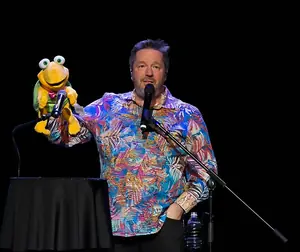
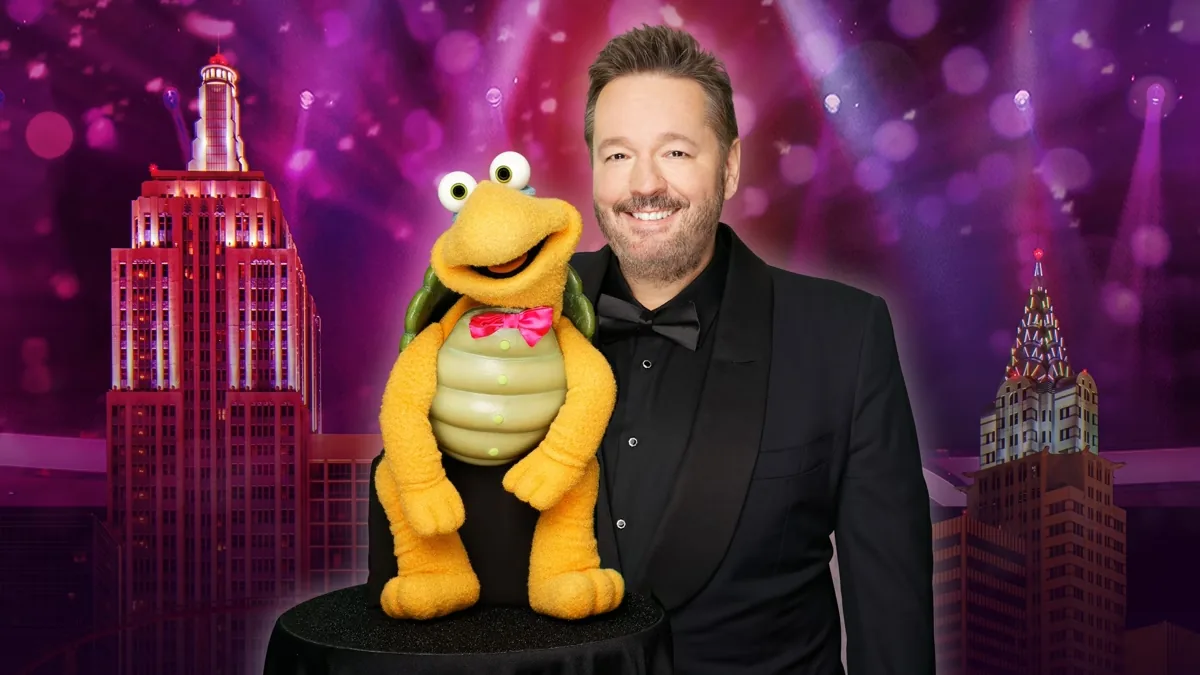

Revisiting this conversation from Mar. 7, 2018 offers a sharp look into the machinery of a modern Las Vegas empire. By this point Terry Fator had already been a Vegas headliner for a decade, a titan of the Strip whose name was permanently affixed to The Mirage. But the man on the line calling to promote a tour stop at the Colosseum at Caesars Windsor sounded less like an institution and more like the hardest-working man in show business. And that’s because he was.
It’s easy to forget the before times. Before the nine-figure contract and the theatre bearing his name there was the grind. A relentless soul-crushing grind. Looking at the raw transcripts from this era Fator is candid about the chasm between his life before and after his seismic win on America’s Got Talent in 2007.
He says it was “absolutely the turning point in my career.” It wasn’t just a break it was a complete shattering of his previous reality. “I had a very decent career before America’s Got Talent,” Fator notes a qualification that undersells the sheer labour involved. “I was making decent money... but I was working really really hard. It was a little more grueling then because I was playing on some of the smaller stages at fairs and I was doing a lot of schools.”
The picture he paints is one of punishingly early mornings and endless setups. “I had to get up at five in the morning and go in and my first show would be at seven at the school. And then I’d do three throughout three or four throughout the day. So that was kind of my my life for the longest time until America’s Got Talent and then kaboom.” That kaboom a million-dollar prize and a Vegas residency wasn’t spent on flash. It was spent on foundation. He paid off bills and bought a house. It was a move born not of youthful impulse but of decades spent hustling.
And that’s the core of the Terry Fator story. He’s eternally grateful that success didn’t find him sooner. He’d tried of course. He’d sent tapes to all the late-night gatekeepers. “I sent videos to Johnny Carson to David Letterman to Jay Leno to all of them,” he recalls. “And I boy I just nobody would pay attention to me.”
The rejection was a blessing. Had he hit it big as a teen he admits he wouldn’t have been equipped to handle the psychological or professional demands. It’s a refreshingly honest take in an industry that glorifies youth. “When it all happened at 42 I feel like that I could I feel like that I could really enjoy that,” he says. “I had developed a work ethic that just said hey listen you know you have to work really really hard and continue to work. The work starts when you when you win America’s Got Talent doesn’t end.”
That work ethic was forged in the most unglamorous of settings. His journey into ventriloquism began at age 10 after finding a book in his school library a quaintly analog origin story. But the practice? That happened while working for his parents’ janitorial business. It’s a stunning image one that grounds his entire larger-than-life persona in a blue-collar reality.
“I was able to practice while I was mopping and cleaning toilets and emptying trash cans,” Fator explains. “When you're 12 and 13 and 14 years old and you're having to paint apartments and clean toilets it's not something you're that's not a goal of 12 year old... And so the way I would while away the hours... I would listen to the to old time radio shows... and I would practice I would do lines that they were doing without moving my lips so I could practice.”
When a turtle sang Crying by Roy Orbison on America, he won the hearts of America. Without that, I don't I really don't believe I would have won.
He wasn't just working he was studying. He inhaled the history of his craft listening to the masters on LPs and cassettes. He name-checks a pantheon of greats: Edgar Bergen the trailblazer who conquered radio a visual medium with a non-visual act. Paul Winchell Jimmy Nelson Shari Lewis. He also points to a more contemporary influence Jay Johnson from the late-70s sitcom Soap whose character believed his puppet was real a brilliant deconstruction of the art form itself.
This deep knowledge of history is what separates the artisans from the amateurs. Fator wasn’t just doing an act; he was participating in a lineage. “I would get records and cassettes of his and listen to them a bazillion times,” he says of Bergen. “I would put them on a cassette I'd put them in my Walkman. And when I wasn't listening to music I would listen to these and and study them and and try to to copy what they were doing.”
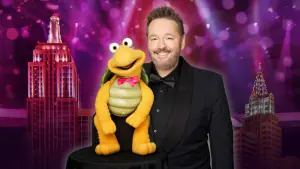
But his biggest star Winston the Impersonating Turtle was born not from history but from a modern-day crisis: intellectual property law. The bit that would define him originally featured a Kermit the Frog puppet singing a duet of “What a Wonderful World” with a Louis Armstrong impression. The AGT producers loved it but The Muppets organization gave a polite but firm no.
“They said no. We don't allow anyone in the world to be Kermit except Kermit,” Fator recalls. With only a week before shooting he had to pivot. The producers confirmed he could do the voice just not with the iconic puppet. So he scrambled online and found a generic turtle puppet from a toy store. “I opened the box and there's this little turtle looking at me. And I and I just popped into my head. I said oh is Winston the impersonating turtle because he’s gonna be doing an impression of Kermit the frog.”
That moment of on-the-fly creativity changed everything. Post-victory the toy-store puppet wouldn’t cut it. Fator professionalized his operation hiring elite puppet makers like Steve Axtell and the famed Puppet Heap in Hoboken, New Jersey to design proprietary characters. It was a crucial transition from performer to brand manager. Winston went from a $50 purchase to a priceless piece of intellectual property.
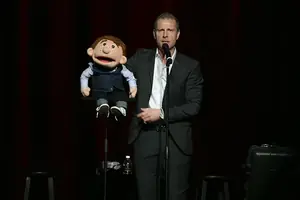
This meticulous approach to character development is Fator’s secret weapon. He describes an organic process where the puppet’s personality reveals itself. Emma Taylor his first AGT showstopper was a Christmas gift from friends who pushed him to try female voices. Vikki the Cougar was conceived as a woman who’s had “plastic surgery you know 50 times” and her name spelled V-I-K-K-I because “she wants to be different.”
But of all his creations Winston remains the favourite. There’s no hesitation. “He's my favorite because without him I wouldn't be in Vegas and I wouldn't be coming there to Canada,” Fator states plainly. “When a turtle sang Crying by Roy Orbison on America, he won the hearts of America... Without that I don't I really don't believe I would have won.”
His sentimental favorite however is Walter T. Airedale his first professional figure a symbol of a dream eight years in the making. And his favourite to perform is Maynard Tompkins the world’s greatest Elvis impersonator. It's this rotating cast that fuels his business model.
He reveals a canny strategy for audience retention. New characters and bits are developed exclusively for the Vegas show at The Mirage. After a year or two they’re retired from the Vegas stage and integrated into the touring show. This ensures that a fan can see him in Windsor and then see a “completely different show” in Vegas a few months later.
It’s a demanding cycle. The creative engine never stops. He admits his wife has to tell him “no working” on vacation but ideas for new characters or jokes always bubble up. It’s the price of maintaining a residency on the most competitive entertainment street in the world.
Looking back at this 2018 interview the portrait that emerges is of an artist in complete control. Fator is not just the talent; he is the CEO the creative director and the keeper of the flame for an entire art form. The grueling early days weren’t a detour; they were the entire point. They built the man who could handle the kaboom when it finally came.
519 Magazine Archive: We are thrilled to officially unearth the 519 Magazine Digital Vault. This isn't just a re-post; it's a high-fidelity restoration of a pivotal era in music journalism. By pairing original print dates with modern retrospectives, we’re bridging the gap between historical rock-and-roll grit and the lightning-fast performance of today’s web. These stories—once locked in physical print and lost URLs—are now back, fully searchable, and optimized for a new generation of fans.
Get Tickets

















We are thrilled to officially unearth the 519 Magazine Digital Vault. This isn't just a re-post; it's a high-fidelity restoration of a pivotal era in music journalism. By pairing original print dates with modern retrospectives, we're bridging the gap between historical rock-and-roll grit and the lightning-fast performance of today's web. These stories—once locked in physical print and lost URLs—are now back, fully searchable, and optimized for a new generation of fans.