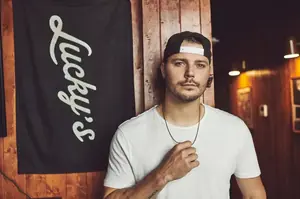
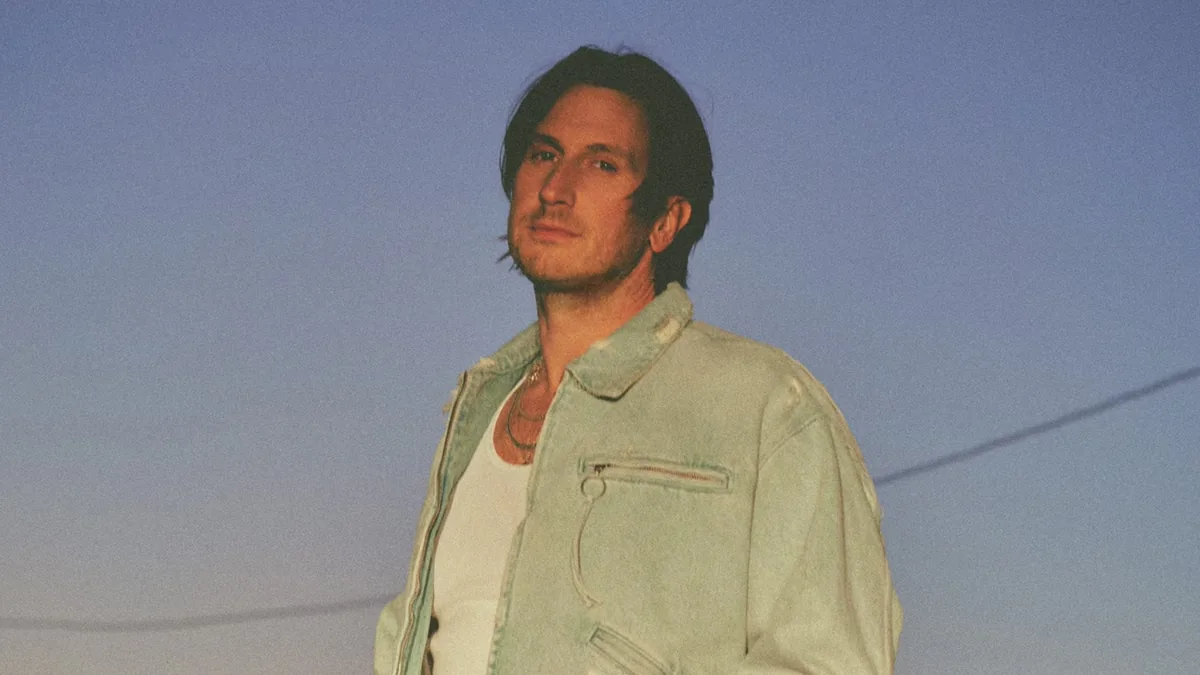

Revisiting this conversation from our archives circa June 2019 is to look at a snapshot of an artist right at the tipping point. Russell Dickerson was on a golf course in Wichita, Kansas, on a day off doing what rising stars do: press. The grind never stops. And for Dickerson, the slow-burn success of his debut single “Yours” had finally ignited, turning years of thankless touring into a full-blown Nashville moment.
He was living the dream but he hadn’t forgotten the climb. When asked if the sudden acceleration felt like a roller coaster, his agreement was immediate and visceral. “It 100% has because, I mean, a roller coaster is actually a great reference because, you know, for so long, it's like it feels like you're going up so slow, like, click, click, click, click, you know, and it's like, oh gosh. When is this gonna happen?” he says. That clicking sound is the perfect metaphor for the Nashville grind. It’s the sound of another empty club, another long drive, another song pitched that goes nowhere.
But then came the drop. “And then as soon as it kicks in, man, it was just like full speed ahead,” he continues. The key here isn't just the speed but his assertion that they were ready for it. The years spent building an infrastructure and a loyal fanbase meant that when the major label machinery finally kicked in, they weren't starting from zero. They had a foundation built on sweat and gasoline.
That foundation was laid down starting around 2011, a time when the country music landscape was about to be seismically altered. Dickerson’s origin story is a classic one straight from the artist’s handbook. “I was driving around the country in an SUV with a trailer and all my college buddies and my band. Just driving anywhere that would pay us gas money and Taco Bell money,” he recalls. This wasn’t a vanity project. This was pure unadulterated labour for the love of the game.
They weren’t chasing fame. They were chasing stages. “We didn't care, though. Like, we just wanted to play music,” Dickerson states. That sentiment is the bedrock of every great act. The period from 2011 to 2016 was an uphill battle fought on highways and in dive bars, a world away from the manicured greens of a Kansas golf course. It’s a narrative we’ve heard before but one that remains essential to understanding the dues paid in country music.
A pivotal piece of his history involves two names that would go on to define an entire era of the genre: Brian Kelley and Tyler Hubbard of Florida Georgia Line. Dickerson’s connection to them predates their own meteoric rise. They caught one of his earliest shows at the legendary Nashville venue 12th & Porter and a writing partnership was born out of mutual respect.
“They came up to me afterwards. They're like, 'Man, great show. Like, we should write some songs.' I was like, 'Let's write some songs!'” he says. This was before the FGL machine existed, before “Cruise” changed the sonic texture of country radio forever. It was just three guys who loved the craft. His observation after they wrote their career-making hit is telling and humble: “I was like, well, see y'all later.”
But the friendship endured. His bond with Tyler Hubbard in particular speaks volumes about navigating Nashville’s notoriously competitive environment. In a town where alliances can be fleeting, a decade-long friendship is a rare currency. It shows a loyalty that extends beyond chart positions and tour grosses.
You can't fight progress, and I wanna take I want as many people to know country music in this world as possible.
Interestingly, Dickerson credits his country roots not to the industry hub of Nashville but to his formative years in West Tennessee. “That's really where I got most of my country roots. You know, like, raised on Garth Brooks and raised on Tim McGraw and all that,” he explains. This distinction is crucial. He wasn't a product of the Music Row machine but an artist steeped in the 90s country boom that made superstars out of Garth, Shania, and Tim. Nashville was where he learned the business; West Tennessee was where he found his soul.
His commitment to songwriting sets him apart from a previous generation of country stars who were often brilliant interpreters of others’ work. For Dickerson, authorship is non-negotiable. “I just felt like I had a fresh sound. I feel like, you know, I had something to bring to the table because, you know, I went to school for music,” he says. This isn't arrogance. It's the confidence of an artist who understands theory, melody, and structure and wants to build his own sound from the ground up.
Finding a home at Triple Tigers Records was another gamble that paid off handsomely. As the flagship artist for the new label, the pressure was immense for both sides. “These guys came ready to prove something, and, you know, I've been ready to prove myself for a long time,” Dickerson notes. It was a perfect marriage of ambitions: a new label needing a cornerstone act and an artist needing a team willing to go all-in on his vision.
The creative process behind a song like “Blue Tacoma” reveals his method. The hook came first, but the substance arrived later after a real road trip with his wife down the Pacific Coast Highway. He came back to the writing room and insisted they retool the song with authentic details. “That's when the song just came to life,” he says. It’s a testament to the power of lived experience in songwriting.
Then there’s “Yours,” a song that found its true purpose not in a writing room but in the hearts of his fans. It became an unexpected wedding anthem. “When we were writing this song, you know, a wedding song was not even across our minds,” he admits. The flood of messages from fans redefined the track, forcing them to listen and react by recording a stripped-down wedding version. It’s a masterclass in adapting to your audience in the digital age.
But Dickerson was never going to be just a balladeer. The 2019 single “Every Little Thing” showcased a distinct pop and dance influence, placing him squarely in the middle of the heated debate over country music's identity, a conversation dominated at the time by Lil Nas X’s “Old Town Road.” Dickerson’s take on the genre’s elasticity is pragmatic and forward-thinking. “You can't fight progress, and I want as many people to know country music in this world as possible,” he argues. He sees himself as a gateway, an ambassador who might lead new fans to discover the genre’s rich history from Johnny Cash to George Jones.
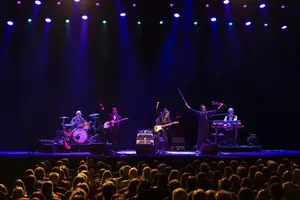
Ultimately, everything circles back to the stage. The live show is his natural habitat, his primary focus. “Even when I write songs, you know, I just envision the crowd singing,” he reveals. This is the mark of a modern performer. The song isn't finished until it’s been screamed back at him by thousands of fans. He’s not just writing for radio; he’s engineering moments of communal energy.
His appreciation for Canadian crowds at festivals like Boots and Hearts and London’s Rock the Park is genuine. He recognizes a certain dedication from fans north of the border who show up ready to sing every word. It’s a market he clearly values and understands.
Whether on a massive festival stage with a new lighting rig or sitting on a stool playing acoustically for 90 people at a private CMA Fest party, Dickerson finds joy in the performance itself. He’s a showman who understands that connection isn’t dictated by the size of the venue but by the honesty of the delivery.
Looking back from today’s vantage point, this interview captured Russell Dickerson at a crucial moment of becoming. He was fresh off a breakthrough hit on a major tour with Thomas Rhett and about to record his next project. The days of surviving on Taco Bell were over, replaced by a disciplined road life aimed at preservation and peak performance. The roller coaster was at full speed and he was holding on tight, ready for whatever came next.
519 Magazine Archive: We are thrilled to officially unearth the 519 Magazine Digital Vault. This isn't just a re-post; it's a high-fidelity restoration of a pivotal era in music journalism. By pairing original print dates with modern retrospectives, we’re bridging the gap between historical rock-and-roll grit and the lightning-fast performance of today’s web. These stories—once locked in physical print and lost URLs—are now back, fully searchable, and optimized for a new generation of fans.
Get Tickets

We are thrilled to officially unearth the 519 Magazine Digital Vault. This isn't just a re-post; it's a high-fidelity restoration of a pivotal era in music journalism. By pairing original print dates with modern retrospectives, we're bridging the gap between historical rock-and-roll grit and the lightning-fast performance of today's web. These stories—once locked in physical print and lost URLs—are now back, fully searchable, and optimized for a new generation of fans.