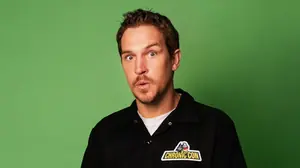

Listening back to these old archival tapes from 2011 is a trip. The digital hiss can’t mask the raw, almost nervous energy coming from Jason Mewes. At the time, he and Kevin Smith were on the road with a strange new beast called Jay & Silent Bob Get Old. It wasn’t a movie. It wasn’t a stand-up show. It was a live podcast, a concept still finding its footing in the mainstream, and for these two, it was something far more critical. It was public therapy, a weekly penance and a very public tightrope walk for Mewes’ sobriety.
This wasn’t some slick marketing gimmick. The whole thing was born from a place of desperation and, frankly, genius on Smith’s part. Mewes is brutally honest on the tape about its origin, a frank conversation after a relapse that could have ended everything. He lays it bare. “I was explaining to him that, you know, there’s a few reasons why, but one of the biggest reasons was I wasn’t really accountable to anybody,” he says, his voice lacking the usual Jay bravado. “And, you know, I didn’t really talk to anybody about what was going on.”
And so the solution was radical. Talk about it to everyone. Every week. On a stage. Under hot lights with hundreds of paying fans hanging on every word. Smith’s idea to do the podcast live at his SModcastle theatre wasn't just about content; it was about creating a structure, a forcing function for accountability. It was a lifeline disguised as a comedy show. Each performance became a public check-in, a confessional booth where the currency was laughter and applause.
The show itself was a chaotic grab bag of View Askewniverse lore, road stories and deeply personal revelations. It was different every single night, a deliberate choice to keep it from feeling rehearsed or sanitized. “Every night it’s something different,” Mewes explains. “Mainly it’s talking about us getting old from when we met… everything that’s gone on from when we met, you know, us hanging out, working together at the convenience store.”
This tour hitting Canada was a homecoming of sorts for Mewes. He speaks with genuine affection for the country, a place that represented key milestones in his career, long before he was a podcasting road warrior. He recalls shooting the indie flick Drawing Flies in Vancouver way back in ‘95 or ‘96, being a 19-year-old kid amazed that his American money magically became more valuable and that the drinking age was so civilized. It wasn’t just a flyover territory; it was a place with history for him, from early film work to shooting two seasons of Todd & the Book of Pure Evil in Winnipeg.
Of course, no conversation about this duo is complete without hockey. Smith’s devotion to the Edmonton Oilers is legendary, a part of his very brand. Mewes admits he can’t quite match that intensity. “I’ve always said the Devils have been my team,” he says, referencing his Jersey roots. “But we… I’m not into it enough to really challenge him… he knows so much about hockey and Gretzky and this whole thing. So I don’t usually challenge him in that thing.” It’s a small moment, but it speaks volumes about their dynamic: Smith the obsessive pop culture encyclopedia, Mewes the instinctual, chaotic force.

But the core of the conversation, the thing that always comes up, is the character of Jay. Looking back, it’s astonishing how much of that persona was just pure, uncut Mewes. It wasn’t a performance; it was a documentary. “Kevin wrote the movie, wrote the character Jay based off me exactly how I was,” he admits. “That’s how I used to act all the time. Really very obnoxious. Speak my mind. You know, not really caring about the consequences back then.”
We got to do Mallrats, and it was so surreal to me. Like, I’m out staying in a different state, in a hotel room, getting per diem, you know, getting driven back and forth to work.
He was a live wire, a fountain of unfiltered id that Smith managed to capture and put on screen. The irony is that the character’s fearless, in-your-face attitude was a complete mask for the real person’s anxieties. The confidence was pure performance. The reality was crippling stage fright, even on a set as low-fi as the Quick Stop convenience store.
“I remember shooting Clerks,” Mewes recalls, the memory still fresh more than 15 years later. “I’d ask everybody who was inside who didn’t need to be there to go outside. I’d feel so nervous.” It’s a stunning admission. The loudest character in the store was, in reality, the most terrified person in the room. The camera rolling was a trigger for immense pressure, a command to “act as foolish” as the persona demanded.
The shift from Clerks to Mallrats was the real culture shock. Clerks was a bunch of friends making a movie on credit cards after hours. Mallrats was Hollywood. It was a studio picture with a budget, craft services and call times. For Mewes, who went right back to his roofing job after Clerks wrapped, it was like being dropped on another planet.
“It was so surreal to me,” he says, the awe still evident in his voice. “Like, I’m out staying in a different state, in a hotel room, getting per diem, you know, getting driven back and forth to work.” This was the moment the hobby became a career, the moment he realized the lightning in a bottle they caught in Leonardo, New Jersey could actually lead somewhere. For him, Mallrats remains the favourite, not for the film itself, but for the life-altering experience of making it.
But with that success came the darkness. The interview doesn’t shy away from his addiction, and Mewes is unflinching in his self-assessment. He directly connects his drug use to missed opportunities, a career that could have been even bigger. It’s a painful but necessary admission, grounding the entire comeback narrative in harsh reality.
“I think if I wasn’t doing drugs all those years, I definitely feel like I would have even worked more,” he states plainly. “There’s definitely things that I didn’t show up for… I was too much of a mess to go do that or have a meeting with so and so.” It’s the classic Hollywood story, but hearing it from him, in this context of a recovery tour, gives it a different weight. The work, he says, is now part of the solution. Being busy is a defense mechanism against idle hands.
This leads to the idea of the “new mature Jay,” a phrase prompted by his shorter, darker hair in the promo photos. He agrees with the sentiment, linking the haircut for Zack and Miri Make a Porno to a conscious decision to evolve. “I’m gonna leave it short and try some new different stuff and different roles and different characters,” he says. It was a visual signifier of his internal struggle to separate himself from the teenage delinquent persona he’d inhabited for so long.
The only valid critique, looking back, is the inherent paradox of this tour. It turned the deeply personal and fragile process of recovery into a commercial product. While born of a genuine need for accountability, it also meant that Mewes’ sobriety was now a performance piece, subject to ticket sales and audience expectations. That’s a hell of a weight to carry, turning your AA meeting into a nightly two-man show. It worked, thank god, but the pressure must have been immense.
Ultimately, this 2011 recording captures a pivotal moment. It’s a snapshot of an artist in the process of rebuilding not just his career, but his entire life, in the most public way imaginable. The tour wasn’t just about getting old; it was about getting better, one city, one show and one brutally honest story at a time. And it laid the groundwork for the next decade of his life.
519 Magazine Archive: We are thrilled to officially unearth the Rockstar Weekly Digital Vault. This isn't just a re-post; it's a high-fidelity restoration of a pivotal era in music journalism. By pairing original print dates with modern retrospectives, we’re bridging the gap between historical rock-and-roll grit and the lightning-fast performance of today’s web. These stories—once locked in physical print and lost URLs—are now back, fully searchable, and optimized for a new generation of fans.
We are thrilled to officially unearth the 519 Magazine Digital Vault. This isn't just a re-post; it's a high-fidelity restoration of a pivotal era in music journalism. By pairing original print dates with modern retrospectives, we're bridging the gap between historical rock-and-roll grit and the lightning-fast performance of today's web. These stories—once locked in physical print and lost URLs—are now back, fully searchable, and optimized for a new generation of fans.