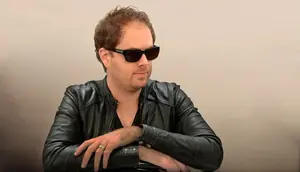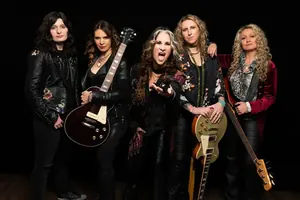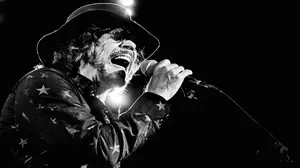
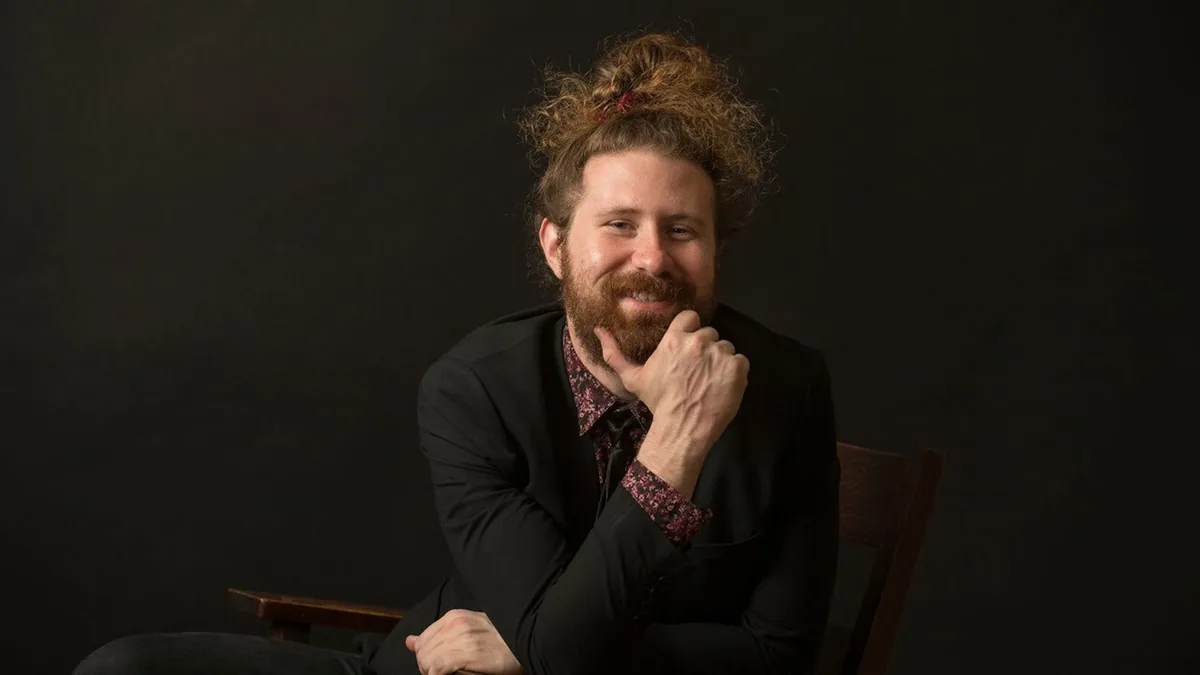

Looking back at these raw archival tapes from Sept. 15, 2011, is a strange exercise in time travel. The air was thick with the last gasps of the American Idol monolith, a ratings juggernaut that still had the power to mint stars, or at least familiar faces. And on the line from a tour stop near the end of the road is Casey Abrams, the season 10 wild card, the guy who brought an upright bass and a whole lot of growl to a stage built for power ballads and pop precision.
There’s a weariness in his voice, but it’s mixed with a palpable buzz. This was the end of the bubble. He calls the tour a “dreamland” and you believe him. For months, he and the other finalists were insulated from reality, shuttled from city to city, playing to thousands of screaming fans. But the real world was coming fast. “It’s gonna be good to get back to reality and try to work something out, you know, for my career,” he says. That single line captures the incredible precarity of the post-Idol moment. You’re famous, but you’re also unemployed.
The entire Abrams narrative hinged on his refusal to fit the mould. He was the jazz cat in a pop kennel, a fact he was keenly aware of. His entire audition was a calculated risk, a direct response to seeing another Idol iconoclast break through. “I think seeing Adam Lambert up there,” he recalls, “He did a version of ‘Ring of Fire.’ My mom showed me.”
And that was the spark. Lambert’s glam-rock deconstruction of Johnny Cash wasn’t just a great performance; it was proof of concept. It proved that a mainstream audience could stomach, and even celebrate, something weird and artistically aggressive. It was a signal to every other musician who thought Idol was beneath them.
Abrams saw an opening. A huge one. “I looked at it and I was like, if he can do that, why can't I bring some jazzy kind of things to it, you know?” he says. “So I said, why not? Let's try and get in there, you know, infiltrate the system.”
‘Infiltrate the system.’ That’s the key phrase. It was the quiet mission statement for a new breed of contestant. Abrams didn't see Idol as a destination but as a Trojan horse. A way to hijack a massive pop audience and steer it toward something more musically complex. He wasn’t alone, and he’s quick to credit his peers. “I think a lot of people did that this year,” he notes. “Paul and Jacob and James, you know.”
He was right. Season 10 was a fascinating collection of artists who felt like they belonged in different eras of music. You had James Durbin’s arena rock, Paul McDonald’s indie-folk rasp, Haley Reinhart’s bluesy growl and Scotty McCreery’s classic country. They were all trying to use the machine without being crushed by it.
Of course, you can’t talk about Casey Abrams without mentioning the Judges’ Save. It was a moment of high drama, the earliest the save had ever been used. Looking back, his memory of it is pure, unfiltered panic. “Oh god,” he says of the look on his face. “That was relief and I’m gonna vomit at the same time. More like, why? I was questioning everything.”
We're taking it back and throwing it in there a couple times, sprinkling it. It's like a spice.
That raw honesty is what connected with people. He wasn't a polished media-trained performer. He was a musician who looked genuinely shocked to be there, and even more shocked that the judges—Randy Jackson, Jennifer Lopez and Steven Tyler—were willing to burn their only save to keep him around. It cemented his status as the season’s beloved underdog.
But the Idol tour itself is a different beast. It’s a tightly choreographed machine designed for maximum efficiency, not artistic exploration. When asked about the highlight, he doesn’t mention a specific performance or a roaring crowd. He talks about the downtime. “Hanging out with the dudes,” he says immediately. “It’s fun being on the tour bus writing songs, planning ahead, hanging out with Scotty and Stefano, James, Jacob and Paul.”
This reveals the truth of that experience. It’s a surreal summer camp. The real work is done off-stage, in the quiet moments on a bus hurtling through the night, figuring out who you are when the stage lights go down. His song choices for the show were a perfect example of the compromises required. He performed Santana’s “Smooth” and Maroon 5’s “Harder to Breathe,” both solid pop-rock hits.
It was a smart play, but you can hear his main priority was finding a way to make it his own. “I wanted to put the upright bass in there somehow,” he explains. That instrument was his anchor, his connection to the jazz world he came from. It was his non-negotiable. Even his signature vocal growl, something that could have easily become a caricature, was being managed. He insists he’s not “full throttle with the growl.”
“No, no, no,” he insists. “We’re taking it back and throwing it in there a couple times, sprinkling it. It’s like a spice.” It’s a brilliant metaphor, and it shows an artist already thinking about dynamics and longevity. He knew the growl was a gimmick if overused, but a powerful tool when deployed with intention.
The most telling part of this entire conversation, however, is when he looks to the future. His expectations are shockingly, almost comically, modest. He dismisses the idea of playing the 10,000-seat venues of the tour. “I was planning on doing something a little bit, you know, tinier,” he muses. “Maybe 100. Who knows?”
This humility is charming, but it also highlights a critical flaw in the Idol ecosystem. The show gave contestants massive exposure but very little practical guidance on how to translate that into a sustainable career. Abrams was mentally preparing for a hard reset, a return to the bar circuit, because the path from TV fame to a real-world touring artist was completely opaque.
And his ambitions were delightfully all over the map. He wanted to make an album, sure, but he also wanted to break into acting. Specifically, he wanted a spot on a certain HBO comedy. “I really wanna be on Curb Your Enthusiasm,” he says with a laugh. It’s the perfect Casey Abrams goal: niche, quirky and a little bit weird.
When pressed to describe his ideal album, his vision is a glorious mess of influences. It’s a portrait of an artist bursting with ideas, completely unburdened by A&R notes or market research. It’s pure creative impulse.
“There’s gotta be comedy in it. There’s gotta be an upright bass. Gotta be an electric guitar in there somewhere,” he lists off. “And, there’s gotta be a sitar. There’s gotta be something like that. There’s gotta be weird instruments.”
Listening to this tape now, years after he was thrust into the spotlight, you hear the sound of a truly original artist trying to figure out how to navigate a system that wasn’t built for him. He successfully infiltrated it, but the real challenge was just beginning: building a career in the shadow of a pop culture phenomenon, one weird instrument at a time.
519 Magazine Archive: We are thrilled to officially unearth the Rockstar Weekly Digital Vault. This isn't just a re-post; it's a high-fidelity restoration of a pivotal era in music journalism. By pairing original print dates with modern retrospectives, we’re bridging the gap between historical rock-and-roll grit and the lightning-fast performance of today’s web. These stories—once locked in physical print and lost URLs—are now back, fully searchable, and optimized for a new generation of fans.

We are thrilled to officially unearth the 519 Magazine Digital Vault. This isn't just a re-post; it's a high-fidelity restoration of a pivotal era in music journalism. By pairing original print dates with modern retrospectives, we're bridging the gap between historical rock-and-roll grit and the lightning-fast performance of today's web. These stories—once locked in physical print and lost URLs—are now back, fully searchable, and optimized for a new generation of fans.