

Listening back to these raw archival tapes from a conversation on Sept. 28, 2009, offers a striking snapshot of a moment in pop music history. Carmit Bachar, just over a year and a half removed from her exit from The Pussycat Dolls, is in the thick of a creative rebirth. The air is thick with ambition and the lingering sting of what could have been. This wasn't just an interview; it was a declaration of independence, centred around a loud, vibrant and fiercely original project called The Zodiac Show.
The Dolls had been a global phenomenon, but for an original member like Bachar, the machine had clearly become creatively stifling. Her new focus was a world away from the synchronized choreography and radio-friendly pop that defined her past. The Zodiac Show was her defiant answer, an entity born from the gritty, collaborative spirit of the Los Angeles underground arts scene.
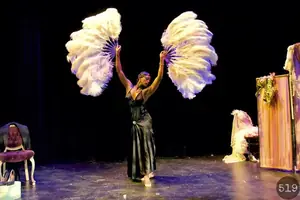
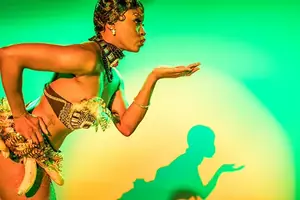
It all started in a photo studio after hours, a convergence of talent that felt too potent to remain private. “We had so many kind of interesting artists come through, and it became, like, sort of a jam session,” Bachar recalls. The energy was immediate, a stark contrast to the manufactured gloss of the pop world she’d just left. “One day we looked at each other and we said we should really do this for real, like, a show because who wouldn’t wanna see this? This is incredible talent and it’s just raw.”
That raw quality was the entire point. It was a direct rebellion against the polished product. “It’s not a contrived show,” she insists. “It really comes from an organic place.” The show evolved with its performers, a living, breathing spectacle that reinvented itself constantly. Each performance was a new creation, built from scratch with a core troupe and a rotating cast of guest celebrities looking to experiment outside their established brands.
This passion project caught the eye of the one man who could change its trajectory: Jimmy Iovine at Interscope. The timing was perfect and perverse. The music industry was in freefall, desperately seeking new revenue streams as album sales cratered. A live stage show with crossover potential was exactly the kind of multi-platform property labels were gambling on.
Bachar’s pitch, which she’d been making to Iovine for years while still in the Dolls, finally landed. The development deal they secured was, in her words, “unprecedented.” It wasn’t a simple demo deal for a few tracks. “The amount of money that we got because it was a full production stage show was pretty intense,” she explains. This was her official exit ramp from The Pussycat Dolls, a calculated leap into a project she co-created and controlled.
And then there was Adam Lambert. Before he was an international superstar, he was a member of The Zodiac Show’s inner circle. Hearing Bachar talk about his decision to audition for American Idol is fascinating. The troupe’s reaction was one of confusion. “We’re like, ‘What? We’re like, you are American Idol. Why would you do American Idol?’” she remembers. They saw him as the complete package, an artist who didn't need a reality TV competition to validate his talent.
But Lambert understood the mechanics of modern fame better than anyone. He knew the platform was unmatched. “He’s like, ‘I just wanna go out there and do my stuff and show the world what I can do,’” Bachar says. And he did exactly that, becoming an overnight sensation in a matter of weeks. His success had a profound ripple effect, kicking down the door for the glam rock aesthetic that The Zodiac Show championed.
We’re like, ‘What? We’re like, you are American Idol. Why would you do American Idol?’ And he’s like, ‘Because you just can’t get that publicity.’
Suddenly, what was once considered an “LA underground scene” was now a viable mainstream sound and look. Lambert’s meteoric rise gave them incredible press and a new level of cultural relevance. It was a validation of the artistic direction they had been pursuing for years, pulling their niche into the national spotlight.
The group was also navigating profound loss. The death of longtime cast member Gabriel Paige cast a shadow over their triumph. Their show became a tribute, a celebration of his life and artistry. They reprised a number he had performed, an aerial piece where he portrayed an angel. This emotional depth fueled the creation of a behind-the-scenes rockumentary, which they began submitting to film festivals like Sundance and Tribeca, signalling their ambition to cement The Zodiac Show’s legacy beyond the stage.
Of course, the shadow of her former group loomed large. When asked if she missed the Pussycat Doll life, Bachar’s response is a masterclass in diplomacy and honest reflection. “Yes and no,” she admits. “I think that we had good times and we had bad times, like any relationship. I miss the good times for sure. I miss performing. I miss touring. I miss the synergy of when we were all having a good time on stage and in sync together.”
But she doesn’t shy away from the fractures that led to its decay. Her critique is sharp and clear. “Unfortunately, the group, because of a number of things, sort of didn’t ever really fully realize the potential of the group,” she states, a touch of melancholy in her voice. “And now I don’t think it ever will.” It’s a candid admission that the internal politics and structural imbalances prevented the collective from reaching its zenith.
A major source of that friction was the recasting of the original lineup. Bachar was the only member to bridge the gap from the burlesque troupe to the recording group, a transition she describes as deeply painful. The original members were her sisters, the women who built the brand from the ground up. The new members arrived with a different perspective.
“It was really difficult for me to adjust into this new world and this new group of girls that had sort of a sense of entitlement because all of a sudden the stakes are different,” she reveals. It was a jarring shift from a collaborative, ground-up family to a corporate-backed entity with a pre-defined hierarchy. This is the unvarnished reality of the pop machine: art gives way to commerce and loyalty is often the first casualty.
She firmly believes the original lineup would have endured. “I guarantee you that the group would still be together if it was the original group,” she says, without hesitation. “There’s a different level of respect and loyalty, I think, to a situation when it’s been like us girls that built it.”
The catalyst for that industry shift was, ironically, another powerful woman in music: Gwen Stefani. Bachar gives her full credit for their record deal. After becoming friends while Bachar was a dancer for No Doubt, she invited Stefani to a show at the Viper Room. Stefani was so taken with the performance that she joined them on stage for a subsequent show. That was the turning point. All the label heads came to see Gwen, and Jimmy Iovine finally understood the concept. “I give all the props to Gwen because without her, we would have never had the record deal with Interscope,” Bachar says.
Looking forward from that 2009 vantage point, Bachar was focused on her solo album. Her goal was to fuse pop, dance and urban flavours into a sound that was uniquely her own. She was adamant about not rushing the process, a subtle jab at other solo efforts from girl groups that had failed to launch. “You can’t force creativity,” she insists. “It’s gotta be organic or else people will see right through it. It’s gotta be real.”
This remains the fundamental challenge for any artist stepping out from a globally recognized group, particularly one who wasn't the designated lead vocalist. The labour of defining a solo identity, of convincing the public to see you as a singular artist, is a monumental task. Bachar’s commitment to an organic process was artistically sound, but in the fast-moving pop cycle, it’s a difficult path to navigate.
Beyond music, she was pouring her energy into philanthropy, serving as an ambassador for Operation Smile, an organization that held deep personal meaning for her as she was born with a cleft lip and palate. It was another way of building a legacy on her own terms, separate from the persona crafted for her in the pop world.
This conversation captures a pivotal moment of transition. Carmit Bachar was no longer just a Pussycat Doll. She was a producer, a creator, a solo artist and a philanthropist, piecing together a new chapter with the same passion that fueled her from the very beginning. The Zodiac Show was more than just a stage production; it was her vehicle for artistic reclamation.
519 Magazine Archive: We are thrilled to officially unearth the Rockstar Weekly Digital Vault. This isn't just a re-post; it's a high-fidelity restoration of a pivotal era in music journalism. By pairing original print dates with modern retrospectives, we’re bridging the gap between historical rock-and-roll grit and the lightning-fast performance of today’s web. These stories—once locked in physical print and lost URLs—are now back, fully searchable, and optimized for a new generation of fans.
We are thrilled to officially unearth the 519 Magazine Digital Vault. This isn't just a re-post; it's a high-fidelity restoration of a pivotal era in music journalism. By pairing original print dates with modern retrospectives, we're bridging the gap between historical rock-and-roll grit and the lightning-fast performance of today's web. These stories—once locked in physical print and lost URLs—are now back, fully searchable, and optimized for a new generation of fans.