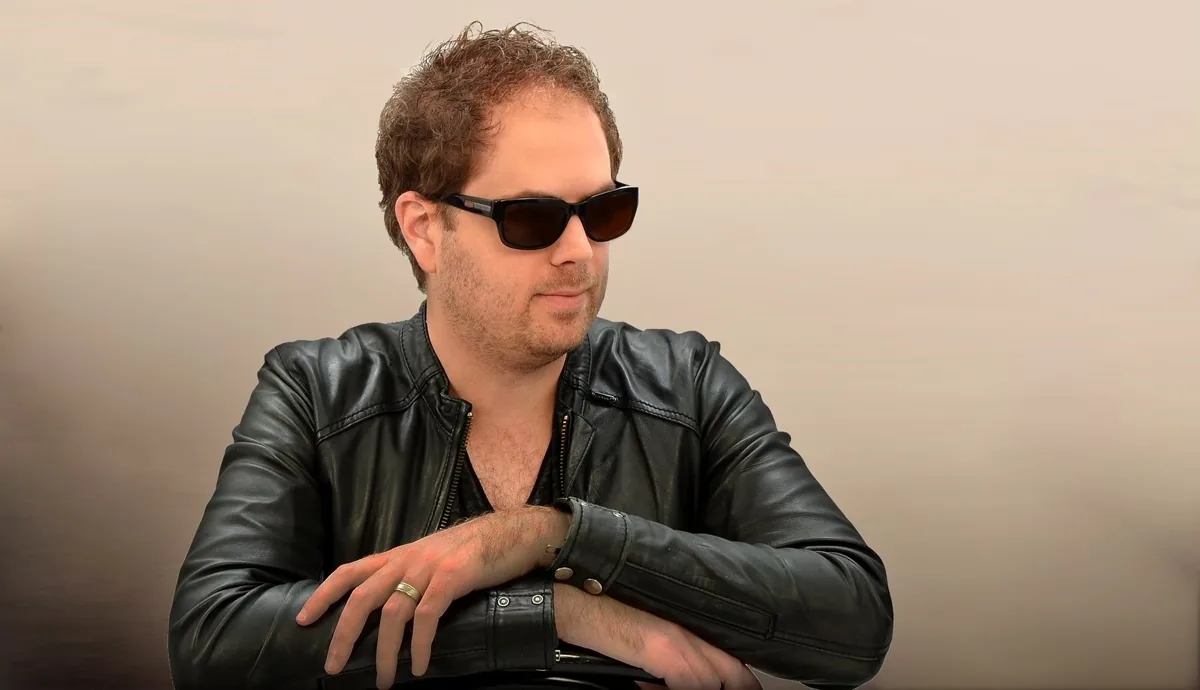

Listening back to this raw archival tape from our Mar. 9, 2010 interview with Scott MacIntyre is a genuine trip. It’s a snapshot of a moment when American Idol wasn’t just a TV show but the absolute centre of the pop culture universe. MacIntyre, fresh off the Season 8 tour, was on the promotional circuit for his major-label debut, Heartstrings. And the air was thick with the pressure and promise that came with being an alumnus of the biggest star-making machine on the planet.
He was selling a story of vulnerability and resilience, a narrative baked into the very title of his album. This wasn’t just a collection of songs; it was a mission statement. Hearing him lay it out, the ambition is clear. “The title Heartstrings really encapsulates the entire album”, MacIntyre says on the tape, his voice earnest. “It’s about love, it’s about loss, it’s about that longing you wish you could do something.”
This was the currency of the era’s male singer-songwriter: earnest piano-driven pop that aimed squarely for the emotional jugular. The market was saturated with it. But MacIntyre believed his story gave him an edge, a depth that couldn’t be manufactured. He wasn’t wrong.
What audiences saw on television was only a fraction of his reality. The show built its narrative around his blindness, framing him as an inspiration. It was a powerful angle but also a simplistic one. The real story, the one that gives his music its foundational grit, was far more harrowing. He was ready to talk about it.
“People know about my blindness but they don’t necessarily know… I dealt with kidney failure for two years and was on dialysis”, he reveals. “I couldn’t play and sing piano. I couldn’t travel. I almost lost my life at one point. And now to come through American Idol after my recovery and then go on tour and now get the album out, it’s really just a very personal piece of me that I wanted to share.”
That context changes everything. It reframes his performances from impressive feats of memory and talent into acts of sheer defiance. The polished pop of Heartstrings suddenly carries the weight of a man who fought his way back from the brink not once but multiple times. It’s a backstory that the show, in its relentless churn, never had the time or nuance to fully explore.
And then there’s the Canadian connection, a detail that always resonates up here. MacIntyre spent formative years in Oakville, Ontario, a period he credits with forging his entire musical identity. It wasn’t just a footnote in his biography; it was the crucible where his talent was refined, far from the Los Angeles glare.
He speaks of his time studying at The Royal Conservatory of Music with a reverence that’s telling. “There was something very organic and very real about my musical training at the Royal Conservatory of Music”, he recalls. “The training was spectacular… and I really enjoyed my time there.” This wasn’t some casual hobby. This was serious, disciplined labour that laid the groundwork for everything that followed.
People know about my blindness but they don’t necessarily know I dealt with kidney failure for two years and was on dialysis. I couldn’t play and sing piano. I couldn’t travel. I almost lost my life at one point.
This classical background is MacIntyre’s secret weapon. In a sea of three-chord pop stars, he possessed a technical facility that set him apart. His goal was to disrupt the formula. “I really wanted to take the piano and make it a centerpiece of everything I do”, he explains. This is the one point of true artistic distinction he had coming off the show, a way to elevate his sound beyond the typical Idol fare.
But the Idol machine is a complicated beast. It gives you the platform and then demands you conform to its weekly themes. Country week. Motown week. MacIntyre describes it as a high-wire act. “You’re trying to be yourself, you’re trying to do something America will like, you’re trying to do something the judges will like, the producers will like, all the while trying to be true to yourself.”
His most stunning admission, however, is about the moment it all ended. Most contestants view their elimination as a failure. MacIntyre saw it as a liberation. “Tongue in cheek, getting kicked off the show is the best part of the whole American Idol experience because you get to shape your career”, he says, the relief still palpable in his voice years later. “I got to finally step out of the American Idol bubble and realize the impact that I had had globally.”
It was his first taste of real artistic freedom, a chance to finally present the music he wanted to make, not the cover songs dictated by a theme. The tour that followed was his opening salvo, a bridge between the TV personality and the recording artist he intended to become.
Looking back, the album itself is a fascinating artifact of its time. The lead single “Heartstrings” is a solid piece of power pop. But the track that truly anchors the record in 2010 is “I’ll Take Tom,” a song about a Myspace breakup. It’s a clever, tongue-in-cheek concept that he was clearly proud of.
“If you go through a bad breakup or someone takes you off on Myspace, you can take their friend picture right off your profile and put Tom’s picture in its place. And it’s like the ultimate Myspace diss”, he explains with a laugh. “This actually did happen to me.” It’s a brilliant snapshot of early social media angst.
Herein lies the critic’s only real reservation. While witty, tying your art so explicitly to a fleeting tech platform is a dangerous game. Myspace was already ceding ground to Facebook in 2010. The reference, so current then, instantly dates the track for a modern listener. It’s a minor quibble but a reminder of the challenge of writing pop music that endures beyond its cultural moment.
Still, the ambition was undeniable. MacIntyre wasn’t just a singer; he was a composer, a multi-instrumentalist and a storyteller who had lived a life far more complex than viewers ever knew. He was the first visually impaired finalist in the show’s history, a fact that carried immense global significance.
He speaks of receiving emails from people in countries where disabilities are shunned, thanking him for his visibility. “I’m very thankful that the show ventured to uncharted territory with me”, he says. “I can imagine what they thought when I showed up. This guy can’t look in the camera. He’s got his white cane. What are we gonna do with him? And it really worked out well.”
That statement alone captures the tightrope he walked. He had to be an inspiration without letting it define or confine him. He had to be a pop artist who could also subtly flex his classical training. He had to survive a reality TV pressure cooker that chewed up artists with far less to overcome.
The tape clicks off, and what remains is the sound of a young artist on the cusp. He’s armed with a record deal, a book deal and a tour schedule booked through December. He had David Foster and Steve Buckingham in his corner. He had the biggest television audience in the world at his back.
This interview captures the precise moment Scott MacIntyre stepped out of the American Idol shadow and into his own spotlight. It’s a document of hope, intense pressure and the relentless drive required to turn 15 minutes of fame into a lasting career. A fight he was more prepared for than anyone knew.
519 Magazine Archive: We are thrilled to officially unearth the Rockstar Weekly Digital Vault. This isn't just a re-post; it's a high-fidelity restoration of a pivotal era in music journalism. By pairing original print dates with modern retrospectives, we’re bridging the gap between historical rock-and-roll grit and the lightning-fast performance of today’s web. These stories—once locked in physical print and lost URLs—are now back, fully searchable, and optimized for a new generation of fans.
We are thrilled to officially unearth the 519 Magazine Digital Vault. This isn't just a re-post; it's a high-fidelity restoration of a pivotal era in music journalism. By pairing original print dates with modern retrospectives, we're bridging the gap between historical rock-and-roll grit and the lightning-fast performance of today's web. These stories—once locked in physical print and lost URLs—are now back, fully searchable, and optimized for a new generation of fans.