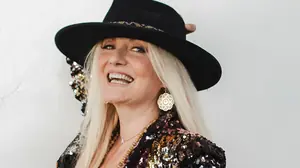
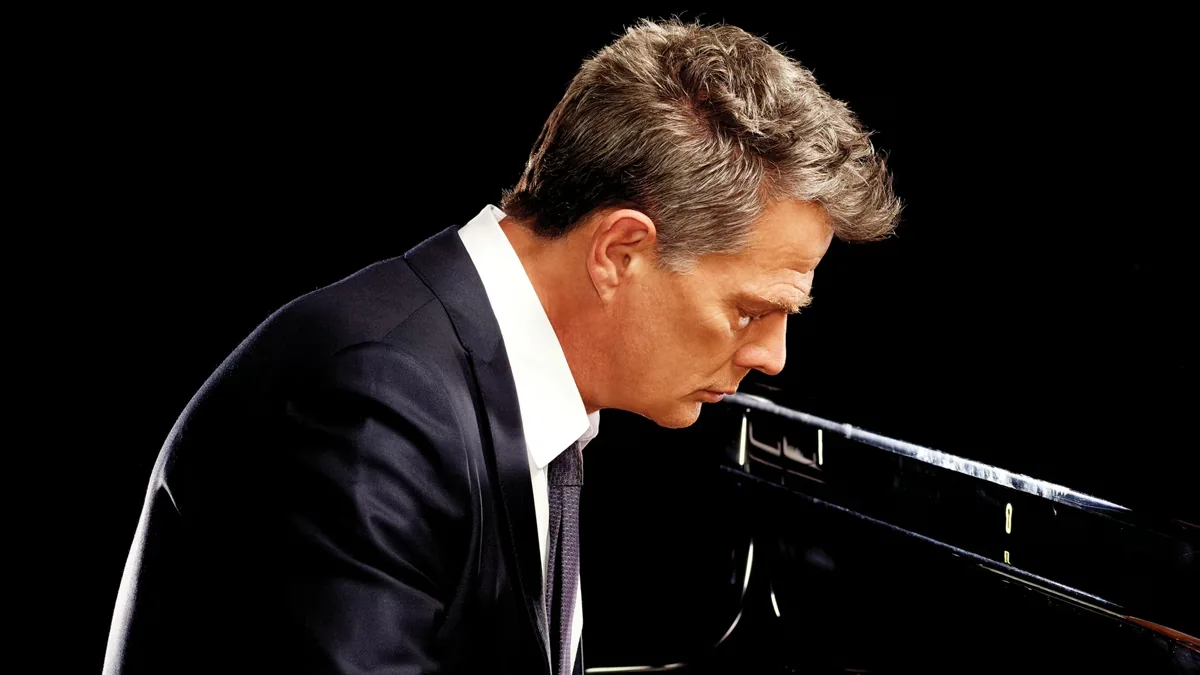
Revisiting the raw transcripts from our 2022 conversation with Katharine McPhee is to look at an artist who has fully embraced a reality few pop singers ever do. She’s moved on. Not from music itself but from the relentless and often thankless pursuit of being a standalone recording artist. And in its place she’s built something more durable, more collaborative, and arguably more interesting alongside her husband, the legendary producer David Foster.
At the centre of this new chapter was the touring production dubbed “The Dave and Kat Show,” a title that feels both impossibly grand and charmingly domestic. It’s a delicate balance McPhee was keenly aware of. She explained the dynamic as a blend of immense professional respect and the raw, unfiltered reality of a marriage. You get the polish of two seasoned performers and then you get the real stuff. The stuff that sells tickets.
“You get to see the respect and honor that I have for him for who he is and everything he’s done as an amazing producer and artist” she says. “And then at the same time you get to see moments of husband and wife bickering and bantering. So it's kind of like the best of both worlds.” It’s a smart formula. It channels the ghosts of iconic musical couples like Johnny Cash and June Carter or even Sonny and Cher, a duo McPhee herself references as an aspirational model for their on-stage dynamic.
But make no mistake, this isn’t just a variety show. It’s a strategic deployment of one of pop music’s most formidable songbooks. McPhee is candid that the setlist is “heavily David Foster influenced because you know we like to lead with strongest stuff.” She’s not just a co-star; she is the primary vocal interpreter for a catalogue that defined an entire era of adult contemporary music. It’s a role that fits her powerful, versatile voice perfectly, a role that perhaps gives her more artistic meat to chew on than any solo project ever could.
The tour’s Canadian leg was a homecoming for Foster and a familiar landscape for McPhee, whose family history is dotted with summers spent in the Pacific Northwest and camping trips across the border. It’s a minor detail that adds a layer of personal texture to the professional grind of a multi-city tour, showing the deep integration of their lives.
What’s most telling is her admission about the psychic weight of performance. The idea of returning to a solo show now feels alien. “He and I both say, like, I don't wanna do it by myself anymore” McPhee admits. “Like it's so much more enjoyable to do it with somebody and share the stage with somebody you love. Just feels more fun and less pressure.” This is a profound shift for an artist forged in the crucible of American Idol, a competition predicated entirely on individual stardom.
And her reflections on that era are brutally honest. Looking back nearly two decades, she sees a young performer armed with a dangerous combination of unearned confidence and technical ignorance. “I had the confidence as though I had so much experience. But in actuality, like, there I really didn't have as much experience” she reflects. “I really knew nothing. Like I really didn't know how to sing properly. I had to learn that when I came off the show.”
That lack of formal training had serious consequences. McPhee reveals she frequently hurt her voice during the show, a startling admission for a singer praised for her vocal prowess. It was a crash course in the brutal mechanics of performance where singing in your bedroom is a world away from belting over a live band under television lights. The irony she notes is that her own mother is a celebrated voice teacher whose lessons she largely bypassed in her youth.
I do so many different styles of music, which is can be impressive to some people... but it does sort of lend itself for not having a point of view as a recording artist. It's just not really where my passion is.
That trial by fire on Idol, however, laid the groundwork for a pivot into a surprisingly robust acting career. She viewed early gigs like a guest spot on CSI: New York working alongside Gary Sinise not as star-making turns but as essential on-the-job training. She was just trying to get comfortable on a call sheet, to understand the rhythm of a set. It was a practical, methodical approach to building a different kind of career.
From there she navigated a path from the college comedy of The House Bunny to the procedural drama of Scorpion and of course the critical bridge between her two worlds, NBC’s Smash. Each project added a new tool to her kit. When she speaks of the difference between playing a college kid in The House Bunny and a mother in The Tiger Rising, it’s with the self-awareness of a veteran who understands the journey.
Her eventual arrival on Broadway in Waitress felt like an inevitability and a coronation. It was the moment that solidified her status as a true multi-hyphenate. “That was the show I was waiting for to kind of help introduce me to the Broadway community” she says. Taking over from the show’s creator Sara Bareilles was one thing but then being asked to originate the role in London offered a completely different experience, allowing her to shape the character with a new cast from the ground up.
Which brings us to the core of McPhee’s current artistic philosophy. When asked about new music, she is refreshingly direct. “I'm not really interested in putting out albums anymore” she states plainly. It’s not bitterness or resignation but a sharp diagnosis of her own artistic identity. She recognizes that her greatest strength—her versatility—is also her greatest weakness as a recording artist in a market that demands a singular point of view.
“I do so many different styles of music which can be impressive to some people... but it does sort of lend itself for not having a point of view as a recording artist” she explains. “It's just not really where my passion is. I don't know that it ever really was my passion.” This is the kind of self-knowledge that takes years to acquire and even more courage to state publicly.
The one exception to her no-albums rule is a Christmas collection with Foster, a project that perfectly aligns with their brand. It’s a commercial and artistic layup built on Foster’s theory that audiences crave standards, not new holiday tunes. He points to Mariah Carey’s hit as the last true original to break through, a telling piece of industry wisdom.
This partnership with Foster seems to have unlocked a new level of creative ease for McPhee. She compares their producer-singer relationship to that of a director and an actor. “If you have a great director you feel confident and it's a collaboration and you really put your trust in that director” she says. For her, Foster provides the roadmap, allowing her to simply inhabit the performance.
This new era also includes a venture into entrepreneurship with a direct-to-consumer jewelry line. It’s a classic celebrity brand extension but her story behind it is telling. The idea was a private dream, something she manifested rather than chased. It took an outside connection to make it a reality, revealing an artist who thrives on collaboration rather than solo ambition.
The designs themselves are deeply personal, drawing inspiration from heirloom pieces like a Maltese coloured stone clown pin that belonged to her great aunt. It’s a small detail that grounds the commercial venture in genuine sentiment, making it feel less like a cash grab and more like an authentic expression of her taste.
Ultimately, the Katharine McPhee of 2022 is a case study in career evolution. The ambition for solo pop stardom has been replaced by the stability of partnership. The pressure to define a singular sound has given way to the freedom of being an interpreter, an actor, a collaborator, and a business owner. She’s not chasing the charts anymore. She’s building a life.
519 Magazine Archive: We are thrilled to officially unearth the 519 Magazine Digital Vault. This isn't just a re-post; it's a high-fidelity restoration of a pivotal era in music journalism. By pairing original print dates with modern retrospectives, we’re bridging the gap between historical rock-and-roll grit and the lightning-fast performance of today’s web. These stories—once locked in physical print and lost URLs—are now back, fully searchable, and optimized for a new generation of fans.
We are thrilled to officially unearth the 519 Magazine Digital Vault. This isn't just a re-post; it's a high-fidelity restoration of a pivotal era in music journalism. By pairing original print dates with modern retrospectives, we're bridging the gap between historical rock-and-roll grit and the lightning-fast performance of today's web. These stories—once locked in physical print and lost URLs—are now back, fully searchable, and optimized for a new generation of fans.