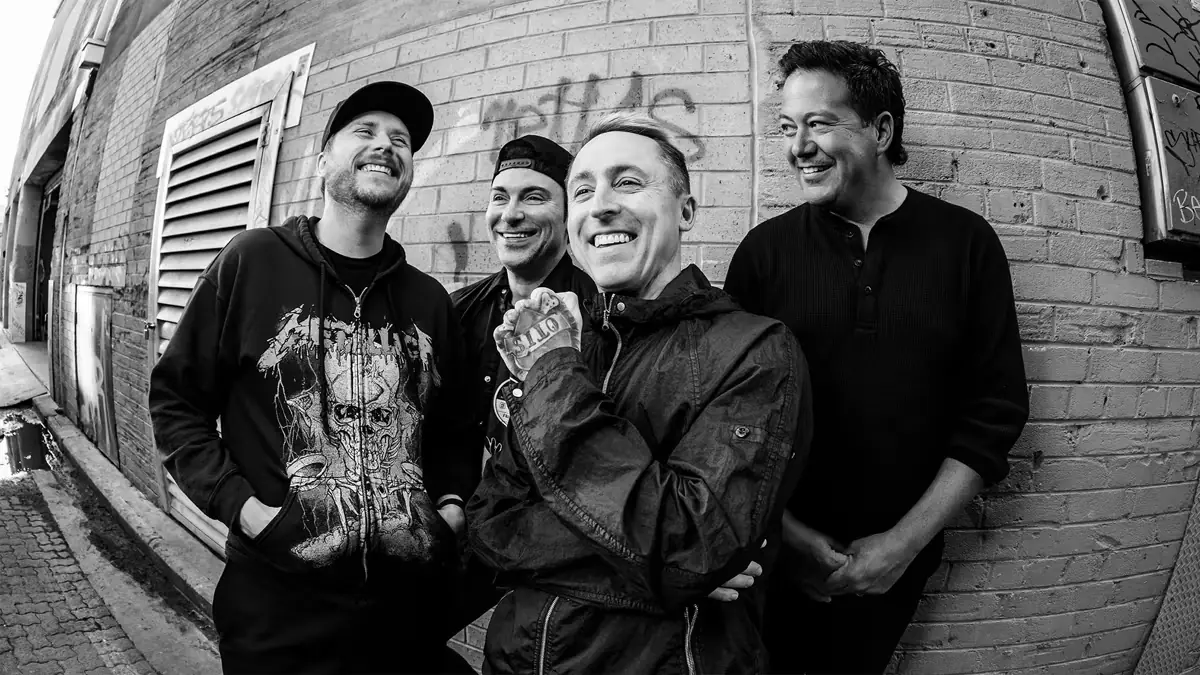

Listening back to this archival tape from early 2011 feels like cracking open a time capsule. The digital hiss of a conference call line can’t mask the cautious optimism in the air. Yellowcard was back. After a hiatus that felt like an eternity in the fast-moving pop-punk scene, the band had re-emerged with a new record, a new bassist, and a renewed sense of purpose. On the line was that new bassist, Sean O'Donnell, fresh from an MTV acoustic session in New York City and fielding questions about a comeback that was anything but guaranteed.
O'Donnell, despite being the newest member, had a front-row seat to the band’s temporary dissolution and eventual reunion. He was a veteran of the scene himself, his band Reeve Oliver having shared countless stages with Yellowcard. He had the proper context. He knew the grind that led to the break.
“The band released a record called Paper Walls in 2007, and they'd kind of been hitting the road really, really hard for about ten years, and everyone kind of wanted to just take a break,” O'Donnell explains, his voice clear on the recording. The burnout was real. Ten years of relentless touring had taken its toll, splintering the group geographically and creatively. Violinist Sean Mackin got married, drummer Longineu Parsons III was touring with Adam Lambert, and the others scattered to find some semblance of normal life.
But the silence wasn’t permanent. The catalyst for their return wasn't a label mandate or a lucrative festival offer. It was a text message. A simple digital olive branch from LP to Ryan Key and Sean Mackin got the conversation started, leading to tentative meetings about what a modern Yellowcard could even be.
“I think the time off was really good for everyone because there's definitely this kind of a refreshed sense of being in a band that's very prevalent these days,” O'Donnell notes. That refreshed energy was the entire pitch for their new album, When You're Through Thinking, Say Yes. It was a record that had to justify its own existence, proving the band wasn't just running on nostalgic fumes.
The sound itself was a calculated look backwards to move forward. It wasn't a desperate attempt to recreate the lightning-in-a-bottle success of Ocean Avenue. Instead, they aimed for something more nuanced, a synthesis of their entire catalogue.
“I think, upon reflection, it definitely has a lot of elements from the old albums but with kind of a new spin on it,” he says. “A lot of the guys were talking about how it kind of has some of the energy of even the record before Ocean Avenue, which was One for the Kids, but also kind of combines some of the things they were doing on later albums like Lights and Sounds and Paper Walls.” This was the tightrope walk: appeasing old fans while showcasing artistic growth. It was smart. It showed they understood their own DNA.
A point of contention, however, was the integration of material from Big If, a side project between O'Donnell and Ryan Key. Bringing pre-written songs from an outside project into a band's comeback album is a high-risk maneuver. It can feel like a shortcut, disrupting the collaborative chemistry. O'Donnell frames it as a practical measure, a way to hit the ground running. It was a collection of songs Ryan and he had already developed, ready for the full-band treatment. While it expedited the process, one has to wonder if it fully represented the “refreshed” group dynamic they were aiming for.
The first take, she kept coming at us and the director is just yelling cut, cut, stop as loud as you can and we all had to just grab our gear and run away.
Of course, you can't discuss the Yellowcard sound without talking about the violin. By 2011, Sean Mackin’s string work was more than a gimmick; it was the band's sonic signature, the element that separated them from the Warped Tour pack. O'Donnell acknowledged seeing their influence ripple through the scene, with younger acts incorporating violinists into their rock setups.
He wasn’t territorial about it. He saw it as a form of flattery and correctly placed Mackin in a lineage of rock violinists. “Obviously, Sean Mackin wasn't the first to do that, but you definitely can see the influence that he's had on kind of younger bands to see that, 'Oh, you know, while this at first seems like kind of a weird idea to have a violin player on stage with rock guitars, it not only can work but it can kind of be cool,'” O'Donnell says. He’s right. Jethro Tull and Camper Van Beethoven did it first, but within the specific architecture of pop-punk, Mackin was a pioneer.
The conversation reveals a deep commitment to fundamental songwriting. The potential for an all-acoustic album was floated, a natural extension of their writing process. Most of their tracks began life on an acoustic guitar, a litmus test for a song's structural integrity before being layered with distortion and bombastic drums.
“If you can play a song acoustically and it sounds good, that's a good indication for the song being strong,” O'Donnell states. This is the core of their appeal. Beneath the polish and the power chords, there were meticulously crafted melodies and relatable narratives. It’s why their music endured.
That dedication to the craft contrasts sharply with the chaotic, almost comical, reality of making music videos. The story behind the video for “For You, and Your Denial” is a perfect example. A muscle car, an actress in big boots and faulty brakes created a genuinely dangerous situation on set.
“The first take, she kept coming at us, and the director is just yelling, 'Cut! Cut! Stop!' as loud as you can, and we all had to just grab our gear and run away,” he recalls with a nervous laugh. “Luckily, she stopped before getting it really close to hitting any of us, but there was that fear that one of us, you know, could at any time be injured by an old muscle car.” It's a stark reminder of the unglamorous and occasionally perilous work behind the glossy final product.
The video itself, a “teaser” that intentionally obscured the band members' faces, ended up becoming an accidental lead single when radio and MTV2 unexpectedly picked it up. It speaks to a band navigating a new media landscape, where a low-stakes fan release could suddenly gain a life of its own.
The industry itself had shifted under their feet. The move from a major label like Capitol to an independent powerhouse like Hopeless Records was a sign of the times. O'Donnell, having been on Capitol with Reeve Oliver, understood the difference intimately. The move to Hopeless meant a smaller roster but a more focused, passionate team. It was a trade-off many bands were making, choosing dedicated attention over the dwindling resources of the major label system.
Ultimately, this interview captures a band at a crossroads. They were seasoned veterans fighting to reclaim their space, armed with a new member and a record that honoured their past without being chained to it. The fan response, as O'Donnell describes it, was immediate and powerful, with kids at the first few shows already screaming back the lyrics to new songs.
The energy was real. The comeback was on.
When asked about the band’s influences, O'Donnell lists a murderer’s row of 90s punk and emo: Lagwagon, NoFX, Saves the Day and Dashboard Confessional. It’s the perfect summary of their sound—the intersection of skate-punk velocity and heartfelt, melodic vulnerability.
Looking back from today, When You're Through Thinking, Say Yes stands as a crucial bridge in Yellowcard's career. It wasn't their commercial peak, but it was a powerful statement of resilience. This recording with Sean O'Donnell is a snapshot of that moment—the relief, the fear and the defiant joy of getting the band back together.
519 Magazine Archive: We are thrilled to officially unearth the Rockstar Weekly Digital Vault. This isn't just a re-post; it's a high-fidelity restoration of a pivotal era in music journalism. By pairing original print dates with modern retrospectives, we’re bridging the gap between historical rock-and-roll grit and the lightning-fast performance of today’s web. These stories—once locked in physical print and lost URLs—are now back, fully searchable, and optimized for a new generation of fans.
We are thrilled to officially unearth the 519 Magazine Digital Vault. This isn't just a re-post; it's a high-fidelity restoration of a pivotal era in music journalism. By pairing original print dates with modern retrospectives, we're bridging the gap between historical rock-and-roll grit and the lightning-fast performance of today's web. These stories—once locked in physical print and lost URLs—are now back, fully searchable, and optimized for a new generation of fans.