

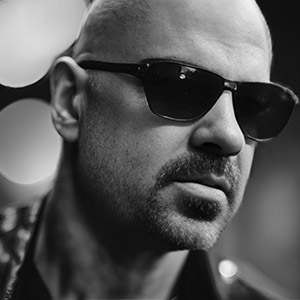
Looking back at these archival tapes from Feb. 23, 2012, is a raw hit of perspective. The hiss on the recording feels like a time machine. Here are Sebastien Lefebvre and Chuck Comeau of Simple Plan, 12 years into a career that was supposed to have the shelf life of a carton of milk. But the pop-punk crash of the early 2000s was long over. And instead of being a relic, the band was navigating a second life, pushing their sound and solidifying a global fanbase that refused to let go.
This was the era of Get Your Heart On!, an album that saw them doubling down on what made them famous while trying to figure out where to go next. They were no longer the new kids from Montreal. They were veterans. And with that came a different kind of ambition, one tempered by experience.
Chuck Comeau puts it bluntly when reflecting on their trajectory. “We dreamt of playing the hometown arena,” he says, the sound of a man who still can’t quite believe it. “And then we got to travel the world and kind of do more than we'd ever thought was gonna be possible. So it's pretty nuts.” It’s a humble admission from a band that had become a genuine international export, a flag-bearer for Canadian rock on stages most bands only see in magazines.
That journey wasn’t an accident. It was built on a relentless work ethic that bordered on obsessive. By 2012, they were a machine, but one that still ran on genuine passion. “It's been a fun ride,” Comeau says. “We've been doing it for twelve years now with this band, and I think we still love it as much, probably even more as we did in the beginning.” That wasn’t just good PR. You can hear it in his voice. They were lifers.
The creative process for Get Your Heart On! reveals the core of their strategy: overwhelming force. They didn’t just write a record; they wrote an entire library and cherry-picked the best. “The goal whenever we make an album is to make it better than the last one,” Comeau explains. “I think that we just sat down and decided we're gonna write until we feel we have our best album yet. And so what we did, we wrote, like, over 70 songs for the record.”
Seventy songs. Let that sink in. It’s a staggering number that speaks to both their creative drive and a certain anxiety. The mission was clear: they had to prove they still had it. “We wanted to sort of go back to our roots in some way and kind of recapture the vibe and the energy of the first and second record, but at the same time pushing ourselves and trying to come up with something new,” Comeau notes. It’s the eternal tightrope walk for any legacy act.
But this volume-based approach has its artistic risks. While it guarantees a high level of quality control, it can also lead to a project that feels more like a curated playlist than a cohesive album. It’s the one valid critique you could level at the record; it’s a brilliant collection of moments, but perhaps not a singular, unified statement. It’s a minor point, however, for a band whose primary goal was to deliver high-octane, hook-filled fun.
We were really nervous, we were scared, and we were a little like, ‘Okay, are people gonna like this or think it's really lame?’ And then it turns out to be so great. Just like sex, you know?
The songs that didn’t make the cut weren’t just discarded. They were assets, saved for a fanbase they knew was hungry for more. “Some of the dead songs are awesome. We'll use them in the future,” Chuck promises. “Some of the dead songs might end up on other people's albums.” This wasn't about dumping scraps; it was about respecting the work and the audience. They understood the value of every single track.
Album sequencing was a dark art they had clearly mastered. They knew a record needed peaks and valleys. “We want our records to have a balance,” Comeau says. “At some point if you have, say, 15 super fast songs, okay, well, you know, we'll pick our five favourites.” This is the kind of professional thinking that separates career bands from one-album wonders. It’s about the listener’s experience from track one to track 11.
And they were determined to push the sonic envelope, even if it meant alienating some old-school fans. Sebastien Lefebvre points to one track in particular. “There's a song called 'Summer Paradise' on the album that's completely different than anything we've done before,” he says. “With every record, we try to have at least one or two songs that are kind of like a departure for us and a little bit of an evolution. I'm really proud of that one.” It was a smart, commercially savvy move that paid off, proving they could play in the mainstream pop sandbox without losing their identity.
That professionalism extended to their live show, which by this point was famously tight. They talk about a New Year’s Eve gig in Niagara, playing in zero-degree weather for a national TV broadcast. The pressure was immense. “It's kinda like being under the microscope a little more,” Lefebvre admits. “But at the same time, you know, we're so awesome that it's easy.” He’s joking, but only just. They had the flight hours. They knew how to deliver.
They also understood the power of a stacked tour package. The 2012 Canadian run wasn’t just a Simple Plan show; it was an event, featuring Marianas Trench, All Time Low and These Kids Wear Crowns. It was a masterstroke of scene-building. “When you spend your hard-earned money on a show, we wanna make sure we give them, you know, like, the best four hours they can have,” Comeau insists. “It's part of that philosophy that every band needs to be great.”
Beyond the music, another pillar of the band’s identity had become the Simple Plan Foundation. It wasn’t a vanity project; it was deeply integrated into who they were. “It also came from the fact that we got so many letters from fans, from kids going through really tough times,” Chuck explains. “What can we do that goes a step further?” The foundation was the answer. “It's part of the fabric of this band now. It's part of who we are.” A dollar from every ticket on that tour went straight to the cause.
But the most telling moment of the interview comes when they discuss language. As a band from Quebec that broke globally in English, the pressure to record in French was always there. With the bilingual version of “Jet Lag,” they finally gave in. “We caved. We totally did it,” Lefebvre laughs. He admits singer Pierre Bouvier was nervous, having never tracked vocals in French for the band before. The result was one of their biggest hits in Quebec and France.
Sebastien’s reflection on the anxiety and reward is pure, unfiltered rock and roll. “We were really nervous, we were scared, and we were a little like, 'Okay, are people gonna like this or think it's really lame?' And then it turns out to be so great,” he says, before delivering the punchline. “Just like sex, you know? You're nervous, you feel awkward about it, and then you do it, and it's awesome.”
That candour is what defined them. They even took it a step further, recording a Mandarin version of the song with a Chinese artist. It was a forward-thinking move, an acknowledgment of their global reach long before such collaborations became commonplace. It was about connection, not just commerce.
Listening to this tape now, you hear a band at a crossroads. They had survived their own explosion and were now meticulously building an institution. They did it with an insane work ethic, a deep respect for their fans and a willingness to take calculated risks. They weren't just chasing hits. They were building a legacy.
519 Magazine Archive: We are thrilled to officially unearth the Rockstar Weekly Digital Vault. This isn't just a re-post; it's a high-fidelity restoration of a pivotal era in music journalism. By pairing original print dates with modern retrospectives, we’re bridging the gap between historical rock-and-roll grit and the lightning-fast performance of today’s web. These stories—once locked in physical print and lost URLs—are now back, fully searchable, and optimized for a new generation of fans.
Get Tickets



We are thrilled to officially unearth the 519 Magazine Digital Vault. This isn't just a re-post; it's a high-fidelity restoration of a pivotal era in music journalism. By pairing original print dates with modern retrospectives, we're bridging the gap between historical rock-and-roll grit and the lightning-fast performance of today's web. These stories—once locked in physical print and lost URLs—are now back, fully searchable, and optimized for a new generation of fans.