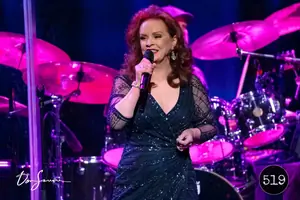
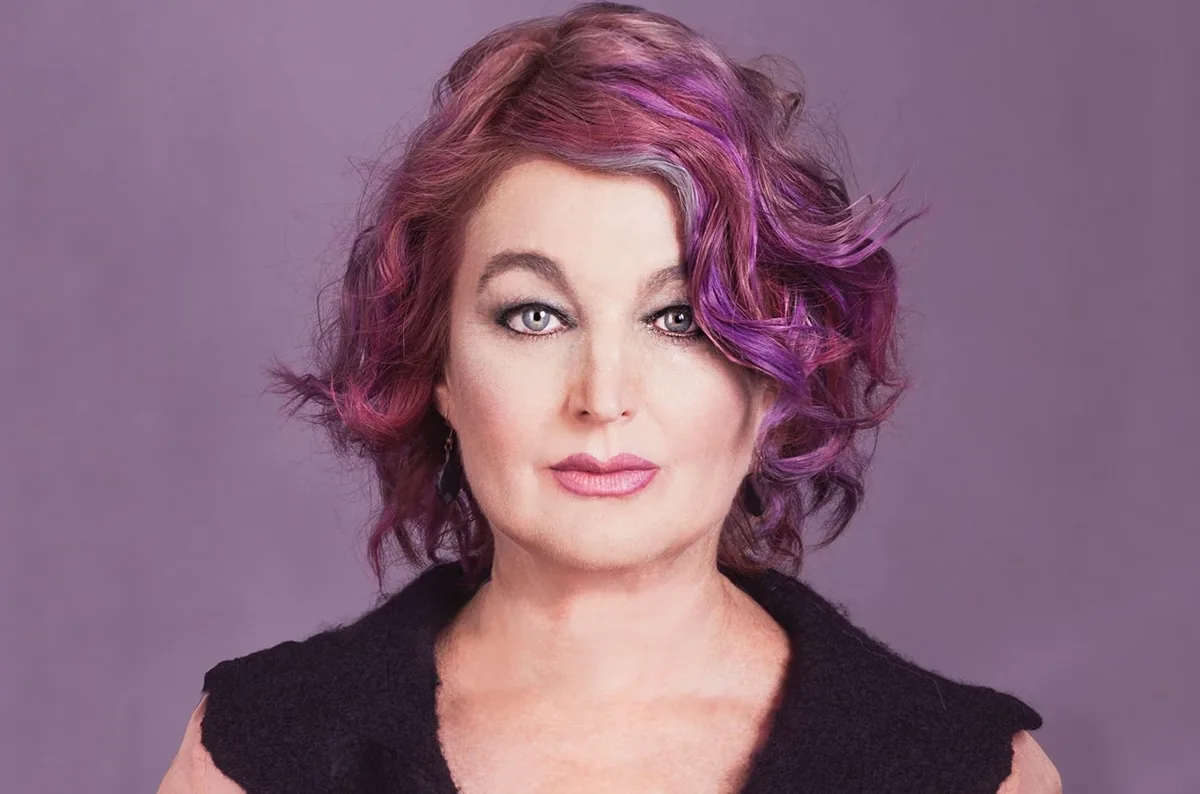

Looking at the raw transcripts from our 2018 chat with Jane Siberry is a stark reminder of an artist perpetually in motion. Even then, years after her reign as an art-pop queen on the airwaves, she was dissecting her own process with a clarity that most musicians never find. The conversation was ostensibly about a show in Windsor but it quickly became a state of the union on artistry survival and spiritual honesty in the modern age.
For a generation of Canadians, Siberry was a fixture. She was an essential part of the cultural firmament built by MuchMusic and Toronto’s legendary CFNY, “The Spirit of Radio”. And she remembers that era for the gift it was. “I got a jump start because of radio and TV long ago, which has always held me in good stead,” she says. It gave her a foundation that allowed her to step away from the mainstream glare without disappearing entirely.
But the industry that built her also moved on. The machine changed. Siberry didn't. She simply adapted her trajectory. “That didn't make me change. It made people less aware of me,” she notes with zero bitterness. There’s a quiet power in her acceptance of a different kind of career, one operating on a more intimate scale. “I'm happy being under the radar now. People... you know, work more word-of-mouth, etcetera, and I've changed just because we all change.”
That change is most evident in her songwriting. The quirky third-person narratives that defined albums like The Speckless Sky have given way to something far more direct and immediate. It’s a conscious evolution, a deliberate move towards gut-level communication. She’s not hiding behind characters anymore.
“I used to do a lot of songs that were sort of third person, and now a lot of my songs are first person,” Siberry explains. “I feel more of a bee under my bonnet to speak directly to people.” She even offers a granular example of this internal debate over a song title that started as “I missed the view but I made it,” confessing her discomfort with its self-focus. It’s a fascinating glimpse into an ego being actively dismantled in favour of a collective voice.
This shift extends to her performance. By 2018 she had long since parked the tour bus for a full band. The economics of the road for a legacy indie artist are brutal and unforgiving. Touring with a band she admits is “a luxury for most musicians, and you end up having to pay; you go into debt to play with a band.” The solution was to go it alone.
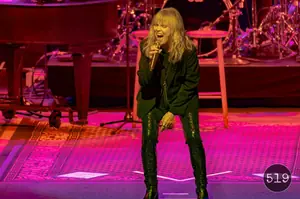
And this wasn’t just a financial decision. It was an artistic crucible. The solo show forces an artist to be the entire engine of the experience. There’s nothing to hide behind. “It's also made me a really much better performer because it's up to me; all the power has to come from me,” she reflects. The result is a performance she describes as more intense, a direct conduit between her and the audience.
I do believe in spirit. And I've always thought nature was the only thing I trusted. So that nature and consciousness and the stars, everything's connected.
The financial realities have also reshaped how she creates and releases music. The five-year gap between albums was a symptom of a larger problem: the immense cost of producing a full-length record. She tried crowdfunding but found it wasn't a comfortable fit. Grants were off the table. The path forward was to deconstruct the album itself.
“I'm gonna just do singles from now on, I think. Just one song at a time,” she declared back in 2018. This wasn't just a trend-chasing move; it was about capturing the energy of a piece of music in the moment of its creation. “I can't write a blog and put it out a month later... put it out while you're in the moment with the same energy, and it holds the energy.” It’s a philosophy that keeps the work fresh and in constant dialogue with her listeners.
Of course, no conversation with Siberry is complete without touching on the spiritual dimension that permeates her work. She’s quick to draw a hard line between faith and institution. “I wouldn't call myself religious,” she states firmly. “There's a lot I really, really don't like in formal religions, and Christianity is a good example of a huge gap between what I think, say, the man Jesus said and what people espouse in church.”
Her belief system is more elemental, rooted in the tangible world. “I do believe in spirit. And I've always thought nature was the only thing I trusted. So that nature, and consciousness, and the stars—everything's connected. That's what I would trust the most.” This worldview demands a radical inclusivity, one that extends even to figures of political division.
“I do think we're all connected to each other deep, deep, deep down,” she muses. “So to reject someone is to reject ourselves or the greater power.” It's a challenging and deeply held conviction, a testament to a worldview that refuses easy binaries.
This blend of the sacred and the profane finds its most potent expression in the infamous line from “Send Me Someone to Love”. When asked about “God is good in bed,” she explains it as a reclamation of intimacy as a spiritual act. It’s about elevating physical connection to “in praise of the beauty of life,” a stark contrast to casual encounters she’s experienced. It’s pure Siberry: provocative, thoughtful, and deeply sincere.
Her perspective on being a Canadian artist abroad is equally insightful. On an upcoming UK tour she notes the British appreciation for Canadian realness. “I think they might find it refreshing that we just sort of speak our mind,” she says. “The British have a bit of an albatross around their neck as far as not feeling comfortable saying what they think... a harmonious flow between your mind and your mouth is the way to go.”
The conversation inevitably turned to Windsor, a city she rightly identifies as being musically distinct due to its proximity to Detroit. “You've had an extra exposure to a different kind of music, which makes Windsor a pretty different place,” she observes. It’s this unique cultural position that made her upcoming show there so compelling.
For fans from the MuchMusic days she promised a show that bridges the past and present. Older songs were still in the setlist including an acoustic version of “Mimi on the Beach,” but reimagined and pulled forward into her current artistic focus. “I think people are tired of being sort of sung at rather than sung to, or that's what it feels like to me,” she says. This was the core promise of her 2018 tour: not nostalgia but a living, breathing continuation of a remarkable artistic journey.
519 Magazine Archive: We are thrilled to officially unearth the 519 Magazine Digital Vault. This isn't just a re-post; it's a high-fidelity restoration of a pivotal era in music journalism. By pairing original print dates with modern retrospectives, we’re bridging the gap between historical rock-and-roll grit and the lightning-fast performance of today’s web. These stories—once locked in physical print and lost URLs—are now back, fully searchable, and optimized for a new generation of fans.
We are thrilled to officially unearth the 519 Magazine Digital Vault. This isn't just a re-post; it's a high-fidelity restoration of a pivotal era in music journalism. By pairing original print dates with modern retrospectives, we're bridging the gap between historical rock-and-roll grit and the lightning-fast performance of today's web. These stories—once locked in physical print and lost URLs—are now back, fully searchable, and optimized for a new generation of fans.