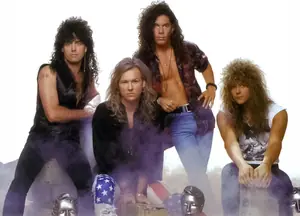
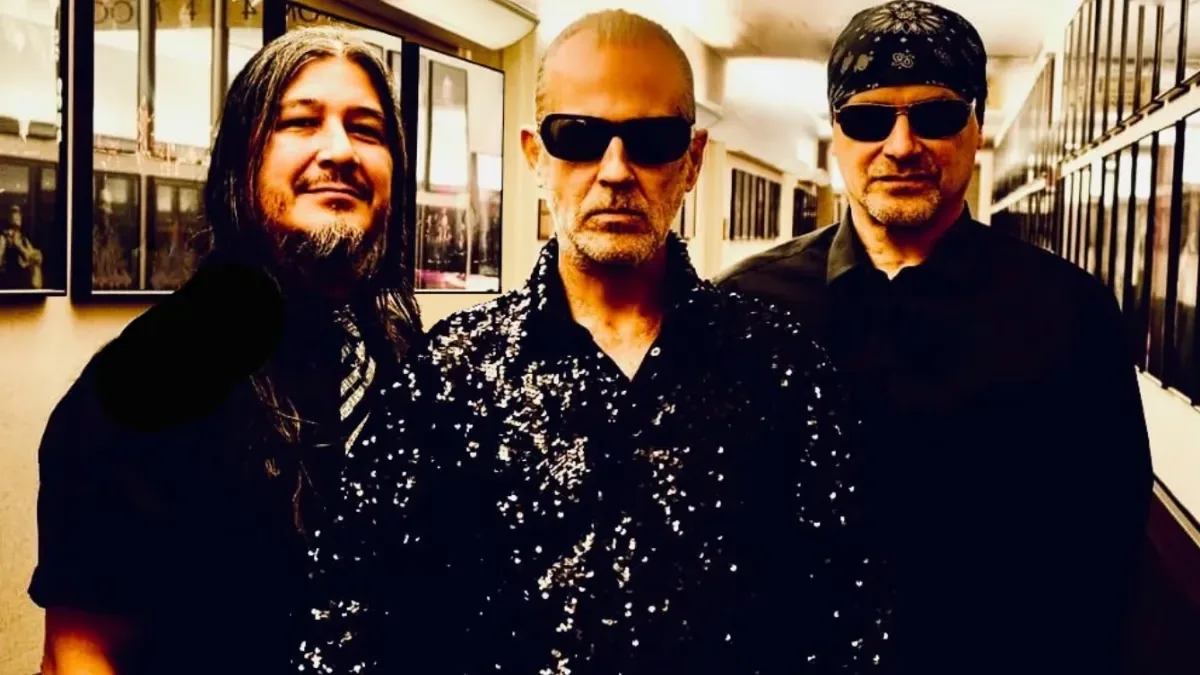
Revisiting this conversation from late 2021 offers a sharp snapshot of a band navigating its own monumental legacy. Men Without Hats were on the verge of releasing Again, Pt. 1, an EP of cover songs that acted as the prelude to a full album of new material. It was a calculated move, a way of re-contextualizing their own sound by first paying tribute to the artists who built the foundation. And for a band defined by one of the most indelible synth-pop singles of all time, looking backward was a bold way to move forward.
The plan was a two-act play. First, the five-song EP of covers, then a full-length of 12 original tracks. Ivan Doroschuk laid it out simply. "Part two is gonna be twelve original songs coming out early next year. This is just the setup for it." This strategy, releasing a covers collection to prime the audience, is a classic industry tactic. It re-engages fans with familiar melodies filtered through a new lens while simultaneously buying time and building anticipation for the original work. It’s a delicate balance between homage and holding pattern.
But the creation of this music was anything but a simple studio session. The band decamped to a purpose-built studio on Malahat, on Vancouver Island, embracing a near-total isolation that had nothing to do with the global lockdowns of the era. This was a deliberate artistic choice, a throwback to a time when bands would sequester themselves to create. Doroschuk describes it as a return to fundamentals. "It was a pretty old school way of making albums, you know, renting a house, building a studio, and just staying there until the record's finished."
That sense of seclusion became a core part of the album's narrative. It was a creative bubble, protected from the noise of the outside world. And it was a vibe that was meticulously curated. The only distractions were welcome ones. "The only company we had was a family of 13 peacocks that we watched grow as we were laying down tracks," Doroschuk says. This wasn't just about acoustics; it was about atmosphere. It was about creating a space where the work could breathe, far from the pressures of the city and the industry machine.
Interestingly, Doroschuk is clear that the band’s timeline was their own, completely independent of the pandemic that had upended the rest of the music world. "We had taken the summer off. We had decided not to tour," he explains. "We had decided so it really didn't it didn't affect us." It’s a statement that speaks to a veteran band’s ability to operate on its own terms, a luxury not afforded to many. They weren’t reacting to the crisis; they were simply proceeding with a long-held plan.
The covers chosen for Again, Pt. 1 serve as a sort of sonic blueprint for the Men Without Hats aesthetic. These weren't just favourite songs; they were influences made explicit. The EP features tracks by Lou Reed, The Rolling Stones, The Tragically Hip and a David Bowie-penned classic, mapping out the intersection of glam rock art-pop and Canadian grit that informs their work. "We wanted to show people who influenced us and who we like," Doroschuk notes. It was an exercise in transparency, pulling back the curtain on their own creative DNA.
Lou Reed’s "Satellite of Love" was a deeply personal choice. "Lou Reed's always been a big favorite with Men Without Hats," Ivan recalls. "My first honeymoon, I went to see Lou Reed in Rome... I have an audio recording of my first honeymoon." Meanwhile, Mott The Hoople’s "All the Young Dudes" tapped into a formative teenage memory. "That song was in the set growing up being a teenager in the seventies, for me, it was like an anthem. That was our anthem."
I was quoted in the eighties as saying, you know you know, Mick Jagger, know, he's like, you gotta make way for the new wave. You know? You gotta know when to call it quits. And the fact that he's still out there and that I'm still out there... the guy's amazing.
The Canadian connection was solidified with a take on The Tragically Hip’s "Blow at High Dough." It was a nod to their roots and a tribute to a band Doroschuk admired from their earliest days. "I've always been a big Tragically Hip fan. I'm Canadian, so I'm, you know, represent. And I saw the first tour. I saw them play this song." Then there’s The Rolling Stones' psychedelic cut "2000 Light-Years from Home" a choice that serves as a subtle apology for some youthful bravado. Doroschuk admits to once saying Mick Jagger should "make way for the new wave." His perspective has since shifted. "The fact that he's still out there and that I'm still out there... The guy's amazing."
The EP’s most audacious track however is the reinvention of their own monolithic hit "The Safety Dance." To deconstruct a song so woven into the fabric of 80s pop culture is a high-wire act. But the band approached it not as a remix but as a complete narrative reimagining. It’s a slower more melancholic interpretation that trades synth ebullience for a kind of world-weary wisdom.
Doroschuk even crafted a new story for it, envisioning a return to West Kingston, the English village where the original video was filmed. "The jester is now the mayor of the town, and he's married to the crazy blonde chick, and they have this huge family," he explains. "And so I go back forty years later to see how they're all doing, and this is the soundtrack to that visit." This conceptual frame elevates the cover from a simple update to a thoughtful sequel.
This new version grew out of a larger project of reinterpreting the band’s catalogue with just vocals and piano. It was an exercise in finding new harmonic structures beneath familiar melodies. The result is a version that stands on its own, a testament to the songwriting strength that was always there beneath the iconic synth riff.
Looking back at the song's origin reveals it was never a guaranteed smash. In fact it wasn't even the first single off Rhythm of Youth. "We released 'I Got The Message' first in Canada," Ivan says. "Safety Dance didn't even... we put out 'Safety Dance' next, and it went to number 12, I think, in Canada. And we were we were totally stoked." It took a 12-inch remix to detonate the song on a global scale, a version Ivan remembers channeling Grandmaster Flash to create. Its subsequent life has surprised even him, with a personal highlight being the critique from a certain animated duo. "The place that I've kind of enjoyed the most over the years has been the Beavis and Butthead doing their critique... and saying, 'Who does this guy think he is, Michael Jackson?'"
Despite decades living on Vancouver Island, Doroschuk’s connection to his hometown remains a critical part of the band’s identity. "I still consider myself a Montrealer even if I've been here twenty years... a big part of me is Quebecois." This identity famously manifested in the use of Bonhomme Carnaval, a move Ivan now looks back on with a mix of amusement and disbelief. "I figured, like, if that guy can get people to come out and party in the streets in the coldest city in North America in February, he might be able to sell us a few records."
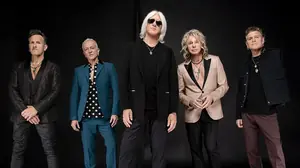
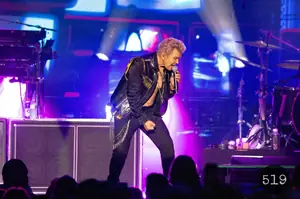
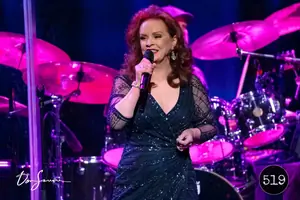
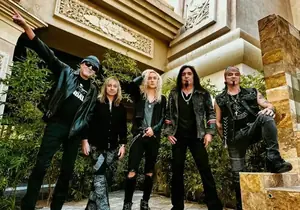
The 2021 lineup reflected both history and evolution. Ivan was joined by his brother Colin Doroschuk, guitarist and engineer Sho Murray and a new generation in Colin's daughter Sahara Sloan on vocals and keyboards. Backed by a new label, Sonic Envy, it felt like a genuine relaunch. A fresh start for a band with a four-decade history.
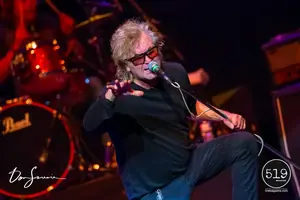
The machinery of touring was also gearing back up. Plans were in motion for shows with A Flock of Seagulls and participation in the Lost 80s Live tour, staples of the legacy circuit that prove the enduring appeal of the era's music. The camaraderie is real. "Mike and I are pretty close, and Gordon Deppe from The Spoons is on guitar with them... so we hang out."
But the most significant plan on the horizon was the 40th anniversary of Rhythm of Youth. The band intended to mark the occasion by performing the entire album live from start to finish. "It's gonna be a two-set affair, and the first set is gonna be the 'Rhythm of Youth' album from start to finish," Doroschuk confirmed. It was the ultimate nod to the past, a move that acknowledged the album's foundational importance to both the band and its audience.
This conversation from 2021 captured a band in perfect equilibrium. Men Without Hats were honouring their roots with the covers EP, deconstructing their biggest hit with startling creativity and preparing to celebrate the album that started it all. They were a group that understood its place in music history but refused to become a museum piece. And that is a dance worth doing.
519 Magazine Archive: We are thrilled to officially unearth the 519 Magazine Digital Vault. This isn't just a re-post; it's a high-fidelity restoration of a pivotal era in music journalism. By pairing original print dates with modern retrospectives, we’re bridging the gap between historical rock-and-roll grit and the lightning-fast performance of today’s web. These stories—once locked in physical print and lost URLs—are now back, fully searchable, and optimized for a new generation of fans.
We are thrilled to officially unearth the 519 Magazine Digital Vault. This isn't just a re-post; it's a high-fidelity restoration of a pivotal era in music journalism. By pairing original print dates with modern retrospectives, we're bridging the gap between historical rock-and-roll grit and the lightning-fast performance of today's web. These stories—once locked in physical print and lost URLs—are now back, fully searchable, and optimized for a new generation of fans.