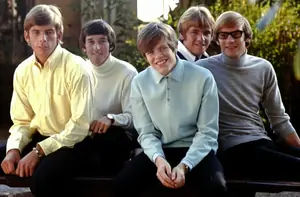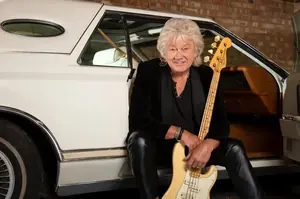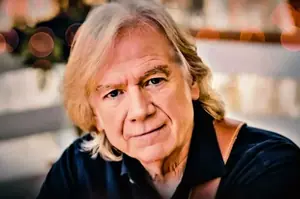
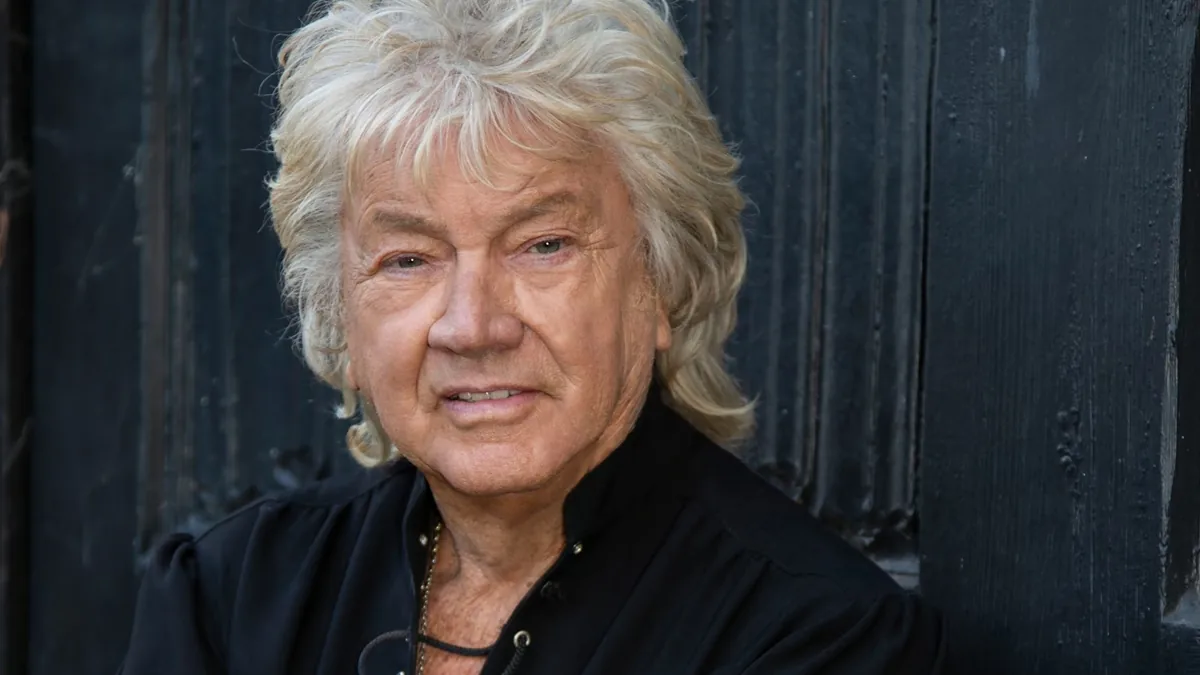

Looking at the raw transcripts from this June 2023 conversation with John Lodge feels like cracking open a time capsule. Here is one of the chief architects of symphonic rock holding court on the very album that defined the genre more than 55 years prior. The tour he was promoting was a full-album performance of Days of Future Passed, an audacious move that was less a nostalgia trip and more a live-action restoration of a foundational text of progressive rock.
Lodge was in Cobham, England, a world away from the Windsor-Detroit corridor where this interview was originating. But the distance felt negligible. The subject was universal: the strange and enduring afterlife of a hit record. He’d already taken the show through the American East Coast and the reaction was telling. It wasn’t just the old guard showing up.
“Not that I'm just bringing the album to a new audience,” Lodge says reflecting on the tour’s early success. “But it's an audience that's rediscovering the album and a new audience is experiencing the album for the first time, and I'm really pleased about that.” This is the dream of every legacy act. It’s the validation that the work transcends its original context, that the grooves cut in 1967 still have something to say to a world of endless digital distraction.
But performing an album so deeply intertwined with the voices of his departed bandmates like Ray Thomas and Graeme Edge required more than just musical proficiency. It demanded a kind of artistic method acting. Lodge had to become the vessel for their words, their sentiments. A difficult task for any performer.
He had to inhabit their perspectives. “I realized that I had to immerse myself into the lyrics of the other guys,” he explains. “If it's a song of Ray's, I had to immerse myself in that lyric. So in a way I had to think I'd written that song myself. Because when you perform a song vocally, you have to really live those songs and believe in it.” It’s a profound responsibility, one that separates a tribute from a genuine re-articulation.
The entire Moody Blues pivot was born from a moment of crucial self-awareness. Before Days, they were another British band chasing the American sound. A good one, but a facsimile nonetheless. The breakthrough came when they stopped looking across the Atlantic and started looking inward at their own experiences in post-war industrial England.
“We thought, what is it that is the blues? It's where you grew up and your influences,” Lodge recalls. “And we said that's what we should do. We should write our own English blues music, really.” This wasn't just a change in direction; it was a declaration of artistic independence. It was the same impulse that drove Ray Davies to write about Waterloo sunsets and The Beatles to sing about Penny Lane. It was the sound of Britain finding its own voice.
That creative freedom required a new kind of environment. The band famously demanded something unheard of from their record company: round-the-clock studio access. They negotiated to have the studio on lockdown 24 hours a day, shattering the rigid ten-to-two and two-to-six session blocks that defined the industry.
Creation, it's real creativity is an impulse, and you've gotta capture it there and then. I really believe that.
It was a move that fundamentally changed the relationship between artist and recording space. The studio was no longer a factory on a time clock. It became a laboratory, a sanctuary. “You can become more creative at 04:00 in the morning,” Lodge insists. “And you need to capture this. And that's what we'd be recording at 04:00 in the morning. We take a camp bed, put it in the studio, fall asleep, wake up, record, and we were there twenty-four hours a day.”
This immersive process allowed for moments of strange inspiration like the genesis of “Peak Hour.” The song’s driving rhythm came not from a musical instrument but from the hypnotic click of a car’s tires rolling over concrete slabs on a British freeway. Lodge felt a tempo in the road itself, a mechanical pulse he asked drummer Graeme Edge to replicate.
But the song’s theme was a sharp commentary on a uniquely modern kind of misery: the traffic jam. “I was thinking there's gotta be a better way to do this because we're all wasting so much time sitting in traffic jam and fuming and getting hot and bothered,” he says. It was a prescient observation on the creeping inefficiencies of modern life, a problem that has only metastasized since.
And then there was the orchestra. The element that could have easily pushed the album into saccharine schmaltz. The key, according to Lodge, was a subtle power play. “We decided to basically ignore the orchestra and make the orchestra play to us,” he states plainly. This was crucial. The band wasn’t an accessory to the symphony; the symphony was an extension of the band. The orchestral parts took their cues from the rock instruments, weaving themselves around Lodge’s melodic bass lines and the core song structures.
Looking back, did they know they were making history? Absolutely not. “No idea. No idea at all,” Lodge admits. “We were just young musicians excited to be in the studio… We never thought about the success of it. Never thought about what's gonna happen to it. Nothing at all. It was just magic recording our own songs for an album.” There’s a purity in that statement that feels almost impossible in today’s hyper-aware, metrics-driven music industry.
Lodge also touches on the brutal commitment of analog recording. With only two four-track machines bounced together, there was no undo button. Every decision was permanent. “Creation, it's real creativity, is an impulse and you've gotta capture it there and then,” he argues. “I know when you write a demo and you create something on the demo, when you go into the studio to try and recreate the creation, it never comes off.” It’s a compelling argument against the infinite options of digital recording where perfection can be pursued to the point of sterility.
The most poignant part of the modern show is the inclusion of the late Graeme Edge. Through video, Lodge ensures his friend and bandmate of 50-plus years has a place on stage every night, reciting his original spoken-word poems. “I went to Graeme and I said... ‘on stage you will always have a place with me on stage.’ And he said ‘John, be delighted to record it.’ And he said ‘John, keep the Moody Blues music alive.’”
The moment is a gut punch for the audience and for Lodge himself, who had hoped Edge would live to see the production. “The audience reaction when Graeme's face comes up on the screen is amazing. And also for me because suddenly, you know, I didn't know he was gonna pass away before he saw the show.” It’s a digital séance, a testament to a bond that transcends life and death.
When the conversation turns to Detroit, the connection is immediate. Lodge, a native of Birmingham, England’s own industrial heartland, feels a kinship. “I'm from Birmingham. Birmingham was called the second motor city. The first motor city, of course, Detroit. So we've got a relationship there.” He fondly recalls playing the legendary Pine Knob Music Theatre, a venue that holds a special place in his psyche.
Ultimately, Lodge’s role has shifted. He is no longer just the singer in a rock and roll band. He is the curator, the historian, and the primary torchbearer for a monumental legacy. His labour is to ensure that the magic captured in a 24-hour studio lockdown in 1967 continues to breathe and find new ears. It is the work of keeping the past present.
519 Magazine Archive: We are thrilled to officially unearth the 519 Magazine Digital Vault. This isn't just a re-post; it's a high-fidelity restoration of a pivotal era in music journalism. By pairing original print dates with modern retrospectives, we’re bridging the gap between historical rock-and-roll grit and the lightning-fast performance of today’s web. These stories—once locked in physical print and lost URLs—are now back, fully searchable, and optimized for a new generation of fans.
We are thrilled to officially unearth the 519 Magazine Digital Vault. This isn't just a re-post; it's a high-fidelity restoration of a pivotal era in music journalism. By pairing original print dates with modern retrospectives, we're bridging the gap between historical rock-and-roll grit and the lightning-fast performance of today's web. These stories—once locked in physical print and lost URLs—are now back, fully searchable, and optimized for a new generation of fans.