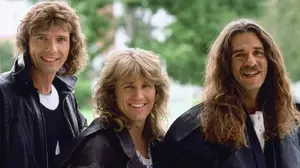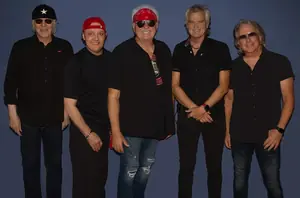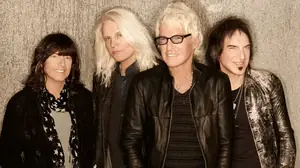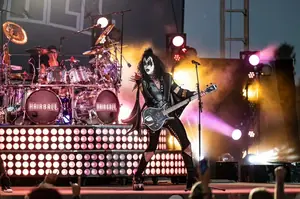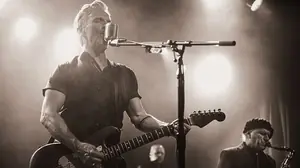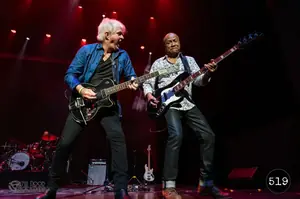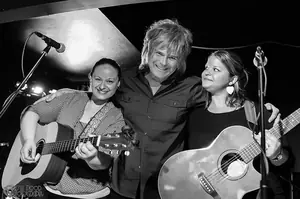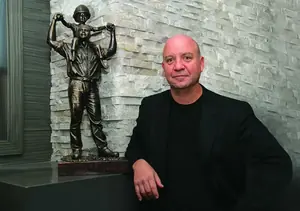

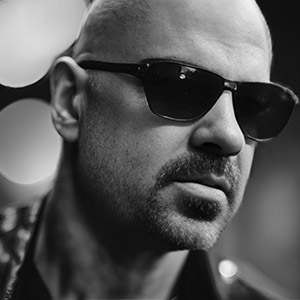
Revisiting this conversation from mid-2018 with Jack Blades feels like cracking open a time capsule from the exact moment classic rock decided it wasn't done yet. This wasn't some legacy act phoning it in from the casino circuit. This was a working band with a new record, a full tour schedule, and a frontman who still sounded hungry. The cultural landscape for bands of Night Ranger’s vintage was shifting. But Blades was, as ever, unapologetically focused on the work.
When pressed on the staggering reality of nearly 40 years in the game, there’s no grand philosophical posture. Just a workmanlike pragmatism. “A good song is a good song, and here we are all these years later talking about it,” Blades says. It’s a simple diagnosis but it’s the right one. He chalks it up to luck, good songs, and a relentless drive to deliver live. That’s the core of it. There is no magic formula, just the brute force of killer hooks and stage energy.
And it's that very energy that separated Night Ranger from so many of their peers still grinding it out. Blades is candid about the sheer joy of performance. “When the lights go down, the, you know, the intro tape is playing and the crowd is going crazy. And, I mean, you know, when you walk out on stage, everybody gets excited. I mean, how could you not love that?” he asks. He calls himself a gypsy, completely at home living out of a suitcase. The twenty-two hours of travel and waiting are just the setup for the two hours of release. It's the addict's logic and the artist's creed rolled into one.
But the real tell is his absolute insistence on creating new material. In an era where many legacy bands are content to tour on past glories, Night Ranger had just dropped three studio albums in six years. For Blades, it’s not a commercial strategy. It’s a biological imperative. “I think when you stop creating, that's when you start sort of shriveling up and dying inside,” he argues. “I don't care if you're a musician, an artist, a writer, a bricklayer. I don't care what it is. It's like creating things, creativity in your mind.”
This philosophy directly fuelled the band’s late-career renaissance. Starting with 2011’s Somewhere in California followed by High Road and Don't Let Up, Blades admits they made a conscious choice to get back to their roots. The sound of those records wasn’t an accident. It was a deliberate rejection of chasing trends, which he feels led them astray in the nineties. “Brad and Kelly and I would go into a room and just start jamming on songs,” he explains. It was a return to the garage. A return to the core chemistry that birthed Dawn Patrol and Midnight Madness.
That authenticity extends directly to the stage. Blades is fiercely proud of the fact that Night Ranger is a true live band. No safety nets. No digital sweetening. “Night Ranger doesn't run tapes and run, you know, background vocals and all that stuff,” he states plainly. “Everything you're hearing is being played by the five people that you're seeing up on stage.” This is a massive point of pride and a clear shot across the bow at contemporaries relying on pre-recorded tracks to replicate studio perfection.
The result is a show that lives and breathes. It keeps the band on its toes and the audience guessing. One night they’re pulling out deep cuts from their debut that haven’t been played in 30 years. The next they might throw in a Damn Yankees track. He bristles at the idea of calling his own material a 'cover' using an airtight analogy. “If Eric Clapton, you know, plays Layla, would you say that that's it? Oh, Eric Clapton did a cover song in his set,” he posits. His point is unassailable. The songs belong to the man who wrote and sang them.
Tommy and I used to call Ted's side of the stage the killing fields. It's like, I'm not going over there. You're going over there. I'm not going over there.
The setlist itself is treated more like a suggestion than a contract, a fact that likely drives their road crew insane. It’s a guideline. A loose framework for organized chaos. This approach is the antithesis of the slick pre-programmed Vegas-style rock shows that have become so common. It’s dangerous. It’s unpredictable. It’s real rock and roll.
For the diehard fans hoping for a massive box set of unreleased demos and studio outtakes, Blades delivers some disappointing news. There is no secret vault. “With Night Ranger, there's not like a treasure trove of of unreleased material, like, laying around,” he admits. They were an efficient band. Ideas that didn't work were simply abandoned. It’s a refreshingly honest take that speaks to their blue-collar ethos. Write the song, record the song, move on to the next one.
The end of the band’s first imperial phase in 1989 wasn’t just a lineup change; it was a tectonic shift in the industry. As Blades tells it, the band was pulling in different directions and he made the call to step away. What happened next is pure rock history. He decamped to Vancouver to hang out with Mötley Crüe during the recording of Dr. Feelgood at the legendary Little Mountain Sound Studios. He even ended up singing backups on “Same Ol' Situation (S.O.S.)” alongside Steven Tyler and Bryan Adams.
And just as he was contemplating his next move, the phone rang. It was A&R legend John Kalodner. “He said, ‘Hey, I have Tommy Shaw, Ted Nugent in New York working on some songs. You know, maybe you'd be the catalyst, you know, to, like, kick it in gear,’” Blades recalls. He flew to New York and Damn Yankees was born. A supergroup in the truest sense of the word.
The band was a commercial juggernaut but also a study in contrasts. The melodic sensibilities of Blades and Shaw smashed against the primal force of Nugent. The result was pure dynamite. Blades laughs when recalling the sheer volume. “Tommy and I used to call Ted's side of the stage the killing fields,” he says. “It's like, ‘I'm not going over there. You're going over there.’ No. I'm not going over there.”
That creative partnership with Tommy Shaw remains one of the most fruitful of his career, extending into their Shaw/Blades duo projects. And in a tantalizing reveal for fans, he confirms the existence of a nearly completed third album. “There's, like, three-quarters of a Shaw/Blades Influence Two record in the can somewhere, and we just haven't ever gotten around to finishing it up,” he says. A project that would only take a couple of weeks to complete sits waiting. The industry holds its breath.
This love of collaboration defines his approach to songwriting. He credits producer Ron Nevison with teaching him to be open to outside ideas. Co-writing isn't a compromise; it’s an expansion. It’s about seeing a song from an angle you never would have conceived on your own, whether you’re in a room with Ted Nugent or Alice Cooper. It’s the key to staying fresh.
He’s applied that same spirit of embracing a challenge to other fields, including acting. His stint in the Las Vegas production of Rock of Ages was a whole new discipline. He went from the unbound freedom of a rock stage to the rigid choreography of theatre. “Here's your mark. I'm like, ‘What's a mark?’ Well, you have to stand right here,” he remembers with a laugh. It was a different beast but one he clearly enjoyed conquering.
Bringing the conversation home to an upcoming show at Bluesfest Windsor, Blades reveals a surprising bit of personal history: his Canadian roots. “My mother was from Canada. She was born in Saskatchewan,” he reveals. “She was born in Regina. Right near Regina, I think. Wapella or something.” It’s a charming detail that adds another layer to the veteran rocker.
Ultimately, looking back at this transcript from 2018 reveals an artist completely comfortable in his own skin. Jack Blades understands exactly who he is, what Night Ranger represents, and what the audience deserves. It’s not about nostalgia. It’s about the relentless pursuit of a great song and the unapologetic thrill of playing it loud. Very loud.
519 Magazine Archive: We are thrilled to officially unearth the 519 Magazine Digital Vault. This isn't just a re-post; it's a high-fidelity restoration of a pivotal era in music journalism. By pairing original print dates with modern retrospectives, we’re bridging the gap between historical rock-and-roll grit and the lightning-fast performance of today’s web. These stories—once locked in physical print and lost URLs—are now back, fully searchable, and optimized for a new generation of fans.
We are thrilled to officially unearth the 519 Magazine Digital Vault. This isn't just a re-post; it's a high-fidelity restoration of a pivotal era in music journalism. By pairing original print dates with modern retrospectives, we're bridging the gap between historical rock-and-roll grit and the lightning-fast performance of today's web. These stories—once locked in physical print and lost URLs—are now back, fully searchable, and optimized for a new generation of fans.