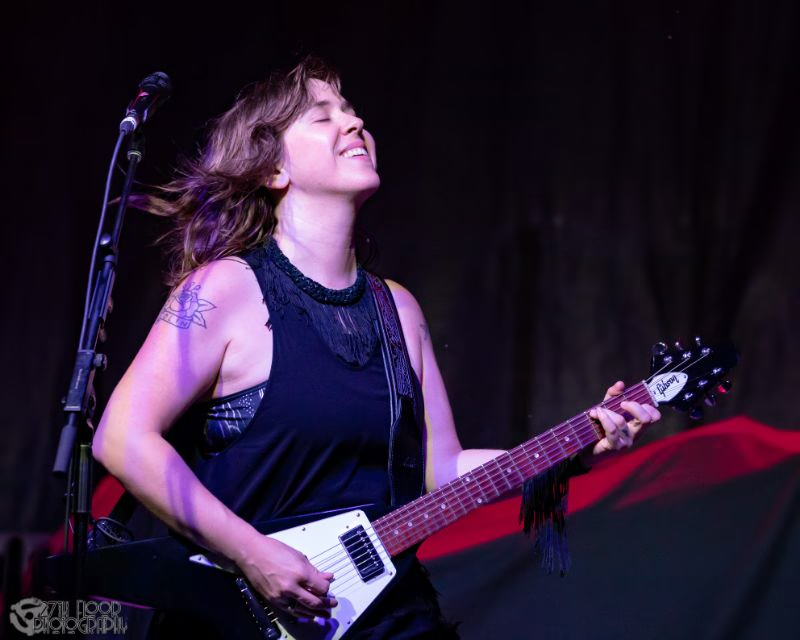
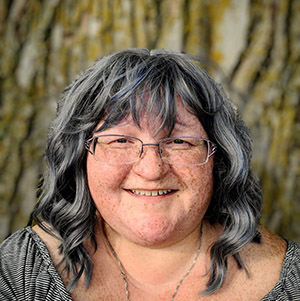
The heat in Kingsville on Aug. 9 was the kind of heavy, humid air that sticks to your skin and refuses to leave. But for the crowd gathered at the Kingsville Folk Music Festival, the discomfort was a secondary concern. They were there to witness Serena Ryder, a performer who carries a certain gravity that few Canadian artists can match.
Ryder is a multi-platinum powerhouse, a six-time Juno Award winner who usually commands stages much larger and more sterile than a grassy park in a small town. Seeing her here felt like a rare, intimate gift. It was one of only three summer shows she scheduled this season. She isn't officially touring right now, which makes every appearance feel less like a stop on a circuit and more like a deliberate choice.
Sitting down with her behind the scenes, you don't get the sense of a woman obsessed with her own celebrity. She has the SOCAN No. 1 Awards to prove her commercial dominance, but her focus remains locked on the ephemeral nature of the craft itself. We sat down to talk about her last album, *Utopia*, her upcoming work and the percussive heartbeat that drives everything she touches.
I asked her if there is a specific spark that triggers her creative output. She doesn't have a simple answer, and she prefers it that way.
"Well, I feel like that is the indescribable thing that I just feel really grateful for," Ryder says. "I feel like every time I try and put my finger on it, it seems to go away. I just try and not figure out what it is. I feel like a big part of creativity is just being open to it and actually listening to what’s going on around you, instead of thinking about what you’re going to do, more about quieting your mind and being open to what’s happening."
It is a refreshing perspective in an industry that often tries to manufacture "moments" through data and focus groups. Ryder treats her talent like a wild animal that she refuses to domesticate. She’s a listener first.
"Because a lot of the most brilliant things that happen are things that happen without you trying to put your mark on them," she continues. "I feel a lot of the songs that I write and a lot of them were the songs that exist without me. If I’m there—I sound like such a hippie, it’s just hilarious—but it’s like if I’m just present, it kind of comes out, which is awesome."
But if you look at the actual architecture of her music, there is a recurring skeletal structure: the rhythm. From the very start of her career, the beats have been the backbone. She isn't just a singer who happens to have a drummer; she’s an artist who builds from the ground up.
"Oh my gosh. My number one inspiration is rhythm, for sure," she says. "That was a really good segue on your part, because it’s like, okay, if there’s anything that could inspire me to write a song, it’s the beat. It’s the rhythm, because there’s no melody there. There’s no lyrics there, but there’s something that just moves your body, you know?"
This obsession with the percussive elements reached a fever pitch during the creation of her album *Harmony*. For an artist long associated with the acoustic guitar, it was a fundamental shift in how she approached the blank page.
"For me, that’s huge. I kind of discovered that on my second last record, which is called Harmony," she explains. "That was the first time that I ever wrote without a guitar to begin with. I would just listen to the beats and the rhythm. I worked with a producer who was a really amazing drummer, and that was the most exciting thing for me because it was like you could base your song on how your body’s going to move, how people’s bodies are going to move, like the heartbeat, which is awesome."
It makes you wonder why she isn't the one holding the sticks during the live set. She has the timing and the physical energy for it.
I always say that different styles of music are like different languages. You can say the exact same thing, and if you play it in a different style, then it’s almost like it’s a different language. Other people can hear it. ...If you just change the style or the sound of the song, it’s like different people can hear the song in a way that they can relate to.
"All the time," she admits when I ask if she has ever contemplated being a drummer. "I don’t think people would be very happy with it. But I do love bashing on the drums. I play for fun here and there, and it’s one of those instruments I feel like that takes a really long time to get really, really good at. But yeah, no, I love the drums. They’re my favourite instrument, actually. I have a drum kit set up in my studio."
And according to Ryder, we might eventually see her transition from the front of the stage to the riser.
"It’s very, very possible because I just love it so much," she says.
Lyrically, her work has always felt like a series of diary entries, though she is careful about how she frames the "truth." There is a raw, unvarnished honesty in her voice that makes even her most produced tracks feel personal.
"Oh, absolutely. I feel like it’s important for me to be speaking from the heart," she says. "I think it’s important for everyone to be speaking from the heart. I can’t really sing a song if I can’t relate to it. All of my lyrics are very much from the heart and very honest. I don’t necessarily write in actual timeline storylines, like this person, this thing happened. It’s really more based on metaphor and feelings in the moment. I’m a really big fan of poetry and using words to describe feelings and things that have happened to you in a larger, profound way instead of necessarily a story."
This poetic approach was pushed into new territory with "Electric Love." The track is a departure, flirting with electronic textures that felt almost alien to her folk-rock roots. It’s a "sexy dance song" that somehow still feels like a Serena Ryder track.
"That was a song where I went into the studio and my producer just started playing this crazy drum beat and I was like, 'Hey, let’s do a sexy dance song,' because I’ve never done something like that before," she says. "It’s definitely, a little bit more electronic, and even just the melody and stuff like that. It’s this kind of cool, almost froggy, rocky, weird ‘80s kind of sound."
But Ryder isn't content to let the digital production do the heavy lifting. For her current run of shows, she has stripped the song back to its bare essentials. It’s a risky move—taking a track built on electronic pulses and forcing it into an acoustic space—but she views music as a fluid medium.
"But it’s funny because I just reworked a different version of it because I have this new stripped-down band that I’m going to be touring with, which is just me playing guitar, my guitarist, and my drummer. We came up with an acoustic-y, rocky version of the song, which completely changes it as well," she says.
The critique here is simple: "Electric Love" works because of its grit and digital pulse. Stripping it down risks losing that "froggy" 80s edge she worked so hard to create. Yet, Ryder argues that the core of the song is what matters most.
"It was really cool, because I always say that different styles of music are like different languages," she explains. "You can say the exact same thing, and if you play it in a different style, then it’s almost like it’s a different language. Other people can hear it. There are certain people that are like, 'Oh, I’m a country fan,' or 'Oh, I’m a rock fan,' or 'Oh, I’m an R&B fan,' but it’s all melodies and lyrics, and if you just change the style or the sound of the song, it’s like different people can hear the song in a way that they can relate to."
Then there is the mystery of "Got Your Number." Songwriters have a long history of throwing phone numbers into choruses, usually leading to a disconnected line or a very annoyed stranger on the other end of the receiver.
"The 534-6607, that literally just flew off of my lips," she laughs. "You know what? I’m sure it is somebody’s phone number, and I apologize to them. I’ve often wondered, I’m like, has anybody tried this number? Should I try this number?"
As for what is coming next, the gears are already turning for a new record. She isn't rushing the process, opting instead to let the songs breathe before heading into the studio.
"With the new album, I think we’re going to start working on it at the end of November, beginning of December. But right now, it’s kind of just been a writing process," she says.
Picking a setlist from a decade of hits is a logistical nightmare, especially when you are as prolific as Ryder. She is the type of writer who leaves dozens of tracks on the cutting room floor for every one that makes the final cut.
"I wish I could play them all, but you guys would be there for, like, a week," she says. "My last record, I wrote almost 100 songs before I put the 14 songs that went on the record. But I try and think about if I’ve been there before, what I’ve played before, what people are like there, what they’re into, what I know about them, what I know about the place. Also, if I know there’s been certain songs that have been played on the radio, I want people to be able to feel like they know the songs that I’m playing. If I could figure out the songs that people loved and knew, I would just play those songs."
She has even considered using social media to bridge the gap between her own artistic desires and the expectations of the crowd. It’s a way to ensure the connection remains two-way.
"I’ve thought about even having just little things where I send out messages and be like, 'Okay, what songs should I put on my set list, Kingsville?' Which maybe I should do like, 'Hey, which ones do you guys want to hear?' Because now in a time of social media, it’s like there’s no guessing for anything," she says. "But I definitely like to play as many songs as people feel like they can relate to and know. Because there’s nothing better than going to a concert and being able to sing the words and know the songs that the artist is playing."
It is a refreshing lack of ego. Many artists of her stature get bored with their own hits, opting to play obscure covers or unreleased material that leaves the casual fan feeling like an outsider. Ryder isn't interested in that kind of alienation.
"I know a lot of artists that are touring and stuff, they kind of get sick of their own stuff and just do a lot of covers or play things that people have never heard. I feel like that leaves people alienated in a way," she says. "I like to balance it out with the things that I want to play for myself and the things that are for everybody else as well, because that makes the evening really great for me. I’ll put in as many, I guess you could say quote-unquote hits as possible, ones people know, and then balance it out with a few little surprises, a few little nuggets there that people will be like, 'Oh, what’s this? I haven’t heard this like this before.'"
In the end, Ryder’s appearance at Kingsville was exactly that: a balanced, rhythmic, and deeply personal display from a singer who still treats every stage like it's the only one that matters.