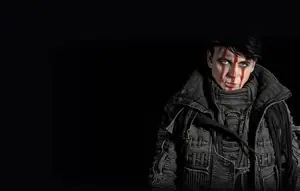
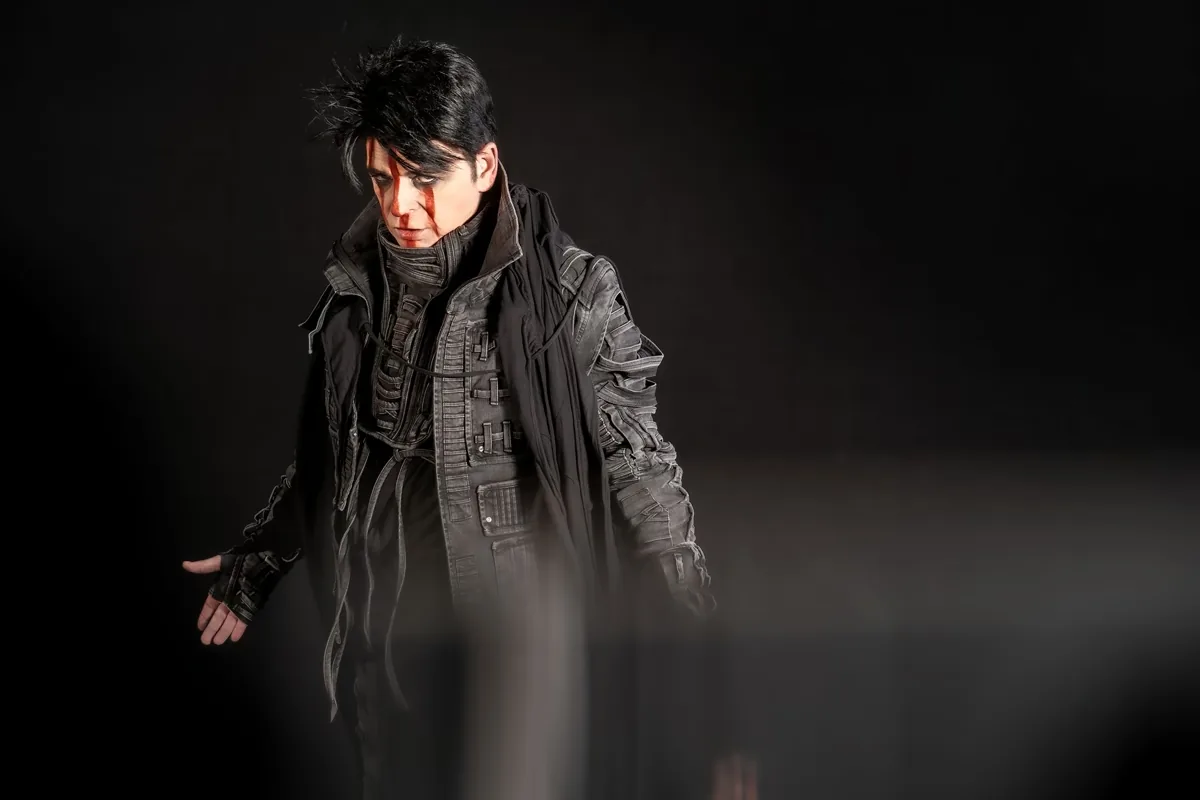
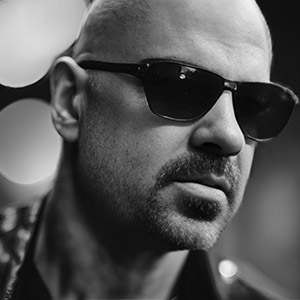
Looking at the raw transcripts from this 2021 conversation with Gary Numan is to witness an artist in a state of profound self-awareness. At the time he was promoting Intruder a brutally elegant and thematically dense album that continued the career renaissance started years earlier. But this wasn't just another album cycle. This was Numan cementing his position not as a legacy act trading on nostalgia but as a vital creative force grappling with the anxieties of the modern world.
The central conceit of Intruder is both simple and devastatingly effective. It is the Earth itself given a voice. A vengeful angry and betrayed voice. “It's written from the point of view of the planet” he says. “If the planet could speak what would it say about what's going on at the moment? How does it feel? Is it disillusioned? Is it disappointed? Is it hurt? Does it feel betrayed? Is it angry?” This personification of our dying world lifts the subject of climate change from scientific abstraction into a visceral emotional narrative a classic Numan move that has defined his best work for decades.
But the origin of this planetary rage is surprisingly intimate. It came from a poem written by his then 11-year-old daughter. “Her poem was about the earth speaking and you were speaking to the other planets and talking about how horrible people were and all the terrible things that we were doing” he explains. “And I thought that's it. That's sort of the angle that I've been looking for. And so I just sort of stole the idea completely unashamedly stole the idea and turned it into an album.” He's quick to note she received full credit and a paycheque for her unwitting contribution a detail that speaks volumes about the man he's become.
This thematic focus on climate change across two consecutive albums however wasn't born in a vacuum. Numan pinpoints a specific political moment as the catalyst. The one that turned a general concern into a creative obsession. That moment was Donald Trump. He candidly connects the dots between Trump’s ascendancy and the creation of both 2017’s Savage (Songs from a Broken World) and Intruder.
He recalls the global unity around the Paris Accord feeling like a historic step forward only to see it dismantled by rhetoric he found appalling. “And then fucking Trump comes along and just obliterates it all” Numan states with palpable frustration. “I was pretty taken aback by that and that made me want to write more about it.” It was a reaction a necessity. The art became a form of protest a way to paint a picture of the dystopian future Trump’s ignorance was courting.
The final analysis is startlingly direct. “Intruder and Savage in a sense I suppose owe their existence to Trump's ignorance in a way” he reflects. “It all goes back to him. I wonder you know if he'd never announced he was gonna run for president and hadn't said all that stupid stuff whether I'd ever written Savage and therefore probably wouldn't have written Intruder.” It’s a stunning admission of how external political forces can shape an artist’s entire creative trajectory.
And yet while his music was reacting to American political chaos his move to Los Angeles was driven by something far more personal and mundane. He’s quick to debunk the rumours that he fled a broken Britain. The truth was a combination of his wife’s long-held dream to live in LA and his own midlife crisis triggered by turning 50. The real enemy wasn't a political party. It was the famously dismal British weather.
I really thought my career was over in '92. So when I made Sacrifice sacrifice was made as a hobby.
“I became very anxious about getting older about the time I had left to me” he confesses. “And the problem in Britain and it and it sounds like a really small glib reason but the weather is so shit that I got frustrated. I felt like I was wasting my life.” It was a desperate need to feel the sun to live an outdoor life and not have plans perpetually cancelled by rain. The move was about maximizing the days he had left not escaping a particular government.
This entire period marks a remarkable second act what he readily agrees feels like a renaissance. To understand its significance you have to look back at the wilderness years. After the meteoric success of the late ‘70s his career entered a prolonged nosedive. By the early ‘90s it was over. He was without a record deal and buried in debt. “I really thought my career was over in '92” he says. “So when I made Sacrifice sacrifice was made as a hobby.”
That 1994 album Sacrifice became the turning point. Freed from the pressure of trying to write a hit for radio or appease A&R men he rediscovered the pure joy of creation. “I went back to making music for the love of it again for the fun of it” he explains. That album’s dark industrial sound was the authentic Numan re-emerging from the wreckage. It was the first album since 1979 to perform better than its predecessor and it set the template for everything that followed.
The struggle to get back taught him lessons the initial explosion of fame never could. “The struggle makes you appreciate where you are” he asserts. “It makes you more appreciative of the PR teams the work that the labels put in and all the people that help you make an album successful. I'm so much more aware of that now than I was before. So I'm just a better person, I think.” It's this hard-won perspective that makes his current success so much more satisfying for him.
Of course no conversation can avoid the long shadow cast by his most famous song. He is gracious but firm about his relationship with “Cars”. While proud of its longevity and grateful for the financial security it provides he bristles at the idea of it defining him. “As a song that would sum up me musically I think it's way off actually” he insists. “Club Cars is the closest thing to a happy song that I ever wrote. And it's about road rage.” It’s a fantastic pop anomaly in a catalogue defined by atmospheric dread and complex concepts.
That discomfort with his biggest hit is understandable when you consider his evolution as a performer. He describes his early stage presence as “very very awkward” and uncomfortable. Now it’s the opposite. Four decades of touring have transformed the stage into his natural habitat. “I'm more comfortable standing on stage than I am having a dinner” he jokes. “I'm just totally in my element there now.” All the anxieties have been replaced by a calm confidence born of experience.
This self-possession extends to his relationship with the digital world. In an era where artists live and die by online engagement Numan is completely detached. He doesn't read comments or seek validation from social media. “I don't need the negative shit and I don't need the positive shit” he says flatly. “I'm not fed by that. I've got my wife. I've got my children. I've got my life. I do my albums. That's all I care about.”
His primary concern with the online world is for his children who are just starting to navigate its treacherous landscape. “You cannot base your self-esteem on the opinions of strangers” he warns a lesson he tries to impart to them. “You've got to have your own judgment your own value as to what who you are and what you do.” It is the wisdom of a man who has survived the highest highs and lowest lows of public life and found peace on his own terms.
As for the future he's contemplative. The pressure to follow up a successful album is real and he admits to finding the process increasingly stressful. He speaks of a desire to write novels a creative ambition that music has consistently pushed aside. But the pull of the road remains strong. For now the renaissance continues a testament to an artist who found his voice lost it and then fought like hell to get it back stronger than ever.
519 Magazine Archive: We are thrilled to officially unearth the 519 Magazine Digital Vault. This isn't just a re-post; it's a high-fidelity restoration of a pivotal era in music journalism. By pairing original print dates with modern retrospectives, we’re bridging the gap between historical rock-and-roll grit and the lightning-fast performance of today’s web. These stories—once locked in physical print and lost URLs—are now back, fully searchable, and optimized for a new generation of fans.
We are thrilled to officially unearth the 519 Magazine Digital Vault. This isn't just a re-post; it's a high-fidelity restoration of a pivotal era in music journalism. By pairing original print dates with modern retrospectives, we're bridging the gap between historical rock-and-roll grit and the lightning-fast performance of today's web. These stories—once locked in physical print and lost URLs—are now back, fully searchable, and optimized for a new generation of fans.