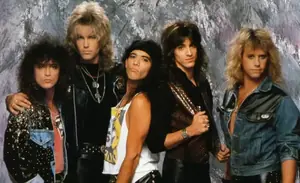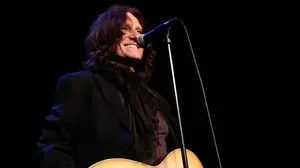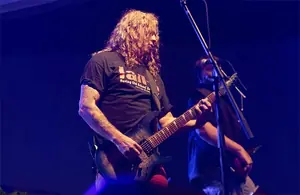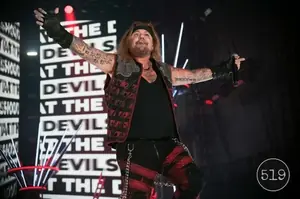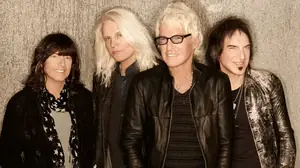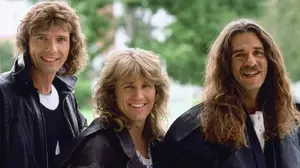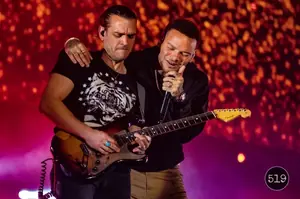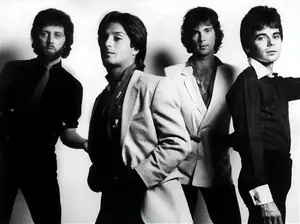
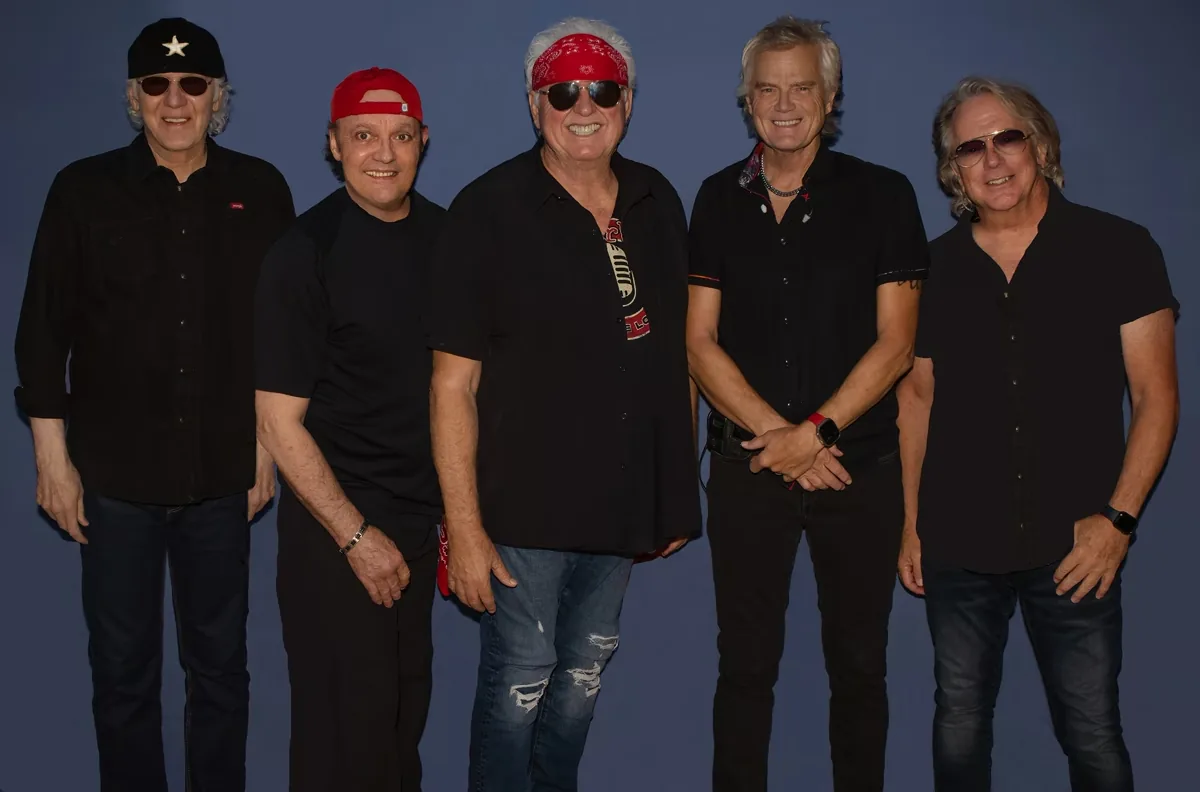

Looking at the raw transcripts from this 2018 conversation with Loverboy’s Paul Dean is to look at a working artist grappling with legacy. By then the band was a well-oiled machine on the casino and summer festival circuit, a reliable draw for anyone craving the Day-Glo punch of 80s AOR. But behind the iconic red leather pants and sweatbands was a group of musicians nearing their 40th anniversary, a milestone that prompts a certain level of reflection on what it takes to survive four decades in a notoriously fickle industry.
When this interview was conducted, Loverboy was on the cusp of that anniversary. Paul Dean and singer Mike Reno first connected in Calgary back in 1978. It’s a number that even Dean seemed sobered by. “We're coming up to 40 around Christmas time, I guess. Wow. That's pretty sobering,” he says. The secret to that longevity isn’t some mystical rock and roll formula. It’s far more pragmatic and, frankly, more difficult. It’s about knowing when to back off.
“We learn when people need space and when we need to get in each other's space. There's times for that, too,” Dean explains. And that’s the core of it. A band isn’t just a creative entity; it’s a small, dysfunctional business, a rolling family that has to navigate ego, finance, and fatigue. Dean admits they’re all emotional guys, but a shared sense of positivity and a profound respect for what they’ve built keeps the ship afloat. “We know we got a good thing going. So, there, that's a really important thing, too. I mean, who would wanna jeopardize what we got going? Seriously, it's pretty incredible.”
That pragmatism extends to the very concept of being a “rock star”. When the label is applied to him, Dean almost laughs it off. “Hardly. I'm just a guitar player,” he counters. He sees the modern pop landscape and understands the term has shifted. The larger-than-life swagger of the 70s and 80s rock god has been supplanted by a different kind of celebrity. But he also recognizes the effect they have on their audience.
“I see it when people, sometimes when people meet us, especially backstage at the meet and greet, people go crazy,” Dean reflects. “It's just funny how it affects people. It affects me. Like I said, it affects me, too. You know, if I were, if I had an opportunity to meet Paul McCartney, it would be like instead of paying.” It’s a fascinating paradox: the artist who rejects the label but fully understands its power from a fan’s perspective. He’s just a dad, a guitar player, but to the crowd, he’s the architect of their high school soundtrack.
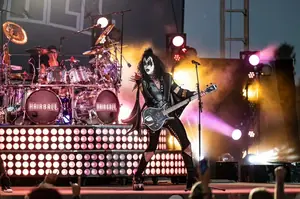
But it wasn’t always sold-out amphitheatres and adoring fans. Dean’s memory of the band’s very first gig is a brutal and hilarious lesson in winning over a hostile crowd. In 1979, they landed an opening slot for KISS in Vancouver. There was no album, no radio play, no promotion. They were complete unknowns thrown to the wolves of the KISS Army. The reception was exactly what you’d expect.
“We were being pummeled by toilet paper rolls, which, as it turned out, was a lot better than the next week when we started playing the clubs around Vancouver. People were throwing ice cubes and rat tail combs, quarters at us,” he recalls. It was a trial by fire made even more chaotic by the fact they were breaking in a new bass player, the late Jim Clench of April Wine, who had only had a handful of rehearsals.
The pressure was immense. And it led to a moment of pure stage panic that has since become legend within the band. During their breakout song, a flustered Clench leaned over to Dean mid-intro. “I remember him coming over to me in the beginning of ‘Turn Me Loose’ and he goes, ‘How's that go again?’ I go, ‘Oh yeah. Okay. Got it,’” Dean laughs. “Imagine not—I mean, now you look back on it, it's such an iconic baseline. Who could forget that baseline? But it's just a pressure thing.”
I remember him coming over to me and in the beginning of ‘Turn Me Loose’ and he goes ‘How's that go again?’ I go Oh yeah. Okay. Got it.
That pressure to perform is constant, but the industry itself has changed entirely. Dean’s solo album Hardcore had finally become available on streaming services, a clarification he’s keen to make. It had been on iTunes for purchase, but the all-you-can-eat model of Spotify and Apple Music was a different beast. His perspective perfectly captures the artist’s dilemma of the late 2010s.
“From a songwriter royalty-making guy, not so great,” he admits bluntly. “But as a fan, as a music fan... Spotify is great.” It’s the central conflict of the digital age: unprecedented access for listeners at the expense of creators’ compensation. Dean’s enthusiasm for the platform isn’t just about convenience; it’s about discovery, even rediscovering his own past. He speaks with genuine excitement about finding old radio serials from his pre-TV childhood in Calgary, a nostalgic trip back to a time when families would gather around the radio. It’s a poignant tangent that reveals a deep love for the art of audio itself.
The conversation about his solo work also unearths a fantastic piece of 80s rock history. The track “Sword and Stone” from Hardcore came to him through legendary songwriter Desmond Child while Dean was in New Jersey writing with Jon Bon Jovi and Richie Sambora. Child had co-written the track and offered it up. “He said, ‘This is available if you wanna record this. KISS don't wanna do it for some reason,’” Dean explains. Mike Reno didn’t feel the song suited his style, so Dean claimed it for his solo project.
This is how the machinery of 80s arena rock worked. It was a world of professional hitmakers, creative partnerships, and songs that passed from one superstar to another. It also underscores the specific creative dynamic within Loverboy; if a song wasn't in Mike Reno’s lane, it didn't make the cut, which is what fueled Dean’s solo output.
At the time of this interview, Dean was deep into his third solo album. He described it as stylistically diverse, much like Loverboy’s debut, with ballads, hard rock, pop, and even reggae. It was a passion project featuring a track with Greg Godovitz of Toronto legends Goddo and a song that mapped a tour across Canada from Vancouver Island to Newfoundland. It was the sound of an artist stretching his wings, free from the constraints of a band identity.
When asked about the possibility of a new Loverboy album, however, the answer was a swift and definitive “Nope.” His focus was on his own material. This wasn’t a sign of acrimony, but an acknowledgement of reality for a legacy act. The real business was on the road, where the hits paid the bills. The creative energy for new material was a personal pursuit.
And the road is where Loverboy truly thrives. Dean pushes back against the idea that they are a nostalgia act, playing the same parts note-for-note every night. He argues that the simplicity of their song structures allows for improvisation and freedom, making each show unique. “I always compare it to a heavy metal riff band, and the band is—I mean, everything is so regimented,” he says. “If you've got two guitars playing exactly the same riff, if one guy changes it, it's just gonna fall apart. But we're not like that.”
It's this interplay that keeps it interesting for them. A subtle change, a different fill, a new vocal harmony. It's a conversation happening on stage between musicians who have shared that space for 40 years. They are listening intently to one another, a band in the truest sense of the word.
The conversation eventually turns to Windsor itself. Dean recalls a brutally hot outdoor show in Ontario where Ra “Smitty” McGuire of Trooper was carried off stage after collapsing from the heat, before correcting himself that the incident happened in a different city. But he remembers Windsor’s proximity to Detroit, a key American market that helped break the band.
He even has a photo on his phone taken from the Detroit side at sunset, looking across the river at Caesars Windsor. It’s a perfect image for a band like Loverboy: a Canadian institution whose success was always intertwined with the massive American rock market just a stone's throw away. They were coming back to play that very building, a testament to their cross-border and cross-generational appeal.
The interview concludes with Dean’s deep respect for his bandmates, particularly his frontman. He praises Mike Reno’s incredible voice and his comedic timing on stage. “He's scary good,” Dean says with genuine admiration. “It's just for an old mother, he can really sing.” It’s the kind of affectionate jab you can only make after four decades together.
Revisiting this 2018 dialogue provides a clear snapshot of a Canadian rock icon. Paul Dean is a man with no illusions about the industry, a craftsman who respects the legacy he helped build, but who refuses to be creatively stagnant. He is still writing, still producing, and still finding joy in the simple act of playing guitar on stage with his friends. The machine keeps working.
519 Magazine Archive: We are thrilled to officially unearth the 519 Magazine Digital Vault. This isn't just a re-post; it's a high-fidelity restoration of a pivotal era in music journalism. By pairing original print dates with modern retrospectives, we’re bridging the gap between historical rock-and-roll grit and the lightning-fast performance of today’s web. These stories—once locked in physical print and lost URLs—are now back, fully searchable, and optimized for a new generation of fans.
We are thrilled to officially unearth the 519 Magazine Digital Vault. This isn't just a re-post; it's a high-fidelity restoration of a pivotal era in music journalism. By pairing original print dates with modern retrospectives, we're bridging the gap between historical rock-and-roll grit and the lightning-fast performance of today's web. These stories—once locked in physical print and lost URLs—are now back, fully searchable, and optimized for a new generation of fans.