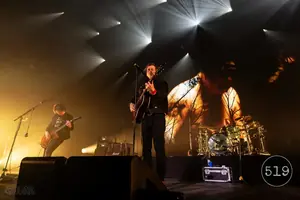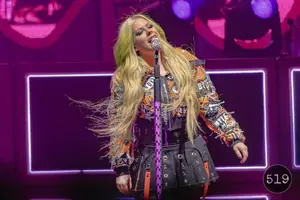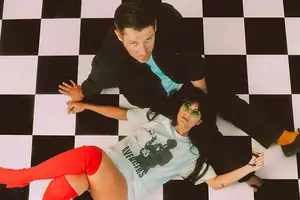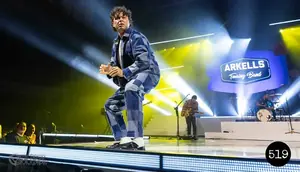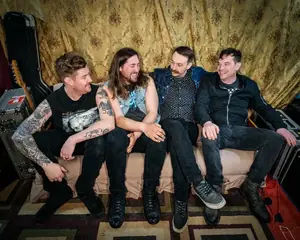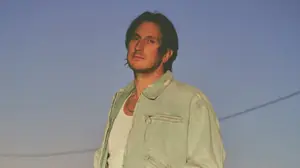
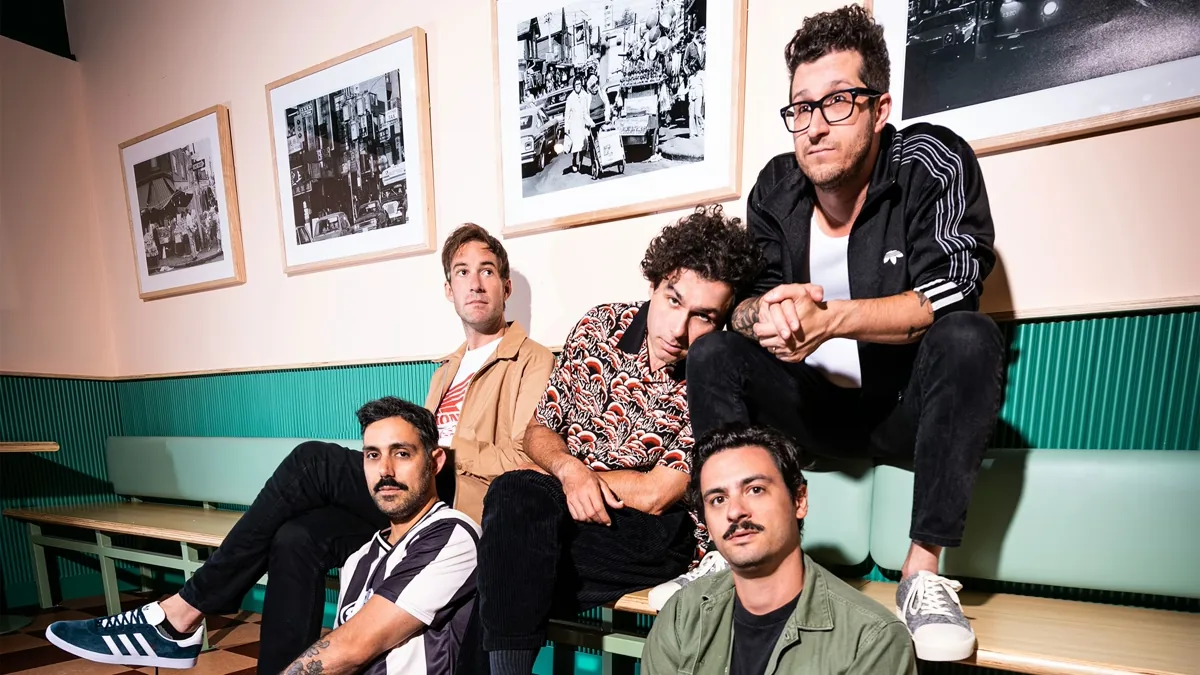

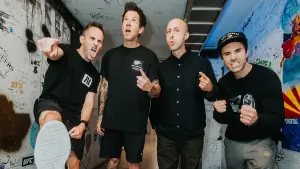
Looking at the raw transcripts from our July 2018 conversation with Max Kerman is like unearthing a blueprint. The Arkells weren't just on the road supporting a record; they were on the cusp of a coronation, solidifying their place as Canada's most essential arena rock band. Their single “People’s Champ” had just landed, a politically-charged, horn-drenched anthem that felt less like a song and more like a mission statement for the era to come. It was a snapshot of a band hitting a new gear, fueled by equal parts civic frustration and uncontainable joy.
At the time, the band was a perpetual motion machine, a strategy Kerman saw as fundamental to their identity. They were gearing up for Sarnia’s Bluewater BorderFest, a return to a city they hadn't played since the old Bayfest days back in 2011. But the location was almost secondary to the philosophy. The grind was the point. Kerman’s logic was sharp and unsentimental, a direct critique of peers who vanish for years on end. “If you wanna be in a touring rock and roll band, you gotta tour, and that's the best way to stay connected to fans that are interested in your music,” he says. “You see bands take maybe too much time off and then they don't kinda hold on to those really kinda special relationships they've built up with cities over the years.”
For Arkells, that connection was everything. It was the currency they dealt in and the reason their ascent felt so organic and earned. They weren't just dropping into towns; they were nurturing ecosystems of fandom, one show at a time.
But the road warrior life was colliding with real life. Arkells' touring keyboardist Tony Carone had just become a father in June, a development that would ground a lesser band. Instead, Arkells were adapting their model. The hedonistic chaos of rock mythology was being replaced by a sustainable, family-aware pragmatism. Kerman was calling from home, illustrating a new reality where summer touring meant weekends on the road and weekdays with family. It was a necessary evolution.
“If you look at a lot of touring bands that have been doing it for a long time, whether it's Jim Cuddy and Blue Rodeo or the Foo Fighters or whoever, it's like a lot of them have kids,” Kerman explains. “That's just the nature of their dad's work.” The band’s casual policy was simple: if family could join, they were welcome. It was a modern solution to an age-old industry problem, repositioning the tour bus from a pirate ship into a mobile family station wagon.
That sense of community and responsibility bled directly into their new music. “People’s Champ” was no accident. It was a direct salvo against the political climate of the day, born from a deep-seated frustration with the occupant of the White House. “It was sort of partly inspired by Donald Trump and our disappointment that he was the guy in charge,” Kerman admits, laying bare the song’s origins. This wasn't a band chasing a trend; it was a group of engaged citizens using their platform for commentary.
And it fit perfectly within their canon. This was the same band that gave us “Whistleblower” and “Cynical Bastards.” The political thread has always been woven into the Arkells' DNA. “The things that fire us up enough to sit in front of a piano or to get together and jam are things that make good songs,” Kerman says. “If we see something troubling, we usually like to talk about it amongst ourselves, and sometimes that makes its way into a song.”
The things that fire us up enough to to sit in front of a piano or to get together and jam things that make good songs. And if we see something troubling, we usually like to talk about it amongst ourselves, and sometimes that makes its way into a song.
The track cleverly defines its hero by first identifying the villain. But in conversation, Kerman pivots to the positive, revealing the values that truly underpin the band’s ethos. He speaks not of celebrity heroes but of the everyday champions in his own life. “My mom's a high school teacher, my dad's a social worker,” he offers. “I was raised with a lot of really good, generous, selfless people around me, and I usually try to think about those people because those are the kind of people that ultimately give me strength and perseverance and a good attitude on life.” It’s a profoundly grounding statement that reframes the song from a simple political jab into a celebration of civic virtue.
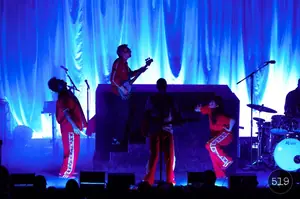
The accompanying video, directed by photographer Matt Barnes, was a masterstroke of chaotic energy. It was a vibrant, inclusive spectacle featuring a cast of characters from all walks of life—a dancing cop, a construction worker, a young girl on a bus. It was a visual feast that mirrored the song’s message. “It was important to us that it wasn't just the band in the video,” Kerman notes. “It was the people from all walks of life.”
The aesthetic, with its nods to 70s R&B and a lineup of characters that felt one step removed from the Village People, was intentional. It was about capturing the band’s live spirit. “The best moments of our live show are like kind of joyful, chaotic energy,” he says. “And I think Matt, the director, captured that pretty well in the video.” While the execution was brilliant, its overt theatricality ran the risk of being read as pastiche, a colourful costume that could almost distract from the song's sincere political heart.
At the time of our call, the album we would come to know as Rally Cry was literally hours from completion. “We should be getting the masters today for the new record,” Kerman revealed. “People’s Champ” was the lead single, but it was also a product of a new, more agile creative process. He spoke of the old model of album cycles as being hopelessly out of date.
“The old model of, you know, waiting till you have your songs assembled and then putting them out and then not doing anything for a couple years is, I think, a little antiquated,” he argues. Their experience with “Knocking at the Door”—a song recorded six months after Morning Report came out and added to a deluxe edition—was proof. The track became one of their biggest hits, a real-time validation of their nimble strategy. They understood that in the streaming era, you had to move at the speed of culture.
Of course, no conversation about Arkells is complete without touching on Hamilton. The city isn’t just their home; it’s their muse and their anchor. Kerman places them in a lineage of Canadian artists inextricably linked to their geography, citing Joel Plaskett’s connection to Halifax and The Weakerthans’ to Winnipeg. “I think every artist who's writing from a place of honesty just naturally will be talking about the place they're from,” he says. It’s why their story feels so authentic.
Even their name is a piece of local lore, plucked from Arkell Street, where Kerman and guitarist Mike DeAngelis lived as students at McMaster University. Kerman laughs about the name’s origins, saying, “Arkell kinda sounded like a sixties duo girl group to us. That's why I went with it.” It’s a humble, almost accidental beginning for a band that would come to define its city.
That definition reached its apex with The Rally, their massive hometown show that saw them sell nearly 24,000 tickets. It was more than a concert; it was a civic event, a homecoming that cemented their status as local legends and national treasures. “We really felt the love of the city,” Kerman reflects. It was the ultimate validation for a band that had poured its hometown's grit and spirit into every song.
This 2018 interview captured a band in perfect sync with its moment. They had figured out how to write stadium-sized hooks about real-world anxieties. They were balancing the demands of the road with the needs of their families. And they were about to deliver an album that would serve as the soundtrack for a generation of fans looking for something to believe in. They were already champions of the people. Rally Cry was just the victory lap.
519 Magazine Archive: We are thrilled to officially unearth the 519 Magazine Digital Vault. This isn't just a re-post; it's a high-fidelity restoration of a pivotal era in music journalism. By pairing original print dates with modern retrospectives, we’re bridging the gap between historical rock-and-roll grit and the lightning-fast performance of today’s web. These stories—once locked in physical print and lost URLs—are now back, fully searchable, and optimized for a new generation of fans.
Get Tickets

We are thrilled to officially unearth the 519 Magazine Digital Vault. This isn't just a re-post; it's a high-fidelity restoration of a pivotal era in music journalism. By pairing original print dates with modern retrospectives, we're bridging the gap between historical rock-and-roll grit and the lightning-fast performance of today's web. These stories—once locked in physical print and lost URLs—are now back, fully searchable, and optimized for a new generation of fans.