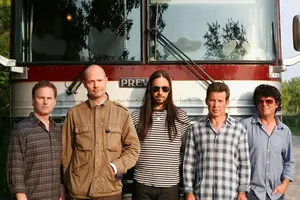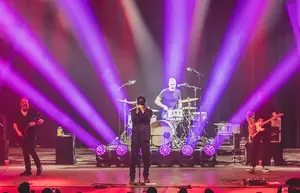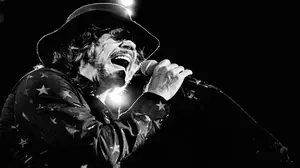
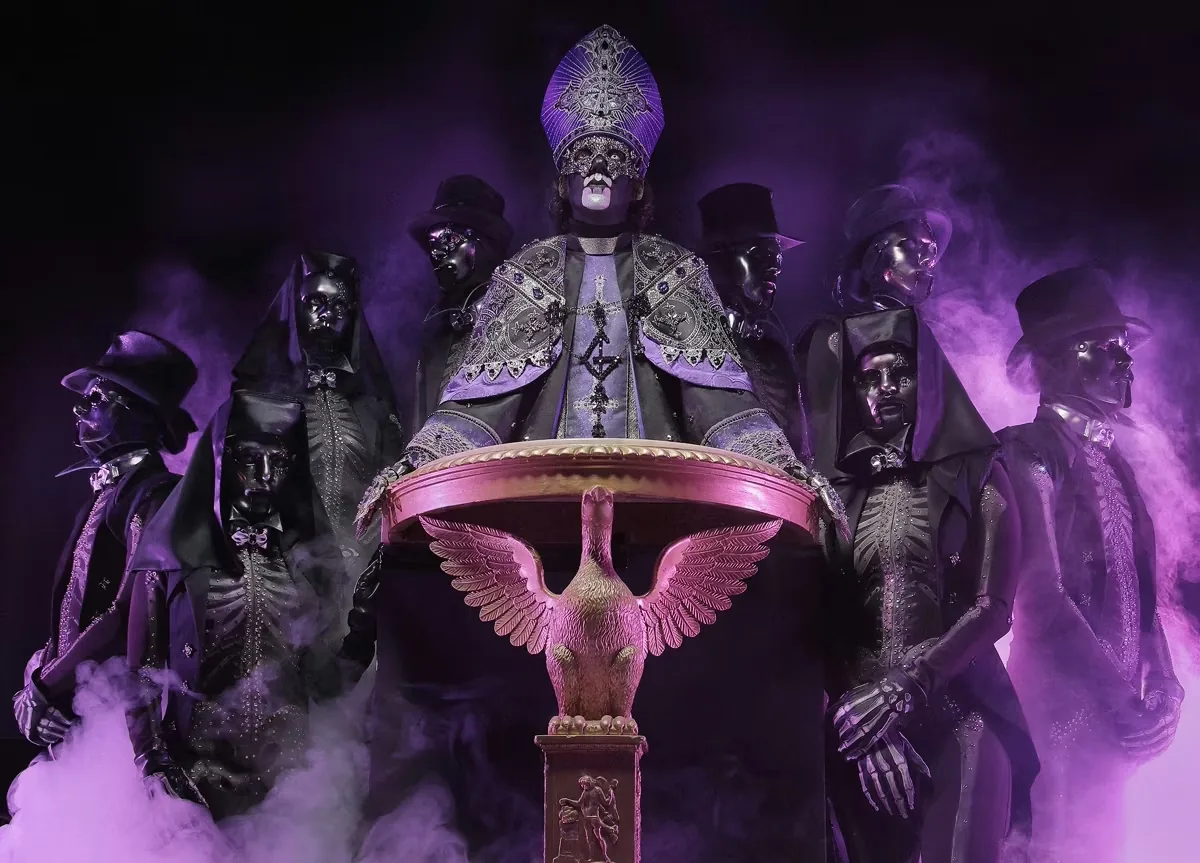

Looking at the raw transcripts from this Aug. 2019 conversation with Tobias Forge offers a fascinating snapshot of a band in transition. Ghost was on the absolute precipice of a new era. They were gearing up for “The Ultimate Tour Named Death” a run that would cement their status not as a theatre act but as a legitimate arena headliner. The Swedish phenom had already conquered clubs and mid-sized venues. But this was the moment they made the jump to the big rooms—a move that often breaks bands with less conviction or a weaker stage show.
Forge was keenly aware of the stakes and the necessary evolution. The previous tours, while successful, were plagued by what he saw as maddening inconsistency. The production was a crapshoot dictated by the limitations of each historic theatre. Now, with a full arena production, he could finally execute his singular vision without compromise every single night. It was about leveling the playing field for fans.
“We're giving the same show to everyone,” Forge says with palpable relief. “And that, for me, is a big, big, big step up.” The frustration with the old model was clear. He notes how only major markets like New York, Los Angeles, and Montreal got the full spectacle on the last run, while other cities got a pared-down version. This tour was a declaration of intent: whether you were in Hamilton or Fargo, you were getting the definitive Ghost experience complete with pyro and full staging.
And it wasn’t just about the hardware. Forge emphasizes the shift in energy that comes with an arena floor. He critiques the staid nature of seated venues, arguing for the raw power of a general admission crowd. “You get a completely different vibe,” he explains. “The whole vibe is so much more vibrant and, sort of, yeah. Way more in tune with the music rather than people sitting and standing and being, you know, bound to their little confined space.” It’s a crucial insight into his understanding of rock theatre. The audience isn't just a passive observer; its energy is a vital component of the ritual.
The conversation then pivots to another kind of product: the deluxe reissue of their 2018 album Prequelle. Forge is surprisingly candid about the business realities that led to the initial version feeling incomplete. The full artwork wasn’t ready, and the machine had to keep moving. Delaying the record was simply not an option.
“That would mean indefinitely pushing the record into oblivion, basically,” he admits. “Of course, we're not gonna do that because we had tours booked. We had everything.” This deluxe package wasn't a cash grab but a course correction—an attempt to present the album as it was always intended, with its full graphic and thematic scope. It’s a rare look behind the curtain at the logistical pressures that even a meticulously planned project like Ghost must navigate.
From high art to pure commerce, the discussion turns to the band’s infamous merchandise, particularly the Cardinal Copia plushie doll. Forge’s story of its creation is a hilarious and humanizing moment. He paints a picture of a relentless business machine presenting him with endless product opportunities, most of which he rejects.
The plushie, however, slipped through. He recalls his initial detached approval, only to be confronted with the final product months later. “You see a picture of this plushie online and you're like, what the flying fuck is that?” he laughs. “It's one of the most horrendous things I've ever seen. But, you know, so that's that's the plushie story.” It underscores how the Ghost brand had become a phenomenon unto itself, sometimes spinning into territories even its creator finds surreal.
It's some sort of weird match between Count Dracula and Jacques Clouseau. And, you know, as a film fan, I love both. So it's, like, it's very fun to sort of play with this sort of as I said, it's a macho man, but still sort of pathetic.
This entire period was the result of a very deliberate strategy. Forge notes the band’s growth in North America has been more “linear” than in other parts of the world where they often relied on festival circuits. In Canada and the U.S., they methodically built their audience from clubs to theatres and finally to arenas. Key support slots with giants like Iron Maiden and Metallica were tactical strikes designed to win over new legions of fans.
He is brutally honest about the purpose of those opening gigs, especially the then-current stadium tour with Metallica. “Let's be real, like you do these tours because you want to expand your brand and your band,” Forge says. The goal was to get a fraction of those 50,000-plus fans to come back for their own headline show. It was a long game, and by the fall of 2019, it was clearly paying off.
The conversation inevitably turns to the characters at the centre of the Ghost mythos. When asked to reflect on the lineage of Papas leading up to Cardinal Copia, Forge is unsentimental. He sees a clear progression in their effectiveness as performers for expanding stages. Papa I was suited for misty clubs; Papa II emerged from the mist; Papa III was a step better. But the Cardinal, he argues, is the best iteration yet for the arena environment.
He doesn’t see them as fully separate entities but as extensions of a specific archetype he’s exploring. “It's some sort of weird match between Count Dracula and Jacques Clouseau,” Forge offers a perfect and insightful description. This isn't just a generic satanic priest; it’s a nuanced character. “As I said, it's a macho man but still sort of pathetic. And that makes him funny because he is sort of cool but in a shitty kind of cheap way.” It’s this blend of menace and absurdity that makes the character so compelling.
Of course, you can’t discuss Ghost without addressing the satanic imagery that defines their aesthetic. Forge is completely unflinching. He dismisses any notion that he had doubts about leaning into that world. For him, it was never a shocking gimmick but a natural extension of his own cultural background.
“I come from the death and black metal underground where any sort of satanic attributes are... you get it. That's sort of, it's just as natural as it just comes with the trade, you know,” he states. The controversy only arose when Ghost began to cross over into the mainstream. “For me, the darkness and the devil and that sort of pop cultural evil was always home turf.”
But Forge’s critique runs much deeper than inverted crosses and spooky costumes. He positions his work as a direct assault on the philosophical failings of organized religion. He sees it as an archaic system of control designed to subjugate humanity. “Linear religion has destroyed so much of our lives for such a long time,” he says with conviction. “And it is really, really crippled our ability to develop.”
He argues its sole purpose was to “make people feel inferior,” a mechanism of power that persists today, albeit in a different form. For Forge, the satanic symbolism is a tool of opposition, not an endorsement of actual evil. He’s using the devil of pop culture, the rebel angel, as a symbol for enlightenment and freedom.
Ultimately, he clarifies that his message is fundamentally humanist. “At the end of the day, what I'm singing about and what I represent has nothing to do with evil,” he insists. “I believe in LGBTQ and freedom and intellectualism, not the opposite. And that the opposite is what the church religion stands for.”
This is the critical detail that many miss. Ghost isn’t promoting evil; it's using the language of theological horror to critique oppression and advocate for a more circular, human-centric philosophy. It’s a far more sophisticated project than the surface-level blasphemy suggests.
This 2019 interview captures Forge at a crucial moment of ascendancy. The vision was locked in, the strategy was working, and the message was becoming clearer than ever. He wasn’t just building a rock band; he was building a new kind of cathedral—a travelling spectacle dedicated to rebellion, intellectualism, and theatrical damnation.
519 Magazine Archive: We are thrilled to officially unearth the 519 Magazine Digital Vault. This isn't just a re-post; it's a high-fidelity restoration of a pivotal era in music journalism. By pairing original print dates with modern retrospectives, we’re bridging the gap between historical rock-and-roll grit and the lightning-fast performance of today’s web. These stories—once locked in physical print and lost URLs—are now back, fully searchable, and optimized for a new generation of fans.
We are thrilled to officially unearth the 519 Magazine Digital Vault. This isn't just a re-post; it's a high-fidelity restoration of a pivotal era in music journalism. By pairing original print dates with modern retrospectives, we're bridging the gap between historical rock-and-roll grit and the lightning-fast performance of today's web. These stories—once locked in physical print and lost URLs—are now back, fully searchable, and optimized for a new generation of fans.