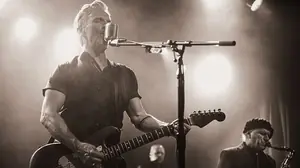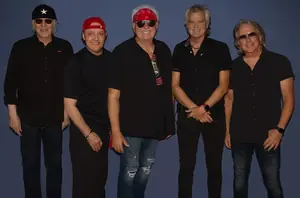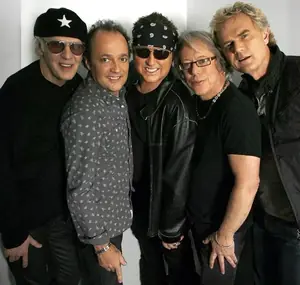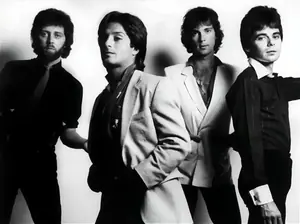
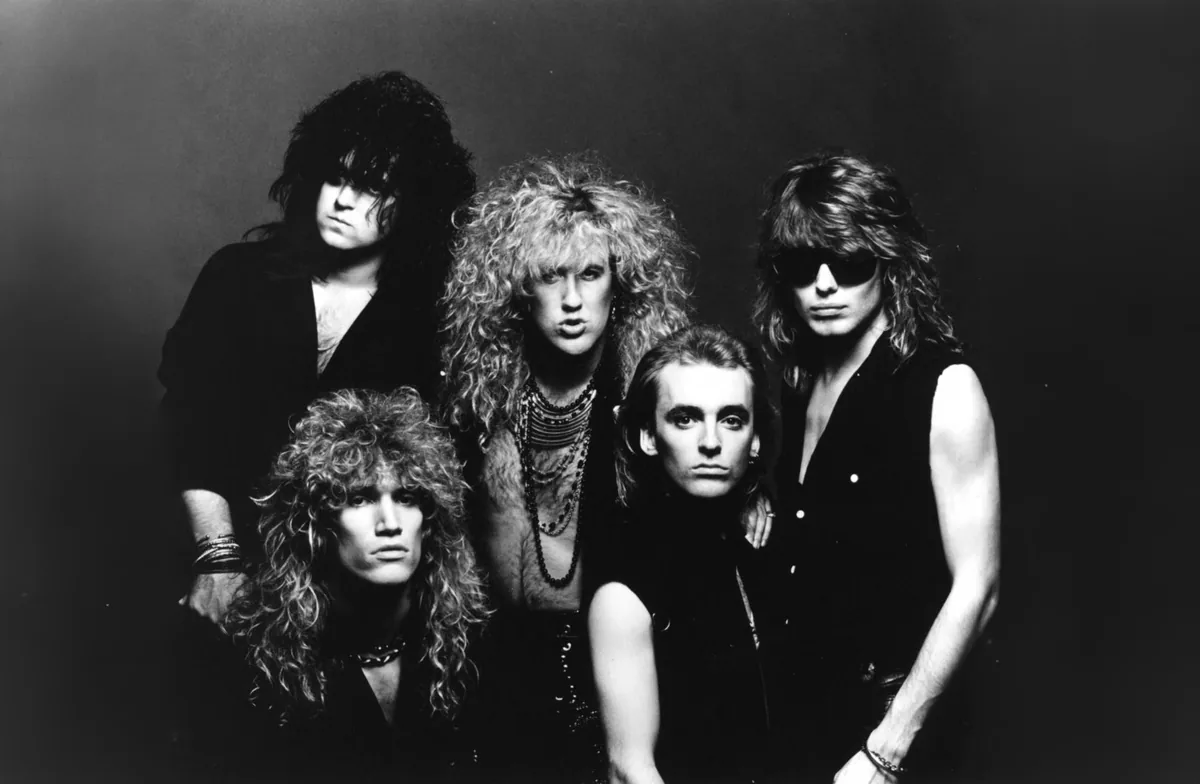

Listening back to these archival tapes from Apr. 23, 2011, is a trip. The digital hiss can’t hide the raw honesty in Jamie St. James’ voice. This was the moment Black 'N Blue was clawing its way back with Hell Yeah!, an album title that felt less like a party cry and more like a sigh of relief. It was a record eight years in the making, a period that saw the entire music industry collapse and rebuild itself. And for a band like Black 'N Blue, a quintessential '80s hard rock act forever on the verge, it was a test of sheer will.
The delay was brutal. It became a running joke, the band’s own miniature Chinese Democracy. But St. James is quick to set the record straight. This wasn't some Axl Rose-esque studio perfectionism. This was life getting in the way, with a vengeance. “It wasn't like we were recording for eight years,” he says, the frustration still audible. “The actual recording process probably took about two months.”
The problems were a death by a thousand cuts. The band was geographically fractured, with Jamie and bassist Patrick Young in Los Angeles while the rest of the guys were up in their native Portland, Oregon. Then came St. James’ four-year tour of duty fronting Warrant, a respectable gig that nonetheless put his main project on ice. The final blow? Guitarist Jeff “Woop” Warner’s studio, the home base for the project, went under. “He lost his studio because of financial problems,” Jamie recounts. “All of a sudden, it’s like, ‘Wow. What are we gonna do now?’”
It’s a classic rock and roll survival story. What’s fascinating is how the album even started. It wasn't a grand reunion plan. It began as a solo deal for St. James with Z Records, a label known for keeping the melodic rock flame alive. But the band’s chemistry, its very DNA, is an inescapable force. “Once Black 'N Blue guys get together, there's nothing else we can do but Black 'N Blue,” he admits. “It's always gonna sound like that.” It’s a telling statement about bands as organisms, where the whole is a sound bigger and more stubborn than any one part.
And that sound is undeniable. St. James pegs it perfectly, saying Hell Yeah! sounds like “the first record meets kinda Nasty Nasty or something.” He’s right. The production is modern, punchy and clean, courtesy of the Frontiers label’s house style. But the songwriting, the riffs and the attitude are pure, uncut 1984 Portland sleaze. It’s a tightrope walk between nostalgia and relevance, and for the most part, they pull it off. They still sound like the same band, a feat after decades apart.
Of course, there’s the thirty-year bond. “We still love each other. We still all get along just fine,” he says. “That doesn't happen every day.” It’s a quiet miracle in a genre littered with broken friendships and lawsuits. But one piece was missing, and his shadow loomed large over the entire project.
Tommy Thayer. By 2011, he wasn’t just Black 'N Blue’s original gunslinger; he was The Spaceman in Kiss, a platinum-plated cog in one of the biggest rock machines on earth. St. James is surprisingly blunt about the situation. He explains Tommy can only do certain things with them, like benefits or their Oregon Music Hall of Fame induction. “Gene's no dummy,” Jamie says with a knowing chuckle. “That's his boy now, so he doesn't let him do too much.” It’s a stark look at the contractual realities that govern legacy rock.
Into those massive shoes stepped Shawn Sonnenschein, a friend of the Portland contingent. St. James is complimentary, calling him an “awesome dude” who “fits in great.” But he also delivers a line that perfectly captures the impossible task of replacing a founding member: “He's been in the band now for eight years. But he's always gonna be the new guy.”
We don't wanna get in a van and drive around and play crap holes. We just don't do that.
The Kiss connection is a recurring theme. It defined their mid-’80s trajectory, and looking back, St. James reveals the strategy behind bringing Gene Simmons in to produce 1986’s Nasty Nasty. It was a defensive move. “I actually was the guy that kind of initiated Gene producing us,” he reveals, “because I just wanted the guy that was gonna protect us from the label, basically. And I knew he would do that.” That’s a veteran move, using a shark to protect you from other sharks.
But the Jamie St. James of 2011 is a different animal. He’s done bowing to labels and producers. “I think we know what we sound like. We know what we want,” he states, a newfound confidence in his voice. “I don't even know if I need a producer anymore.” This was Black 'N Blue taking back control.
That said, some battles you lose. The album’s cover art is a point of contention. St. James is brutally honest about their visual history, stating, “I think a lot of the Black 'N Blue covers suck.” For Hell Yeah!, the band had a photo concept they liked. The label, Frontiers, wanted a graphic. The compromise? The band’s photo was relegated to the back cover. Of the final, slick, metallic image, Jamie is ambivalent. “I don't know what it means, to be honest with you,” he confesses. “I just wanted something that looks good.” It's a pragmatic, if slightly soulless, take on a critical piece of the album package.
The record itself contains its own oddities, like the minute-long lark “Jamie’s Got the Beer.” It’s an inside joke, born from St. James ditching a writing session with the booze to meet a woman. He sounds almost embarrassed by its inclusion. “They recorded it, and I said, ‘You really wanna put that on the record? Okay. Fine. I don't care.’” It’s a rare, unfiltered glimpse into the compromises of album sequencing.
But for all the industry cynicism, there are moments of pure heart. The band’s induction into the Oregon Music Hall of Fame clearly moved him. He expected a stuffy ceremony. Instead, he walked out to a packed Roseland Theater. “Everybody out there standing and clapping and cheering for us and I thought, ‘Woah,’” he recalls. “I never felt so much love from Portland.” It was a hero’s welcome, decades in the making.
The interview also sheds light on another crucial piece of rock history: the band’s Canadian connection. They recorded 1985’s Without Love in Vancouver at Little Mountain Sound with producer Bruce Fairbairn and a young engineer named Bob Rock. This was the team that would go on to define the sound of '80s and '90s stadium rock.
St. James drops a bombshell of a story. “When Bon Jovi heard our record, he said, ‘Oh, I'm gonna use these guys for Slippery When Wet.’ And look what happened with that. And Bon Jovi told me that.” Black 'N Blue, in this telling, are the patient zero for the polished, radio-dominating sound that made superstars of Bon Jovi, Mötley Crüe and Aerosmith. They had the sound first; they just didn't have the luck.
The Canadian influence went deeper, with songwriting contributions from Jim Vallance, Bryan Adams’ legendary creative partner. Vallance co-wrote the hits “Miss Mystery” and “Without Love.” St. James acknowledges their lighter feel. “They're a little lighter compared to a lot of the Black 'N Blue stuff, but I don't have a problem with it,” he says. “If it's good, it's good.”
That pragmatism defined their late-career touring plans, too. No more grinding it out in a van. “We don't wanna get in a van and drive around and play crap holes,” he says flatly. “We just don't do that.” The focus was on festivals like M3 and select, well-paying gigs. It’s the wisdom of a band that knows its worth and its limitations.
Looking back, this conversation captures a band fighting for its legacy. Hell Yeah! wasn’t just another album. It was a statement that Black 'N Blue was still a living, breathing entity, capable of delivering the goods on its own terms. They were no longer the kids from Portland hoping for a break. They were survivors, content to make music for themselves and the diehards who never left. And sometimes, that’s the biggest victory of all.
519 Magazine Archive: We are thrilled to officially unearth the Rockstar Weekly Digital Vault. This isn't just a re-post; it's a high-fidelity restoration of a pivotal era in music journalism. By pairing original print dates with modern retrospectives, we’re bridging the gap between historical rock-and-roll grit and the lightning-fast performance of today’s web. These stories—once locked in physical print and lost URLs—are now back, fully searchable, and optimized for a new generation of fans.
We are thrilled to officially unearth the 519 Magazine Digital Vault. This isn't just a re-post; it's a high-fidelity restoration of a pivotal era in music journalism. By pairing original print dates with modern retrospectives, we're bridging the gap between historical rock-and-roll grit and the lightning-fast performance of today's web. These stories—once locked in physical print and lost URLs—are now back, fully searchable, and optimized for a new generation of fans.