
I’m sitting here with a physical copy of *L.A. Is Mine*, the new record from Richrath Project 3:13, and the weight of it feels like more than just plastic and liner notes. It feels like a debt being paid. Gary Richrath was the combustible engine behind REO Speedwagon, the guy who brought the grit to Kevin Cronin’s polish. When he died in 2015, a specific brand of Midwestern guitar heroics seemingly died with him. But Michael Jahnz, Gary’s long-time collaborator and the voice of his 90s solo era, isn't letting the fire go out.
The history is well-worn but worth repeating. REO Speedwagon formed in 1967 in Champaign, Illinois. It was the brainchild of University friends Neal Doughty and Alan Gratzer. But the band didn't truly find its teeth until 1971. That’s when Gary Richrath, a guitarist with enough ego and talent to back it up, drove 100 miles just to tell the band they were incomplete without him. He was right. His songwriting and that signature Les Paul tone defined their ascent through the 70s and their absolute domination of the early 80s.
By the 90s, the friction between Richrath and the REO machine led to a departure. Gary released *Only the Strong Survive* in 1992 and hit the road hard. Jahnz was there for all of it. Now, years after Gary’s passing, Jahnz is excavating the vaults. This isn't just a tribute act; it’s a posthumous collaboration.
I asked Jahnz about the genesis of this resurrection. He sounds like a man who has spent a lot of time looking at old reel-to-reel tapes.
“It’s very sad that he’s no longer with us but we’re trying to give them a little bit of life here with some of the songs that we worked on a few years back before his death,” Jahnz says. “After we did ‘Only the Strong Survive’ in 92, we did a whole mess of songs that were never put on another record. We planned on putting another record out, it just never happened. I had a lot of the demos that we did in my studio and his studio, and we worked on stuff for a long time. Three or four years ago, the record company said, ‘Why don’t we think about putting out another Richrath album?’ I said, ‘Great, let’s talk about it.’ We went out to L.A. and started working with the old demos that I had, and then COVID-19 hit. Everything got put on hold and the band got antsy so we went into a studio in Milwaukee and finished everything. We had Gary’s guitar tracks pulled off the old demos and there’s songs on the new album that he’s actually playing on and doing some background vocals too and they’ve never been heard before until now. We’re getting a great response to them and I think that our REO Speedwagon/Gary Richrath fans are going to love them.”
The technical hurdle of pulling guitar tracks from decades-old demos is a nightmare. You often deal with hiss, bleed, and varying tape speeds. But the result on *L.A. Is Mine* is surprisingly cohesive. It doesn't feel like a ghost in the machine; it feels like a band in a room.
The lineup Jahnz assembled for this run is a mix of the old guard and fresh blood. You need people who understand the specific language of 70s arena rock. It’s a theatre of bombast and melody.
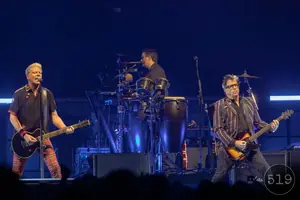
“The band for this album and tour is a combination of veteran and new members featuring keyboardist Scott Weber, a former member of Richrath and member of Project 3:13 since the beginning,” Jahnz explains. “There were a couple members that I played with on and off and the keyboard player has been with me ever since I stopped playing with Gary. Guitarist Dennis Pockets has been in and out of the band over the years and this last step he’s been with us for about three years. He really has got himself a great sound that sounds like Gary and he idolized REO as a kid and he emulates them to a tee. We’re getting such a great response off the Gary songs and the REO songs so he’s really hitting it.”
And they are taking this show on the pavement. Touring a legacy project is a balancing act. You have to satisfy the nostalgia junkies while proving the new material has a reason to exist. Jahnz is currently hitting the Midwest, the ancestral home of the REO sound.
“We’ve been doing some concerts in the Midwest right now to launch this thing and we still do all the classic hits but then we do the new stuff now,” says Jahnz. “We’ll do ‘Golden Country’ and ‘Take It on the Run’ and we recorded ‘Ridin’ the Storm Out’ and ‘Son of a Poor Man’ on this new CD but we do a combination of new songs with the hits. It all depends, I really watch the audience and the new stuff is going over really well, but they still like to hear the classics. We do REO really well. When you play with the guy for so long, it kind of gets etched into your head and your soul.”
But Jahnz isn't a Cronin clone. His vocal DNA is different. He leans into the progressive side of the era—the big, stacked harmonies you’d find in a Styx or Kansas record.
“When I was working with them I had the influences by a lot more vocal bands than just REO,” Jahnz notes. “I was really into Styx and Kansas and bands that had a lot more vocals. Gary saw that in me, but he also wanted to put his touch in it. I do a lot of this stuff that he worked with Kevin Cronin in the early days and I combined them both on the new album. You’ll hear ‘Help Me Save Me from Myself’ and I have a whole choir singing at the beginning of it and that’s all me. And then the band kicks in with the rocking guitar. I think it’s what Gary really wanted. He loved great vocals but he loved to rock and nobody played guitar like him.”
The track “Help Me Save Me from Myself” is the emotional centre of the record. It’s impossible to listen to it without thinking about Gary’s personal struggles. The guy lived the rock star life to the hilt, and it eventually took its toll. The song feels like an open wound.
It’s very sad that he’s no longer with us but we’re trying to give them a little bit of life here with some of the songs that we worked on a few years back before his death. ... We had Gary’s guitar tracks pulled off the old demos and there’s songs on the new album that he’s actually playing on and doing some background vocals too and they’ve never been heard before until now.
“Yes, he did,” Jahnz says when I bring up the autobiographical nature of the lyrics. “I was very close to him and he was one of the nicest guys in the business. He was just a down to earth kind of guy but like anybody else, he had some issues and I think when he wrote the song he didn’t really want to express it. A few years down the road I kind of got it, but then after he passed away I started to get it more and more. I said this has got to be heard, this was Gary. It’s kind of like ‘Son of a Poor Man’ in the beginning of REO. It’s one of my favorite songs and that’s about him when he was in Peoria. ‘Summer Love’ is another one and we do those songs in a set and they go over wonderful.”
The relationship between Jahnz and Richrath wasn't just professional; it was a mentorship. Jahnz started as a bass player and keyboardist in a prog-rock outfit that sounded like Rush. They moved to L.A. looking for the big break and found a legend instead.
“We were really close for many years and he was a mentor to me,” Jahnz says. “When I first met Gary, I was playing bass and keyboards in a progressive rock band kind of like Rush. We moved out to L.A. to try to get a record deal and we ran across Mr. Gary Richrath out of the blue and he came and jammed with us at one of our rehearsals. Everybody knows ‘Ridin’ the Storm Out’ so we started playing that and he’s like, ‘you’ve got to do some demos with me.’ I said I’d love to, so I went into his home studio and started doing demos. He was working on the new REO album at the time with Bruce and Neil, and they had Graham Lear on drums, after Alan departed. He was working with a vocalist and song writer from Nashville and he asked me to sing background on some demos because my voice was so high and he thought I had a good clean voice. Eventually they asked me to do lead vocals, and then another lead vocal and then he told me, ‘You’ve got to put that bass down and start playing guitar.’ I said ‘I don’t play guitar’ and he said, ‘You’re going to.’ So I started playing guitars. I had a nice guitar collection to pick from with Gary’s guitar collection so it was an honor. We became really close friends and one thing led to another and he started doing the solo project. We recorded the album and toured extensively all over North America. He was everything from being a show man to teaching me recording techniques to meet and greets and how you treat people, he was the guy.”
But the 90s were a brutal time for the dinosaurs of the 70s. Grunge had arrived, and the industry had no patience for guys with Les Pauls and leather jackets. The solo project struggled under the weight of a changing market and a lack of label muscle.
“We got the deal to do it and then all they wanted us to do was tour and tour,” Jahnz admits. “We didn’t have a lot of support. Maybe a younger band would have been better than that but he was older, we were getting older and you can’t do that in that scenario. I think we needed more actual support from the record company but it just wasn’t working that way. We didn’t have any videos at the time; we didn’t do anything like that. What’s nice about this thing that I’m doing, the new label is Dark Star Records. We’ve got videos coming out, they’re streaming everything, we’ve got all the current stuff which for a guy like me who’s an 80s rocker, we didn’t do any of that stuff before and that’s what sells, that’s what’s making the money now and going out and touring.”
There is always the question of the "what if." What if Gary had stayed in REO? What if he had gone back? The internal politics of that band were legendary. Kevin was the pop sensibility; Gary was the rock and roll heart. When they split, the balance was lost.
“Yes. 100%,” Jahnz says regarding Gary’s desire to return to the fold. “I mean, he didn’t know if he was taking over the band, because Kevin was doing a solo project. And that’s one of the reasons why he was doing these demos. But the truth of the matter is, I was around the whole time and so was my drummer, but we didn’t know what was going on. It was a day to day thing and then all of a sudden he said, ‘Well, I got some good news and some bad news. The good news is that I was going to be his lead singer; the bad news is I’m not in REO anymore.’ It was pretty nasty for a while but the truth is I have nothing to gain one way or the other except that I’m just trying to do something nice for somebody that I respected and that’s how I look at it and I love to do it too.”
Playing live with Richrath was a different beast. Even as the Seattle sound was taking over the airwaves, the old songs still had a massive pull.
“The grunge was coming out, the Seattle flavour, but you know, those songs, they hold the test of time,” Jahnz says. “I remember some of the songs that I was doing back then because we started out with a real small set and then we kept growing more and more. He didn’t want to play any Kevin songs; he just wanted to play Gary songs and the new ones. I think the first one we started doing that Kevin wrote was ‘Roll with the Changes’ and we were playing out in front of 10,000 people and we kicked into it and the energy was so intense I felt like I wasn’t even on the stage, I was floating. My voice resonates with that, I can really do well with those songs, and it was great. It was a wonderful time for me to be able to experience that, especially with him, and ‘Golden Country’, that’s just awesome. Every time we play it to this day, it’s still the same.”
If there is a technical critique to be made of this new project, it’s that the archival solos occasionally feel a bit thin against the modern, high-fidelity production of the new band. It’s a common issue with "necro-production" where you’re trying to marry 30-year-old demo tape to 2021 digital clarity. But the spirit is there. Richrath’s pride always lay in the raw energy of the early records, specifically 1977’s *You Get What You Play For*.
“When I met Gary, one of his things that he was very proud of was being a co-producer on ‘You Get What You Play For’ and that happened to be the album that I bought when I was a kid,” Jahnz recalls. “I listened to it all the time not ever thinking that I was ever going to play it, I didn’t really know about it, but I listened to it and I loved it. When I met him and started playing with him he had a lot of pride in that album. He would say, ‘I would like to make the band sound like that.’ We did it back then and we carried it to another level in this band. We’re doing ‘Like You Do’ and ‘Summer Love’ and ‘Son of a Poor Man’. ‘Like You Do’ is a great tune and it’s not an easy song to do night after night but it’s fun. We call it the prog rock of REO because it’s the most difficult out of all of them.”
Jahnz is also quick to give credit where it’s due regarding the Cronin hits. He knows what the people want to hear when they buy a ticket.
“I still think Kevin Cronin’s a great songwriter and some of the stuff he did was amazing,” he says. “I have to admit when I play, ‘Can’t Fight This Feeling’ and ‘Keep on Loving You’ to the people, everybody sings those songs. I try to do the best of both worlds but obviously giving Gary the edge. Those are fun songs to sing to, I really enjoy them and so does the crowd.”
The "edge" Jahnz refers to is that specific way Gary’s guitar would weave around the vocal. It wasn't just a solo; it was a conversation.
“You know, that’s true, there are things on there that just cut through and they match with his vocals,” Jahnz says. “That was one of the things that he taught me. When he was playing I step back, when I’m singing, he would step back, but it works that way in the recording studio and I did that on our new album a lot of times. We have a song, ‘Please Let Me Love Again’, that’s set up a lot like that. I wrote this one years ago and it has those guitar riffs that go in and out of the vocal lines. It’s a wonderful, wonderful song.”
The name of the project, 3:13, isn't some deep numerological mystery. It’s just the reality of the studio grind.
“Project 3:13 was about having too much fun at night, working way too late in the studio,” Jahnz laughs. “When it got to that point, we would look at the digital clock and it would always say 3:13. If you’re working that hard you don’t even pay attention to the clock so we kind of made it a 3:13 moment. We would let everything go after that and wait until the next day. Since then 3:13 continues to pop and it’ll happen to you now. You’ll see something and it’ll keep popping up. It’s just kind of a fun thing, it’s nothing serious.”
The album title, *L.A. Is Mine*, comes from a track that Gary viewed as a spiritual successor to his biggest hit.
“A song that Gary wrote one of the times he first flew out to L.A.,” Jahnz explains. “We recorded the demo several times. He wanted it to be his new ‘Ridin’ the Storm Out’. It’s all Gary in there and Gary actually is playing a 12 string in the beginning and then he goes into his Les Paul, complete monster lead all the way out. People know right away who it is if you’re a REO or Gary Richrath fan. What’s so nice is he started a song on 12 string; he was an amazing acoustic player.”
Filling those shoes on stage is Dennis Pockets, a man who clearly understands the weight of the Gibson on his shoulder. Jahnz is confident in the choice.
“Yes, Dennis Pockets - he’s doing his job well filling those shoes,” Jahnz concludes.
If you grew up on the sound of the Illinois plains and the roar of a Marshall stack, *L.A. Is Mine* is a necessary addition to the shelf. It’s a bit messy, a bit loud, and entirely human. Exactly how Gary would have wanted it.