
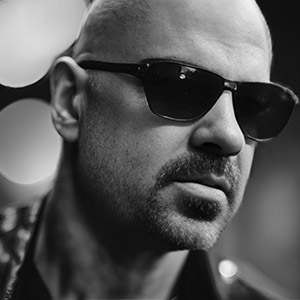
Tyler Shaw is not the type of artist to let a global standstill dictate his pace. At 27, the Canadian pop architect—best known for the polished hooks of "With You" and the emotional weight of "The Man Who Let Her Go"—has been treating the recent industry hiatus like a high-stakes residency. He has been obsessively refining his third studio outing and leading a massive humanitarian effort. Earlier this year, Shaw rallied a collective of the country’s elite performers for a rendition of the 1961 Ben E. King standard "Stand By Me" which funneled more than $100,000 toward the Red Cross.
Sitting down with 519 Magazine for a deep look at his trajectory, Shaw carries the air of someone who has finally figured out how the machinery of fame works. He is not just a singer; he is a strategist. We caught up with him to dissect the mechanics of his latest moves.
**You’ve been pretty busy during the pandemic. You’ve had a lot going on. Let’s just jump right in and talk about the new single, Remember.**
Shaw leans into the conversation with the focus of a producer who spent too many hours in the mixing suite. "I have been busy, for sure, and one of those things is queuing up new music. The first song off of my third album that I’m working on is Remember and that one is co-written and co-produced by Frank Walker and Nick Enriquez. Frank Walker is a buddy of mine and I met him, a couple of years ago when he did a remix of one of my songs called With You. Through that, we just got connected and hit it off and he called me up one day and he said, 'Let’s get in the studio together. Let’s write a song instead of me just doing a remix to your song.' I was like, 'Absolutely, let’s go for it.'"
The collaboration marks a shift from the typical label-mandated pairings that often feel sterile. Walker and Shaw share a genuine shorthand. "So we go in, I bring him that guitar line that you hear at the top of the song. We were going back and forth with the melody and the lyrical concept and all of that, and Nick was there, too. He did the rest basically with making the drop happen and made it sound very positive and energetic. It was a really fun day."
But the track almost didn’t belong to Shaw. In the music industry, songs move between artists like currency, and "Remember" was nearly a Frank Walker release. Shaw explains the pivot: "It’s actually supposed to be Frank Walker’s song, but timelines didn’t really work out and I said, 'I’m going to release a song because I freaking love this song and I think the world is in an interesting place where they need to feel uplifted and everyone needs a little bit more positive energy and just to remember that there is good.' So I was like, 'You know what? I will take this song and release it to the world.'"
**The timing might’ve been wrong for Frank, but it was right for you. So tell me about where the song came from, the writing process and how you developed it.**
Shaw’s writing process is less about clinical precision and more about capturing a fleeting ghost of an idea. It started in the most domestic of settings. "Well, I was actually in Vancouver on tour for a show in late summer, 2019. I remember sitting down at the piano where I grew up because I was visiting family as well, and the first thing I played was those chords that you hear. It’s on guitar and the actual track but I played them on piano first and I thought, 'These chords are so beautiful.' So I was prepared with that guitar riff going into the session because I knew it could be something."
And when he gets into the room, he doesn't wait for inspiration to strike. He forces the issue. "Immediately when I walked in, I was like, 'Guys, I have this idea.' We lay down the guitar and the writing process, for me at least, is very fluid. It has to catch everyone’s ear, including myself. So I can sit down, this is how I usually do it 99.9% of the time. I sit down at whatever instrument, keys, guitar, drums, and bass. I’ll just start playing notes until something feels catchy to me. When I have the notes in a repetitive order, I’ll just start singing words. I don’t even know half the time what I’m singing. I have to record it on my phone to listen back later, or people in the room will be like, 'Oh, that was cool. Did you say that?' Half the time I’m like, 'I don’t remember saying that, but let’s go with it.'"
This stream-of-consciousness approach is what gives Shaw’s music its relatability. It feels unmanufactured. "So that was one of those days where the guitar line was going and all of a sudden the melody came out of my mouth and next thing you know, I’m singing just the remember part. And it just flew in from there, piece by piece. It’s like a puzzle. Okay, cool, we got the chorus melody. Fantastic. What’s the concept? Let’s nail the concept first. Okay, cool. Remember. Remember what? Remember what it feels like to whatever. Like I said, it’s just like a puzzle. You’re going in piece by piece and you try to make sense of the whole thing at the end and if it has that cohesive story from front to back, then I deem that a success. And if it’s catchy, even greater. And if it sounds great and feels right, that’s the cherry on top."
**One of the cool things I like about you, is that you actually enjoy writing your own songs. Not all pop artists like writing their own songs. What makes you want to write songs?**
The industry is saturated with "top-liners" and ghostwriters who assemble hits in laboratories. Shaw, however, views the craft as a survival mechanism. "You know what? I think growing up, it was an outlet for me, escaping to another world, and that’s why I fell in love with it. I think that’s why I continue to do that because when I sit down and I’m writing songs, it’s a couple of the things. It’s a way to escape reality and it’s a way to cope with emotions."
He treats the studio like a confessional. "If you’re hurt, you put into a song, if you’re happy, you put into a song, if you’re sad or frustrated, you put it into a song. That’s like my therapy, which I extremely enjoy. Not only that, but the fact that throughout my entire career, I’ve gotten messages from fans and people saying, 'This song helped me through this, or this song was my wedding song, or this song was an unbelievably fun memory because of whatever it was.' That drives me even more to help people through tough times or to create some kind of soundtrack to someone’s life."
**That must be really satisfying when you play the songs and the people sing along. I was at your London show last tour and the audience was electric. The audience just loved it.**
Watching Shaw live is a lesson in connection. He doesn't just perform; he facilitates a collective emotional release. "I don’t know what to compare it to. I honestly don’t. It’s this on top of the mountain type feeling and you’re just so grateful when you’re there."
Early on when COVID was fresh... I felt kind of useless. ... I think people need to hear this song right now because of the world’s climate and how people are feeling. ... Let’s make this project even bigger. Let’s see how many Canadian artists we can get to be part of this song and donate money to charity to help COVID relief. Brilliant. Let’s do this.
**Sometimes there’s a song that’s so good - and you didn’t write it - but you have to do it. I’m getting to Lean On Me. Tell me about that whole process and the creation of artists and why that song.**
Shaw’s pivot to the Bill Withers classic "Lean On Me" (under the ArtistsCAN banner) wasn't a cynical grab for relevance. It was born from the existential dread of the early lockdown. "Early on when COVID was fresh, around late March, early April, I felt kind of useless. I didn’t have any music out. I was supposed to be on the road, playing shows and writing new material and I was just sitting at home and it felt weird for me because that’s not what we usually do. So me thinking I wasn’t contributing to society was very hurtful in my mind. I was like, 'Ah, this sucks. I’m not doing anything.'"
The death of a legend provided the spark. "When Bill Withers sadly passed away, I was having a conversation with my manager, Danny Reiner, and we were shooting ideas back and forth and talking about his musical legacy and all that. Obviously the song Lean On Me came up and immediately I was like, 'You know what? I should do a cover of this. I think people need to hear this song right now because of the world’s climate and how people are feeling. People are quarantining and self isolating and all that, so it’s tough. It’s a tough time. This makes sense. This song makes total sense.' I’m like, 'Yeah, yeah, let’s do that.'"
What started as a solo idea quickly ballooned into a national event. "The energy I had saved up by just sitting around and not doing much was, I think, starting to bubble up and become a front facing part of this project because it was like, 'No, let’s do something even more. Let’s make this project even bigger. Let’s see how many Canadian artists we can get to be part of this song and donate money to charity to help COVID relief. Brilliant. Let’s do this.'"
The logistics of such a project are a nightmare of schedules and egos, but Shaw managed to bypass the red tape. "We hang up the phone, I call my good friend, Fefe Dobson, I tell her about this idea. She’s in immediately and from there we reach out to everyone that we know in the music industry and see how far we can get. Obviously to our surprise, and we’re so grateful for everyone who’s involved, Bryan Adams says, 'Yes,' Michael Buble says, 'Yes,' Justin Bieber says, 'Yes,' Sarah McLachlan says, 'Yes, Buffy Saint-Marie says, 'Yes.' They’re all part of this project and we are so grateful because without them, who knows what would’ve happened. But to have their support on it is just incredible."
The financial impact was immediate. "I heard the number, and I think it was late last week, we’ve raised so far over $100,000 for the Canadian Red Cross for COVID relief. And that number is just going to keep growing because of the way it’s being donated. It’s per stream, per video view and all that. So I’m very, very happy with the number."
**That’s awesome. Out of all the names that appeared, who was the first to jump on board and who was the toughest to get a hold of and make the connection with?**
"I think if you’re including me, me and Fefe were the first on board. And then the toughest, I think Geddy Lee was the last person to get a hold of and join in. But of course as soon as he said, 'Yeah, let’s do this,' we had no issues. It was very easy going."
**Why the Red Cross compared to anything that you could have chosen?**
Shaw is pragmatic about the choice. He wanted a broad safety net. "Absolutely. Well, first and foremost, for COVID relief specifically, they don’t just target one aspect of people who were affected from COVID. They cover financial struggles, they cover food for example, they cover PPE as well. So it’s an over-arching, broad range of things for COVID relief fund. It’s not just one specific thing. So we really liked that approach."
**I bet a year ago you probably never thought you’d have all those artists contributing to something that you were basically the guy who created it.**
"No, no, not at all. I mean, it’s all part of the journey, right? I don’t know what I’m going to do or what’s going to happen tomorrow, for example. So you got to take it day by day and just smile and be positive and try to spread kindness as much as possible."
**Tell me about the next album. How is it progressing at this point? It’s still a long ways off.**
Shaw is evolving. He’s moving away from the purely instinctual and into something more curated. "I’m still writing constantly for the next project, but I do have a very good idea of where this album is going to end up sonically, lyrically, message wise. And Remember is just the tip of iceberg. It’s an evolution of where I left off with Intuition, but I want people to think of it as a transition song into the next project. Let’s get people up, dancing, feeling good, and then when the next project comes out everyone will be on a positive note."
But don't expect a complete departure. He knows his strengths. "It will not be a dance album, but it’s going to be a variety of different sounds. That being said, I love a good ballad. I’m a ballad guy. I’ve got tons of them from my first album to my second album. I love good love songs, but I also want people to have fun. So that’s why Remember is a part of the album and a couple of other ones that I have in the catalog right now that are feel good and let’s tap our foot or let’s dance the night away kind of thing."
**There has to be a lot of thought involved and not just a collection of songs.**
Shaw has adopted a visual methodology that feels more like a fashion designer’s approach than a musician’s. "Absolutely. From the marketing plan, to the visuals, to the music, it all has to connect, right? I don’t know if anyone else has done this before, and I have never done this for one of my albums, but before I even started writing this album, I started putting together a mood board or a Pinterest board of different things that I really liked. And then I narrowed it down to a specific colour palette and specific vibe and aesthetic that I wanted to capture on this next album."
And he uses this board as a North Star. "And with that, I would pull that up on every single writing session I’ve done since I’ve created that board. I would look at the board as I’m humming melodies and as I’m creating lyrics, so that I’m trying to put the aesthetic into the music and put the aesthetic into the melody. I thought that was really interesting and it really did help create a certain vibe and a certain cohesiveness to my melodies and the stories that I was writing, fiction or nonfiction. They turned out really, really good, so I feel like I’m going to do that next album and the next album after that and so on and so forth."
**How did you put together Intuition in comparison?**
"It was very literal, that’s why I called it Intuition. I went into studios and I just wrote whatever felt right. That was the whole, I guess, game or premise of the album is I’m going to go into the studio in this writing session and whatever feels right, I’m going to do, whatever doesn’t feel right, I won’t do it. I mean, I still do that now. It was a little bit more thought because I have that aesthetic mood board. I don’t have to, but I’m thinking of it a little bit more, whereas Intuition was just purely instinctual and trusting your intuition, very intuitive."
**If we’re going that route, then let’s go back to Yesterday. How did that one compare?**
Shaw winces slightly at the memory of his early days. "Oh God, I had no idea what I was doing. That one was I was brand new in the industry. I still co-wrote all of the songs, but I just didn’t know who I was as an artist and as a person. So I was more writing the riding down a river versus paddling a certain direction, you know?"
**Who is Tyler Shaw as a man and an artist at this point?**
"I’m relatable. Well, I like to think so anyway. Relatable, fun loving character. I like to think that I have some kind of mystery of me. I’m sure my friends would say the same thing because in some cases I’m a pretty quiet guy. At least I can look in the mirror and understand who I am and who I want to be. I still have a lot of learning and a lot of growing to do as an artist and as a person, but that’s why we reflect and we try to ask certain questions and learn about ourselves as much as we can as the days go on."
He is aiming for more than just chart positions now. "But for right now, my main goal is to be as kind as possible to others and be as honest as I can and to spread kindness and just be a positive light and a positive influence and a role model to others who want to be a good person or who want to be in the music industry."
**Earlier this year, you ended up working with Rogers on a really cool hologram project. Not many people can actually become a hologram.**
It’s a bizarre milestone. While some see holograms as a gimmick, Shaw sees them as a historical marker. "No, I know. I think it’s me, I think ABBA has one, and I believe Prince has one. So I’m up there with great company, which I think is incredible. The Rogers deal was very, very cool. I remember filming it mid-tour. I had to fly from Quebec City or Montreal and came back to Toronto to film the hologram filming and it was very interesting. There was about three or four cameras surrounding me and a green screen behind me, obviously. It was a very cool experience. Then to actually be at the 5G Music Hall and watch myself, It was very fun, but it was also very interesting to be there watching myself as a hologram."
And he is ready for the next tech leap. "Would I do it again? 100%, it was just an overall cool experience and I think that’s a testament to where we can take things in the future.