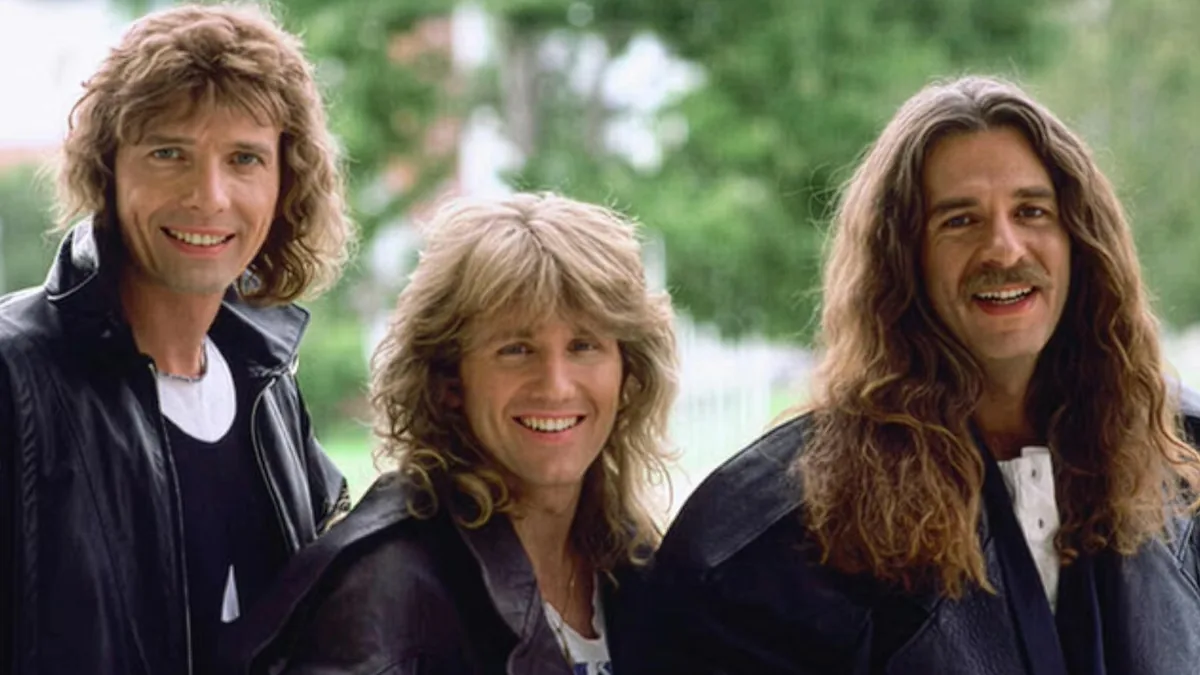

Listening back to these raw archival tapes from 2010 is a trip. The air around Triumph was thick with possibility. Two years after their reunion shows at Sweden Rock and Rocklahoma, the Toronto power trio had just dropped a career-spanning compilation, Greatest Hits: Remixed. It was a definitive statement, a legacy project. And it begged the obvious question: was this a final bow or a new beginning? Speaking separately, drummer Gil Moore and guitarist Rik Emmett laid bare the friction the triumphs and the lingering questions that defined one of Canada’s biggest arena rock exports.
First, the compilation itself. This wasn't just another cash-grab repackaging. For Moore, this was about correcting a historical wrong, a corporate slight that had bothered the band for years. The previous collection, Classics, was a product of a soured label relationship. “We always felt that it wasn't a very good representation because it was after we had left MCA Records in The United States,” Moore says, his voice cutting with the memory of industry politics. “Typically what happens is record companies use that as an opportunity to cut costs and put out a sort of a minimalist sort of disk. We always felt that it really wasn't, it didn't have the Triumph signature.”
This new package was their chance to do it right. It was loaded. A DVD with painstakingly restored videos, a CD with completely remixed audio and even some unreleased material. It was a fan-centric move, designed to deliver overwhelming value in a way the old guard of the music business rarely did. It was pure Triumph: ambitious, meticulously executed and maybe a little late to the party. “We're just not organized enough,” Moore admits with a laugh when asked why it didn't drop in 2008 to capitalize on the reunion hype. “It would have been a lot smarter to do it then.”
But the most divisive element was the audio. The decision to remix their entire catalogue was bold, intended to drag their classic 70s and 80s production into what Moore calls the “subwoofer era.” The goal was to give the tracks the low-end punch they lacked on vinyl, to make them thunder in modern car stereos. “We thought all our fans already own the original mixes,” he argues. “So why would we give them the same mixes over again in a different package?” It’s a logical point from a studio owner obsessed with audio fidelity.
The fans, however, were another story. Rik Emmett, ever the artist-philosopher, had a more detached and nuanced perspective on the backlash. He understood the purists. “If somebody came along and started remixing, say, Steely Dan records which I love and really admire... I probably would be one of the people going, 'well, that was a ridiculous waste of time and money and energy,'” he concedes. “How do you improve something that's already as good as it gets?”
He saw the new mixes as just an alternative, an option in the new modular digital world where everything is up for grabs. But he also admits to his own surprise hearing the final product from engineer Richard Chycki. “When I listen to ‘Somebody's Out There’ and it got to the tag, I was going, 'where are those vocal fills that I sang? And where are those guitar licks that I played?'” It’s a candid admission that the remixes weren’t entirely faithful, that artistic choices were made that even the original artist might not have endorsed. It's a fascinating tension between legacy and revisionism.
The visual component was less controversial. The DVD was a goldmine, featuring restored music videos that, for Moore, were a point of immense pride. They managed to widescreen the old footage without the distortion that plagued early digital transfers. “By the time you went through that sort of anamorphic process, you ended up with everybody looking like they were full backers for the Los Angeles Rams,” he jokes. It was another example of the band leveraging their own Metalworks Studios to control their output, a rare luxury for artists of their vintage.
If somebody came along and started remixing say Steely Dan records... I probably would be one of the people going well that was a ridiculous waste of time and money and energy.
For Rik, looking back at the videos was more like flipping through an old high school yearbook. Cringey but necessary. “I thought something ridiculous happened to my hair in that ‘Never Surrender’ video. I'm not sure what, but it looked like birds were building nests,” he laughs. “It's kind of like looking at a photo album of yourself with pimples and bad clothes from high school.”
Of course, the compilation only existed because of the 2008 reunion shows. Getting the machine running again after two decades of silence was, by Moore’s account, a brutal process. He and bassist Mike Levine were rusty. Emmett, who never stopped touring, was not. The pressure was on. “When we first started to play, we really stunk,” Moore says with startling honesty. “But it was amazing how it did come back together. And after some lumpy rehearsals initially, it finally started to gel and it actually started to sound like a band.” It took nearly 40 rehearsals to get there, a testament to the work ethic that propelled them in the first place.
But the interview peels back the layers on why that machine stopped in the first place. The folklore always pointed to Emmett’s departure in 1988 as the singular event. Rik himself doesn’t shy away from his role, but frames it as an act of personal survival, not sabotage. “By the time the band was in by 1987 or so, I was just looking for an exit strategy,” he reveals. “I really wanted to get out, I needed to get out, I was losing my mind, I was very unhappy... if I stayed, it would have been worse.” It wasn’t about ego. It was about sanity.
Moore’s perspective adds the crucial business context. The band was unravelling under its own weight. They were a massive enterprise without a manager, a ship too big to steer. Then came the record company meddling. “The record company was in their efforts to increase sales, they start meddling with what's going on in the kitchen,” he explains. The label brought in producer Ron Nevison, a disastrous pairing that created more friction than hits. The creative engine was seizing.
That pressure cooker environment ultimately led to Emmett’s exit and the brief, often overlooked second chapter of the band. With guitarist Phil X, they recorded Edge of Excess, an album Gil Moore refers to on the compilation as “Triumph V2.0.” It’s a telling distinction. He’s blunt in his assessment. “It never felt like Triumph without Rik,” Moore states flatly. “It was just Mike and Gil and a different guitar player. So I think if we kept going, we probably would have changed the name or something.”
That version of the band was ultimately torpedoed by a corporate merger at their label, Polygram. A classic music industry tale of an act getting lost in the shuffle. It was a disappointing end to a valiant effort, but Moore’s words suggest the band’s core identity had already left with Emmett.
Which brings us back to 2010. What was next? Rik’s door was open. He was a road warrior, a creative lifer. “Making music is to me it's the closest I can get to God,” he says with genuine passion. “Great music is pure freedom for me. So I don't really have any other choice.” He was ready for whatever came next, but careful not to push his bandmates.
Moore, on the other hand, was the pragmatist. He had a full life running Metalworks, one of the country's most successful studio enterprises. He didn’t need the stage for fulfillment. The unspoken truth hanging in the air was that the future of Triumph rested largely on his shoulders. A dinner with Live Nation was on the books, a hint of major possibilities. But as we now know, a full-scale tour or a new album never materialized.
Listening to these tapes today, the interview feels like a perfect snapshot of a band at a crossroads. It captures the complex dynamic between its two creative poles: Emmett the restless artist always looking for the next song and Moore the pragmatic guardian of the band’s legacy and business. They reconciled their past but couldn’t quite agree on a future. And that’s okay. The music, remixed or not, still stands as a monument to their ambition, talent and sheer force of will.
519 Magazine Archive: We are thrilled to officially unearth the Rockstar Weekly Digital Vault. This isn't just a re-post; it's a high-fidelity restoration of a pivotal era in music journalism. By pairing original print dates with modern retrospectives, we’re bridging the gap between historical rock-and-roll grit and the lightning-fast performance of today’s web. These stories—once locked in physical print and lost URLs—are now back, fully searchable, and optimized for a new generation of fans.
We are thrilled to officially unearth the 519 Magazine Digital Vault. This isn't just a re-post; it's a high-fidelity restoration of a pivotal era in music journalism. By pairing original print dates with modern retrospectives, we're bridging the gap between historical rock-and-roll grit and the lightning-fast performance of today's web. These stories—once locked in physical print and lost URLs—are now back, fully searchable, and optimized for a new generation of fans.