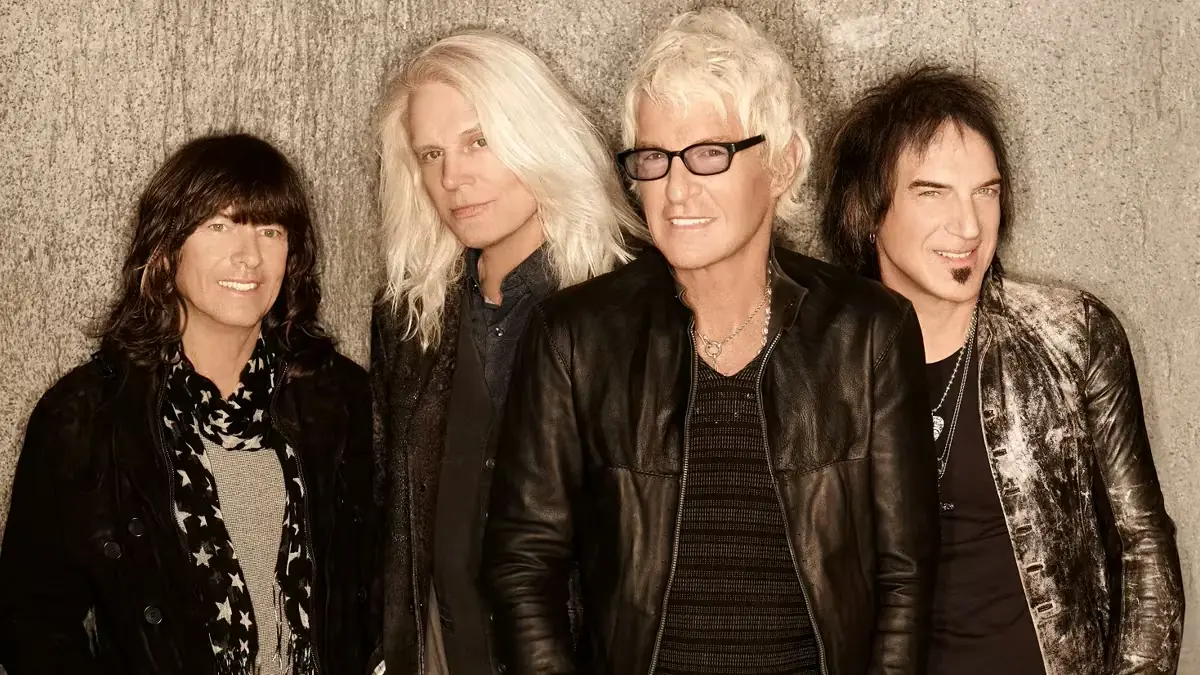

Revisiting this conversation from January 30, 2020, feels like opening a time capsule from a world on the brink. The machinery of rock and roll was still grinding along its well-worn track. And on the line from a snow-covered Minneapolis was Neal Doughty, the foundational keyboardist and sole constant member of REO Speedwagon. He was doing the necessary work of advancing a spring date in Windsor, a routine he’d perfected over 50 years. But the topic of the day was anything but routine: the looming 40th anniversary of Hi Infidelity, an album that redefined the band and arena rock itself.
That record wasn't just a hit; it was a cultural monolith. When it landed in 1980, it became the biggest-selling rock LP of 1981, eventually moving over 10 million units in the U.S. alone. Looking back, Doughty possessed a clear-eyed theory on why it detonated with such force. It was about consolidation. It was about finally making a record that united their fractured fanbase.
“We had a theory that there were different sets of fans that bought all of our other records. And finally we made a record that all of them liked,” Doughty says. This is a crucial piece of industry insight. Before Hi Infidelity, REO was a Midwest hard rock outfit, a workhorse band that built its following through relentless touring. They had fans who loved the rockers and fans who leaned into their softer material, but never had the two camps fully converged.
And the album’s structure was key to its universal appeal. It was a Trojan horse built with pop sensibilities. “The songs on it are kinda like the way Beatles made albums at the beginning where all the songs were sort of short without much space in between,” he explains. “Not only were the songs good but it was just really easy to listen to the whole thing.” This was the magic formula. In an era still dominated by album-oriented rock, REO delivered a record with the punch and immediacy of a pop singles collection.
“This is one where people liked every single song,” he notes, a stark contrast to the modern à la carte consumption of music. “We made our best record at a time when the music didn't really have an expiration date.” That lack of an expiration date is why the band could still pack arenas decades later. The album wasn’t just a moment in time; it became a permanent fixture on the cultural landscape.
But its creation was born from desperation. The story behind the sessions is a classic tale of a band with its back against the wall. Epic Records, after backing 10 previous REO albums that had only “barely broken even,” was losing faith. In today’s unforgiving market, a band would be lucky to get two chances, let alone 10. The label’s message was blunt: deliver a hit or it’s over.
The pressure yielded an accidental brilliance. Doughty reveals a piece of studio lore that speaks volumes about the album’s raw energy. “Several of the rhythm tracks on that record were actually meant to be a demo,” he says. The band cut demos for the label and when they went back to record the songs properly, the spark was gone. The initial takes had a feel, a groove that couldn’t be replicated under formal studio conditions.
“When they went in to record the same songs for real, it just didn't have the right feeling to it. So many of the songs on that record, the rhythm part is actually the demo,” Doughty admits. It was a make-or-break record, their eleventh album, and the very foundation of its sound was built on what were essentially glorified rehearsals. That’s not a compromise; that’s capturing lightning in a bottle.
It has to be the best song you ever did in order for people to accept it. You know, when that comes along, it it it'll just happen by accident, and then we'll do that.
The album also marked a significant sonic shift from gritty hard rock to a more polished pop-rock sheen. This wasn’t a cynical cash grab so much as a savvy alignment with the prevailing winds of the early '80s. The power ballad was becoming the single most potent commercial weapon in rock. REO didn't invent the form, but with Kevin Cronin’s iconic “Keep on Loving You,” they damn near perfected it.
Doughty is pragmatic about the change. “I don't think we were making a conscious effort to go really commercial. Although in the back of our minds we knew that's what our record label was kind of waiting for,” he reflects. “The '80s in general produced a nice mix between hard rock and softer rock where many groups did both on the same album.” That duality became REO’s calling card and their ticket to superstardom.
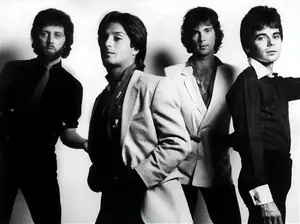
Through all the shifts in sound and personnel, Doughty has remained the band’s anchor. He’s the only member to appear on every single album, a quiet constant since the band’s inception in a University of Illinois dorm room in 1967. His secret to longevity is disarmingly simple and utterly telling of his personality.
“I just tried not to get fired,” he says with a laugh. “I just happen to have been a fan of everything we did. There was never a phase you went through that I just disagreed with. I'm pretty laid back, relaxed kind of guy. And I'm not gonna start a big fight over a minor issue of creative direction.” In the ego-driven world of rock bands, that temperament is a superpower. He was the stabilizer, the guy who kept the ship steady while others came and went.
This deep sense of pragmatism extends to how the band operates today. Doughty understands their role has evolved. They are no longer creators of new worlds but curators of a beloved one. The primary responsibility is to the audience. “We all feel a responsibility. We know who we're working for, and that's the people in the audience,” he states plainly. “We try to do the songs they want to hear.”
Their setlists are carefully calibrated machines designed for maximum nostalgic impact. They know which songs are non-negotiable, the ones the crowd came to sing along to. “Our biggest danger is the crowd drowning out the band,” he jokes. It’s a perfect encapsulation of a legacy act’s relationship with its fans—a symbiotic loop of call and response built over decades.
This brings us to the most pointed critique of modern REO Speedwagon: the absence of new music. Their last full studio album of original material, Find Your Own Way Home, was released in 2007. Doughty’s explanation is a masterclass in industry realism. Creating a new album is a logistical and financial nightmare for a band that tours as relentlessly as they do.
“We haven't really planned to make a whole studio album with 10 new songs because that's just not the way people are buying music anymore,” he says. “We're literally touring too much to spend any time in the studio. We'd have to take a year off to make a full-length CD.” He’s right. The economics don’t add up. Why invest the time and money to produce a product for a market that has largely moved on?
And then there’s the artistic challenge. How does a band with a catalogue of immortal hits introduce a new song into a setlist packed with anthems? “It has to be the best song you ever did in order for people to accept it,” Doughty contends. “And songs like that, they don't come around every day.” It’s an impossibly high bar, a quiet admission that the band’s primary function is now celebratory, not generative.
But their relevance isn’t just confined to the classic rock radio ghetto. The band’s DNA has seeped into modern pop culture in unexpected ways. Doughty lights up when discussing Pitbull’s 2013 track “Feel This Moment,” which heavily samples “Take It on the Run.” This wasn’t a case of cynical exploitation; it was a genuine collaboration.
“We knew he was gonna do that and we really liked the idea and we really liked the song he did,” Doughty recalls. “We even went on a television show in L.A. and played it with him. Just a really nice guy too. So it was 100% with our blessing that he did that.” It’s a sign of a band comfortable with its legacy, one that understands that influence is its own form of currency.
Listening to Doughty speak in the final weeks of the old world, his words about constant touring and the non-stop nature of the band’s life carry a certain poignancy. He was describing a machine that had been running for over 50 years, unaware that it was about to be forced into its longest-ever pit stop. This conversation captures the business-as-usual hum of a legendary band just before the silence fell.
519 Magazine Archive: We are thrilled to officially unearth the 519 Magazine Digital Vault. This isn't just a re-post; it's a high-fidelity restoration of a pivotal era in music journalism. By pairing original print dates with modern retrospectives, we’re bridging the gap between historical rock-and-roll grit and the lightning-fast performance of today’s web. These stories—once locked in physical print and lost URLs—are now back, fully searchable, and optimized for a new generation of fans.
Get Tickets


We are thrilled to officially unearth the 519 Magazine Digital Vault. This isn't just a re-post; it's a high-fidelity restoration of a pivotal era in music journalism. By pairing original print dates with modern retrospectives, we're bridging the gap between historical rock-and-roll grit and the lightning-fast performance of today's web. These stories—once locked in physical print and lost URLs—are now back, fully searchable, and optimized for a new generation of fans.