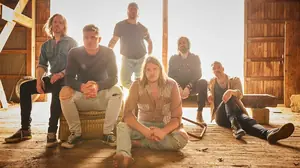
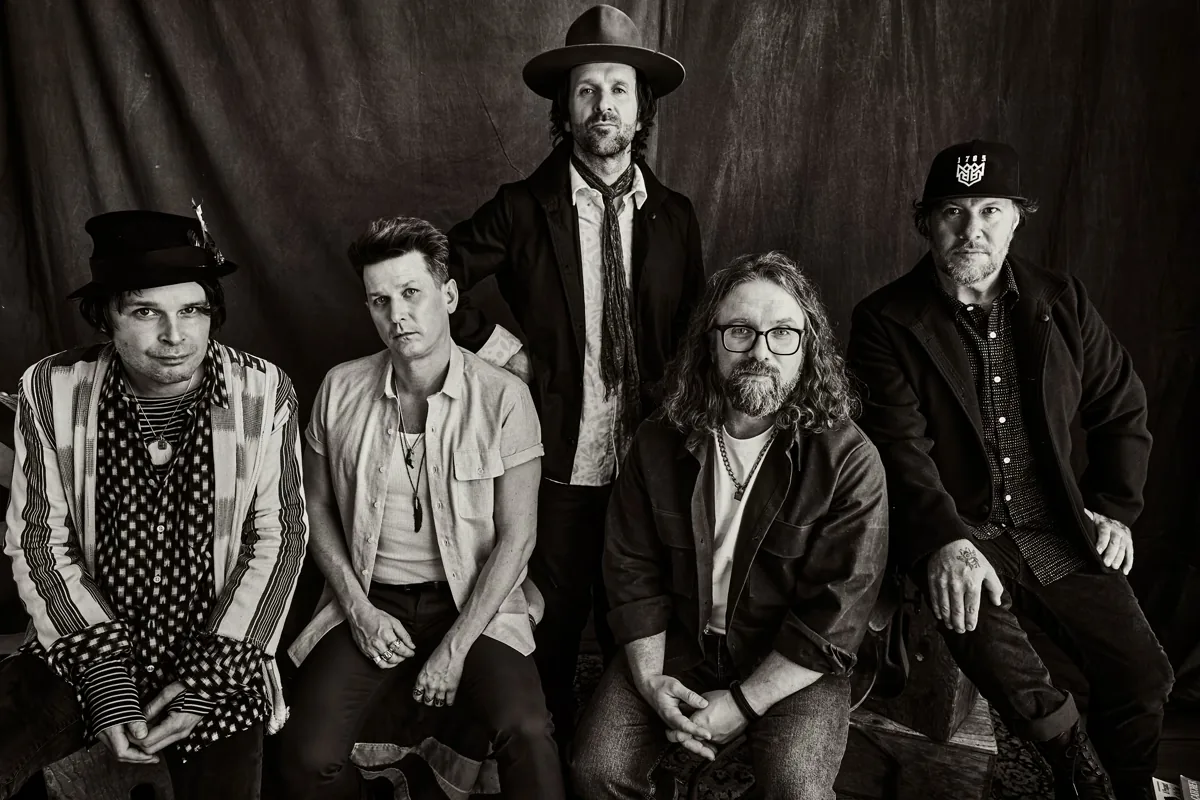

Looking back at these archival tapes from Nov. 4, 2010 feels like cracking open a time capsule. The Trews, a band synonymous with sweat-soaked, electric rock and roll, were deep in the throes of a cross-Canada acoustic tour. It was a move that felt, at the time, like a curious left turn. But listening to guitarist John Angus lay out the logic, you hear the sound of a band not taking a break but recalibrating its attack, rediscovering the bones of its own songs before building them back up again.
The entire affair started as an off-the-cuff experiment. A couple of live acoustic shows were recorded, deemed worthy and released as the Friends & Total Strangers album a year prior. There was no grand strategy. But the market, as it often does, had other ideas. A single, "Sing Your Heart Out" caught fire and suddenly the side project demanded a main stage.
Angus is candid about the unexpected momentum. “We didn't anticipate touring,” he says. “But then there was a single release from it called ‘Sing Your Heart Out’ and people were asking us to tour. So we toured it. And here we are a year later doing round two of the tour.” It’s a classic case of an artistic whim becoming a commercial necessity, forcing the band to explore a texture they’d previously kept in the woodshed.
And in doing so, they found a new audience, or perhaps, a new way for their existing audience to hear them. Angus nails the appeal with a simple, direct observation. “Maybe it's just a clarity thing,” he muses. “Certainly, you can hear the songs a bit better when it's just an acoustic guitar rather than fighting with the drums and the guitars and everything.”
This wasn’t just about turning the volume down. It was about exposing the songwriting architecture that was always there, buried under layers of Marshall stack grit and cymbal wash. For a band built on hooks and heart-on-sleeve lyrics, it was a revelatory move. It proved the songs could stand on their own, naked and unadorned.
Inevitably, this acoustic sensibility began to bleed into their electric work. At the time of this interview, their next album was already in the can, a project we now know as 2011’s masterful Hope & Ruin. Angus confirmed the influence was real. “Whatever that sensibility is that you do when you're performing a song acoustic, it sort of seeped into the new record a lot.” Listening back to that album now, you can hear it—the space between the notes, the emphasis on melody and the raw, emotional delivery that feels born from the intimacy of an unplugged set.
But the creative process is one thing; the industry machine is another. Angus’s frustration with label timetables is palpable, a tale as old as the record business itself. They had finished the album in June and by November, it was still sitting on a shelf. “It drives me crazy,” he admits. “By the time it comes out, I'm gonna be so sick of it. I don't really wanna play anything off this.”
It’s a sentiment that every artist who has ever poured their soul into a project, only to have it held back by marketing plans and release windows, understands intimately. The creative moment is fleeting. The business cycle is eternal. This tension defined the music industry in the 2010s as it grappled with its own identity crisis.
I know there's bands out there that put on airs and try to model themselves up to the latest, greatest, big production American hit. To us that music just sounds empty and uninspired.
The conversation naturally drifts to the titans of Canadian rock, the survivors who provided the blueprint. Neil Young. The Tragically Hip. For Angus, these aren’t just influences; they’re career models. He speaks of Young with a reverence that borders on awe, not just for the music but for the relentless, uncompromising spirit. “He's always managed to stay relevant and push on. And he never sort of gave up. It just seems like he's still got a fire inside.”
That fire is the goal. It’s what separates the lifers from the flashes in the pan. The Trews were clearly studying the right playbooks. Their connection to The Hip was more than just spiritual; they recorded Hope & Ruin at The Bathouse, The Hip’s studio outside Kingston, with bassist Gord Sinclair co-producing. This was a significant co-sign, a validation from the genre's gatekeepers.
When the topic of industry accolades like the Junos comes up, Angus is refreshingly dismissive. It's not arrogance but a deeply ingrained perspective. Awards are nice, but they aren't the point. “It's not why we started,” he states plainly, “and it's definitely not gonna be any reason why we continue or stop or anything like that. We do it for different reasons.” This is the mantra of a working band, a group that measures success in sold-out club dates and singalongs, not in statues for the mantlepiece.
This ethos of authenticity is the core of their identity. The interviewer’s comparison to Rush, another band of uncompromising survivors, is apt. The Trews have always sounded like The Trews. According to Angus, it’s less a conscious choice and more a simple inability to be anything else. “We just don't know how to do it any other way,” he says.
This leads to a fascinating, nuanced discussion about Nickelback. In 2010, Nickelback was the commercial Goliath of Canadian rock and the pressure to emulate their sound was immense. Angus is firm in his rejection of that path. “I know there's bands out there that put on airs and try to model themselves after the latest, greatest, big production American hit,” he says. “To us that music just sounds empty and uninspired.”
But he doesn’t take the easy shot at the band itself. He astutely defends Chad Kroeger’s vision as authentic to him, while critiquing the legion of soundalikes chasing a formula. It’s a sharp analysis that separates artistic creation from cynical imitation. The Trews were never going to chase trends because, as Angus puts it, “Why make music devoid of any feeling or personality?”
Their personality is deeply rooted in their origins. Hailing from Antigonish, Nova Scotia, they carry an East Coast, small-town friendliness that informs everything from their work ethic to their sound. Angus even identifies a musical link. “That steady stomping sort of rhythm is like a trademark of traditional music,” he explains. “I look at our songs and they all sort of do that.” It’s the sound of a kitchen party, even when it's filtered through a wall of amplifiers.
This commitment to their roots extends to their touring strategy. They hit the small towns, the oft-ignored markets, because they remember what it’s like to be left out. Angus notes the crowds in places like Medicine Hat are less jaded and more appreciative. It’s a symbiotic relationship: the band gets an enthusiastic audience and the town gets a real rock show.
One of the most telling anecdotes involves their contribution to a tribute album for The Band. Garth Hudson, the legendary keyboardist, personally assigned them the song “Move to Japan.” They didn’t know it, but the opportunity to record with Hudson was too good to pass up. “We agreed without even hearing the song because we wanted to record a song with Garth,” Angus laughs. It’s a story that perfectly captures the blend of reverence and pragmatism that defines a career musician.
If there’s a critique to be made, it’s that this very refusal to compromise, while artistically pure, may have placed a ceiling on their international reach. In an era where polished, formulaic rock dominated global charts, their gritty, honest sound was a tougher sell outside of Canada and Australia. Their strength was their identity but that identity was unapologetically Canadian, rooted in a tradition that doesn't always translate.
Ultimately, this 2010 snapshot reveals a band at a pivotal moment. They were confident in their sound, yet open to reinterpreting it. They were road-hardened veterans who still held a fan's reverence for their heroes. The acoustic tour was more than a gimmick. It was a declaration of principle: that beneath the noise and the fury, a great song is a great song, no matter how you play it.
519 Magazine Archive: We are thrilled to officially unearth the Rockstar Weekly Digital Vault. This isn't just a re-post; it's a high-fidelity restoration of a pivotal era in music journalism. By pairing original print dates with modern retrospectives, we’re bridging the gap between historical rock-and-roll grit and the lightning-fast performance of today’s web. These stories—once locked in physical print and lost URLs—are now back, fully searchable, and optimized for a new generation of fans.
We are thrilled to officially unearth the 519 Magazine Digital Vault. This isn't just a re-post; it's a high-fidelity restoration of a pivotal era in music journalism. By pairing original print dates with modern retrospectives, we're bridging the gap between historical rock-and-roll grit and the lightning-fast performance of today's web. These stories—once locked in physical print and lost URLs—are now back, fully searchable, and optimized for a new generation of fans.