

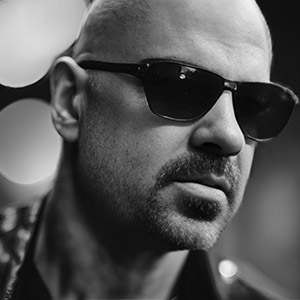
Revisiting the raw transcripts from an Aug. 14, 2020, conversation with Brian Vollmer feels like unearthing a time capsule from a parallel dimension. The world was deep in the throes of a global shutdown, but the Helix frontman was characteristically focused on the one constant in his universe: the work. And that work included a new video, a new compilation album, and a steadfast refusal to let the outside world’s anxieties dictate his band’s forward momentum.
The immediate topic was “Eat Sleep Rock,” a new track and its accompanying video. The song itself was a collaboration with Sean Kelly, a guitarist whose resume reads like a who’s who of Canadian rock royalty. “The song is written by myself and Sean Kelly,” Vollmer says. “Sean Kelly plays for a lot of Canadian bands.” He’s not kidding. Kelly’s work with names like Nelly Furtado, Lee Aaron, and Honeymoon Suite speaks to a versatility that meshed perfectly with Vollmer’s blue-collar rock sensibilities.
But the real story was the video. Directed by former Helix guitarist Brent “The Doctor” Doerner, it was a masterclass in pandemic-era creativity. They couldn’t throw money at the problem, so they threw an idea at it. “We tried a special effect that Brent figured out. It was kinda quirky and made the whole look of the video look kinda quirky,” Vollmer explains. “Because nowadays, you know, there's not a lot of money to go around, so you have to have a good idea versus a lot of cash.” It’s the eternal indie-rock credo updated for a new age of limitations.
And when the topic of COVID inevitably came up, Vollmer’s response was pure rock ‘n’ roll pragmatism. He’s weathered bigger storms. “I ignore those things. I've been through so much in my career, from disco to 9/11 to, you know, whatever.” He pauses for the punchline. “Well, it doesn't get any worse than disco, man.” It’s a line delivered with a laugh, but it’s rooted in a survivor’s truth. For a band staring down its 50th anniversary in a few years, headwinds are just part of the journey.
That journey has been paved with moments that feel lifted from rock mythology. Vollmer recounts an encounter with Gene Simmons on a flight back from a Kiss tour. Amid the chaos of air travel, he found himself in a deeply personal conversation with the Demon. “I was reading a book about Auschwitz during the Second World War, and Gene Simmons says, 'My grandparents died at Auschwitz.' And it was just a very emotional moment because, you know, you always think of Gene Simmons as a wild guy.” It was a rare glimpse of the man behind the makeup.
Then there was the chilling moment that connected Helix to one of music’s greatest tragedies. While working on their debut album Breaking Loose in Stratford, Ontario, with producer Lachlan MacFadyen, the news broke. “We were sitting there at the table, and all of a sudden there was a news bulletin that Lennon had been murdered in New York City,” Vollmer recalls. MacFadyen was partners with Jack Douglas, who was producing John Lennon and Yoko Ono’s Double Fantasy. The proximity to the event was surreal. “Lachlan was on the phone. And I think on the other end, too, Yoko Ono was talking to him on the other line from New York City, and I was sitting in the background. I've seen a lot of things in my career, and that's why I'm in the music business for those moments.”
Of course, not every turn was golden. Vollmer is remarkably candid about the band’s most divisive record, It's a Business Doing Pleasure. He acknowledges the stylistic departure was a product of both personal and professional crossroads. A period of writer’s block with his long-time partner Paul Hackman led their manager to suggest outside collaborators. “So I went down to New York City. I was writing with Bob Halligan, and we spit out 'Good to the Last Drop,' which, as you know, became a huge hit for us in Canada.”
I was reading a book about Auschwitz during the Second World War, and Gene Simmons says ‘my grandparents died at Auschwitz.’ And it was just a very emotional moment because you know you always think of Gene Simmons as a wild guy.
The initial plan was to hive off this new poppier sound as a solo project. But tragedy intervened. The death of Paul Hackman in 1992 changed everything. “My manager came to me and went, 'Well, the one half of the writing team just is not gonna be here anymore. Maybe the new direction of the band is what you're writing,'” Vollmer recounts. “In hindsight, it was a mistake, but in any band's career that has longevity, you shift all sorts of different styles if you're a true artist.” He compares the evolution to artists like Neil Young, whose sonic identity was always in flux. It’s a fair point, even if the album remains an outlier in the Helix canon.
Vollmer’s passion project has always been film, and it’s a thread that runs through the band’s history. The video for “That Day Is Gonna Come” was a collage of his own Super 8 home movies, a visual diary of a band on the road. This archival impulse fuels a future ambition. “One of my projects in the future is to put together a movie on the Canadian bar circuit because it was a unique time in Canadian music,” he says. “You could play from the East Coast right up to the West Coast and turn around and play all the way back again.”
He laments the loss of that crucible. “Bands developed their chops by playing five sets a night, seven days a week, sometimes. And now those bars don't exist, so bands are cocooned in their own little town or village, and they don't get to get outside the city until they get the record deal.” It was a grueling system, but it forged bands of steel. It built character and a catalogue of stories to draw from.
That history is why the music endures. Vollmer understands the mechanics of nostalgia better than most. He knows that a song isn’t just notes and words; it’s a marker for a moment in time. “People make that connection, you know, the first time they had sex, the first time they smoked a joint, the first time they went to a concert,” he theorizes. “They associate it with the song.” In an era of darkness, people crave the light. “We came from a period where we wrote happy music, you know, party music, and it made people feel good. Nowadays, a lot of music is pretty dark.”
This understanding extends to the business side of fandom. He astutely compares the dedicated Helix fanbase to old-school blues collectors hunting down rare pressings of Hound Dog Taylor. It’s about scarcity and authenticity. “When I do a pressing of vinyl, I usually do a 300-record run. If that record actually sells out, I do another run, but I'll do it in red.” It’s a savvy model that serves a smaller but fiercely loyal audience. “You can make a living on a small number of people as long as they're very loyal fans.”
That loyalty is a two-way street built on an old-school code of ethics instilled by legendary manager William Seip. Vollmer shares a stunning example: turning down an opening slot for AC/DC with Bon Scott in San Antonio. “We had to turn it down because the person that brought us to Texas initially was a guy named Joe Miller, who was partners with Joe Anthony from KZEP radio,” he states. They had been champions of the band from day one. “We couldn't take that gig. We were loyal to those people because they first brought us to Texas, and we had to pass on playing with one of the greatest rock bands in the world, but we did.”
It’s a principle that defines him. “That's what you gotta do. If you want people to take you seriously, you gotta keep to your word. When people tell me they're gonna do something and they don't follow through, I just go, 'You know, a lot of hot air.'”
This grit was never more apparent than during the making of Back for Another Taste. The band was at a breaking point. “We had $35,000 saved up in our bank account,” Vollmer says. Their manager Bill Seip laid out the options: split the cash and dissolve the band or gamble it all on one more album. “We all looked at each other and go, 'No brainer. Let's do the album.'” They decamped to a studio in Fort Erie, Ontario, chosen partly for its affordability and partly for its proximity to a certain kind of inspiration. “It was right beside a strip club. Seriously.”
That album produced one of their most enduring anthems, “Running Wild in the 21st Century.” The song was a six-month struggle between Vollmer and Hackman at his house in Lucan, Ontario. “Whenever we would finish the song, we'd go off, and we had bottle rockets that we brought back from The States. And we'd let off a bottle rocket and wake up Lucan.” The lyrics finally broke one night in a sudden flash. But the song’s legacy was cemented by its video directed by Philip Kates.
Its secret weapon was a man named Snake Poley. “He was covered from head to toe in tattoos. And at the time, tattoos weren't, you know, you didn't have tattoo shows; tattoos were a relatively new thing. Only sailors and freaking prison people had tattoos.” The striking visuals made the clip a massive hit on MuchMusic, winning Kates Best Heavy Metal Video of the Year. It was a perfect storm of sound and vision, proving once again that a great idea could trump a big budget every single time.
519 Magazine Archive: We are thrilled to officially unearth the 519 Magazine Digital Vault. This isn't just a re-post; it's a high-fidelity restoration of a pivotal era in music journalism. By pairing original print dates with modern retrospectives, we’re bridging the gap between historical rock-and-roll grit and the lightning-fast performance of today’s web. These stories—once locked in physical print and lost URLs—are now back, fully searchable, and optimized for a new generation of fans.
We are thrilled to officially unearth the 519 Magazine Digital Vault. This isn't just a re-post; it's a high-fidelity restoration of a pivotal era in music journalism. By pairing original print dates with modern retrospectives, we're bridging the gap between historical rock-and-roll grit and the lightning-fast performance of today's web. These stories—once locked in physical print and lost URLs—are now back, fully searchable, and optimized for a new generation of fans.