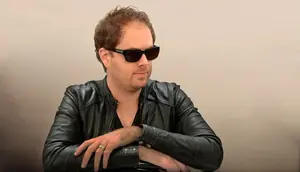
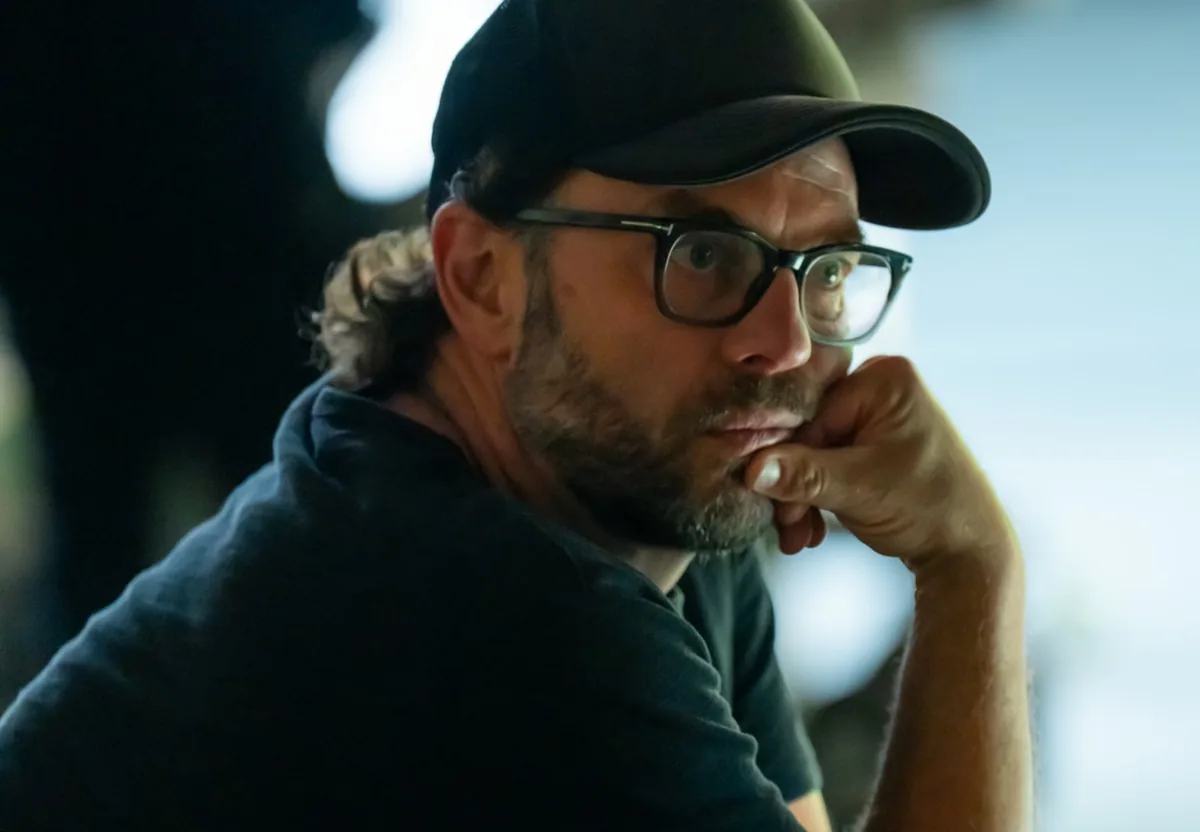

Listening back to this raw 2009 tape with Lee Cherry is a trip. It’s a snapshot of a moment right on the cusp of an explosion. A time when The Zodiac Show was still a fiercely protected Hollywood secret and Adam Lambert was just “one of our people” not a global phenomenon beamed into millions of homes via American Idol. The audio quality is thin but Cherry’s voice is sharp, cutting through the hiss with the clarity of a creator who knew exactly what he had, even if he had no intention of selling it.
The Zodiac Show wasn't born in a boardroom. It was conceived in the dark, after-hours corners of the LA club scene. It began its life as the Freedom Party, a name that perfectly encapsulated its ethos. It was a release valve for a tight-knit circle of professional performers. Cherry lays it out plainly. “It started originally as an after-hours party,” he says. “And it just kinda naturally evolved.”
But that evolution was forced. The party got too good, too popular. And then it got busted. Not by the cops, which would have been a more dramatic story, but by the club that housed them. Cherry recalls the moment with a certain fondness. “They liked the vibe,” he explains. “They said you can’t do the after-hours here anymore but you can do it in our regular club if you want.” This was the pivot. The moment the secret had to step into the light.
Going legit meant a rebrand. The name shifted from the Freedom Party to the Zodiac Party and eventually to The Zodiac Show. The final change was pure LA pragmatism. “Nobody wants to pay to get into a club in LA,” Cherry says, the industry veteran in him showing. “But people will pay for a show ticket. So we changed it to The Zodiac Show and that seemed to work.” It was a simple, brilliant move that repackaged the same raw energy into something with perceived value.
At its core, however, the show remained a family affair. This wasn't a cast; it was a collective. A chosen family of creatives who needed an outlet. “We often refer to ourselves as the Zodiac family because it's really just a group of professional artists who come together and put on the show for the love of doing it,” Cherry states. This wasn't a gig. It was a passion project where dancers singers and musicians could escape the constraints of their high-paying but often soul-crushing day jobs.
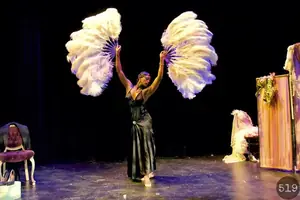
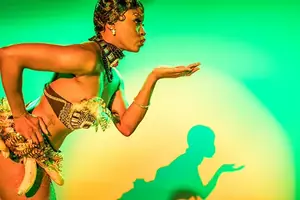
This is where the magic really happened. In an industry that demands artists fit into prefabricated boxes, Zodiac was a custom shop. “In our show we craft each piece for each person so that it's something that they really care about and it really reads on stage,” he says. It was a space for authenticity in a city built on artifice. You weren't just seeing a performance; you were witnessing an act of artistic liberation.
And then, the internet did what the internet does. Rumours of a Zodiac Show movie started swirling, fueled by the discovery of an IMDb page. Listening to the tape, you can almost hear Cherry shake his head at the misinterpretation. He is adamant in his correction. “We're not releasing a movie, or I should say we have no plans or intention to commercially release this as a movie,” he clarifies. “That was something that was completely made up. Not by us.”
The truth was far more personal. The footage was shot and edited as a gift. “I basically cut together the documentary as basically a love letter to everybody in the show,” Cherry explains. Some industry friends saw it, suggested festival submissions, and the official-looking IMDb page was an automatic byproduct of that process. It was a classic case of industry buzz outpacing reality, a small story made big by its proximity to a star about to go supernova.
Our show is music based. And we build our numbers around the music. So we never have someone flying through the air for no reason.
That star, of course, was Adam Lambert. Cherry’s tone when speaking about him is familial and protective. Lambert wasn’t a celebrity guest star; he was a friend who was part of the fabric of the show long before the world knew his name. “He's not one of the original members, but basically, he's one of our people. You know, he's one of our friends,” Cherry says. “We definitely consider each other to be part of the Zodiac family.”
When Lambert came to town, he was invited in. It was that simple. His now-famous original song wasn't written for Zodiac; it was a piece he already had that fit the show's theme. The collective would sift through everyone's original material, curating a new show each time under the banner of a particular zodiac sign. It was a living, breathing organism that changed based on who was available and what story they wanted to tell.
This organic nature is the show's greatest strength and, from a purely commercial standpoint, its biggest flaw. It couldn't be franchised or easily replicated. “Most musical shows have a book writer and a songwriter,” Cherry notes, contrasting Zodiac with the Broadway model. “Our show has a number of songwriters, a number of choreographers, and the show gets put together organically.” There was no master plan, just a commitment to the moment.
This free-form structure meant the show ran on its own chaotic schedule. “Honestly, we do it when we do it,” Cherry admits. They ran for months straight, then took a year off. They resisted pressure to capitalize on momentum. The only guiding principle was quality. This is a terrifying business model for any producer, but it was the only way to protect the show's integrity.
Cherry’s ultimate goal was singular and refreshingly pure. “Our main concern is that when we do it, that we make magic.” This philosophy is the antithesis of the modern content-creation machine. It was about creating singular, unrepeatable events for the people in the room, not generating scalable intellectual property.
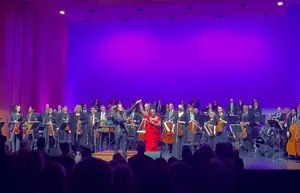
Naturally, people needed a frame of reference, and the comparison to Cirque du Soleil emerged, mostly due to the show's use of aerialists. Cherry is quick to draw a critical distinction. He respects the comparison but doesn't fully embrace it. It misses the point.
The difference, he argues, is the foundation. “Our show is music-based. And we build our numbers around the music,” he insists. “So we never have someone flying through the air for no reason.” For Zodiac, the spectacle always served the song. The music was the text, the acrobatics and choreography merely the illustration. It was a rock concert that grew into a multimedia theatre experience, not the other way around.
The Lambert effect was undeniable. Suddenly, Zodiac had a fan base it never anticipated: teenage kids. The YouTube clips, originally posted months prior, exploded. An insular Hollywood happening was now global. It was a strange and unexpected turn for a show Cherry describes as “definitely a grown-up show.” But he welcomed the new audience, even if Zodiac never pandered to them.
Looking back from today's perspective, the 2009 interview captures the end of an era. Zodiac was a word-of-mouth phenomenon, a holdover from a time when you had to be there. As Cherry mentions, they didn't even have a Twitter or Facebook presence until a few months before this call. It was one of the last true insider secrets of the LA performance scene.
The show was a beacon for a specific tribe, a place where top-tier talent could recharge and create without restriction. It was a collaborative process where the lines between audience and performer blurred, and the energy was raw and unfiltered.
As the interview concludes, Cherry is hopeful but unattached to any specific outcome. Maybe the documentary gets into a festival. Maybe someone funds a tour. Maybe they just do another show in LA when the time is right. The result was never the point.
The tape ends. What remains is the record of a fiercely independent artistic collective on the verge of being discovered by the mainstream. Lee Cherry and his Zodiac family were just trying to make magic. And for a brilliant, chaotic period, they absolutely did.
519 Magazine Archive: We are thrilled to officially unearth the Rockstar Weekly Digital Vault. This isn't just a re-post; it's a high-fidelity restoration of a pivotal era in music journalism. By pairing original print dates with modern retrospectives, we’re bridging the gap between historical rock-and-roll grit and the lightning-fast performance of today’s web. These stories—once locked in physical print and lost URLs—are now back, fully searchable, and optimized for a new generation of fans.
We are thrilled to officially unearth the 519 Magazine Digital Vault. This isn't just a re-post; it's a high-fidelity restoration of a pivotal era in music journalism. By pairing original print dates with modern retrospectives, we're bridging the gap between historical rock-and-roll grit and the lightning-fast performance of today's web. These stories—once locked in physical print and lost URLs—are now back, fully searchable, and optimized for a new generation of fans.