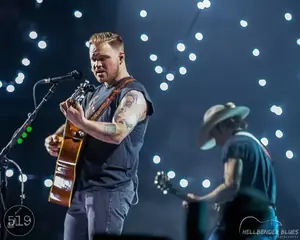

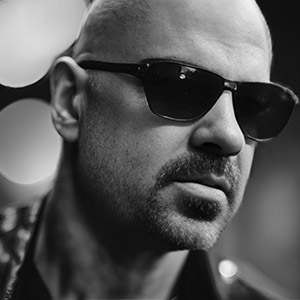
Standing in the dust-choked VIP pen at Boots and Hearts this past summer, I watched the afternoon sun bake the crowd into a state of lethargic dehydration. Then Tim & The Glory Boys hit the stage. The energy shift was immediate. It was not just the volume; it was the sheer, unadulterated exuberance of a band that knows exactly who they are, even if the rest of the world is still catching up.
To those stumbling upon them for the first time, their sound is a frantic, infectious collision of bluegrass roots and polished Canadian country. They call it "canoegrass." It is a clever bit of branding, sure, but it fits. It is raw, it is foot-tappingly good and it is currently carving a massive dent in the domestic music scene.
The British Columbia-by-way-of-Manitoba outfit recently dropped a self-titled full-length album through Sony Music Entertainment Canada. It is a record that serves as a loud, proud introduction to their specific brand of mayhem. But if you look past the boot-stomping and the joyous hoots echoing from the stage, there is a much deeper narrative at play. This is a band built on a spiritual foundation that has, in more ways than one, dictated the trajectory of their career.
The history of this group spans a full decade, and it is a timeline marked by significant evolution. Long before they were chasing country radio play, the members were staples in the Christian music circuit. They were not just hobbyists; they were heavy hitters in a completely different world.
"Yeah, Tim and the Glory Boys has been a band for about ten years now," shares Tim Neufeld, leaning back with the ease of a man who has seen both sides of the industry curtain. "For six or seven of those, we were with EMI in the US with a band called Starfield. We did a bunch of records with them. Then we transitioned to being Tim & The Glory Boys."
The pivot from the rigid confines of Contemporary Christian Music (CCM) to the sprawling, beer-soaked world of country is a move few attempt and even fewer survive. It requires a delicate recalibration of persona and prose. You are moving from an audience that demands piety to one that demands authenticity, though the two often overlap in unexpected ways.
When I asked about the mechanics of that shift, Tim was candid about the lack of a blueprint. "There are a few artists that have jumped back and forth. There's not really a roadmap, there's not, like, a user manual to changing genres. We’ve been working on it steadily since joining with Sony."
And yet, the roots of their past are still visible if you know where to look. They haven't scrubbed their history; they have just widened the lens. Their lyrics still carry the weight of devotion, even if the subject of that devotion is sometimes left open to interpretation. It is a classic songwriting trick, but they do it with more sincerity than most.
"Some of those old songs can have dual meaning. I've definitely written my fair share of Jesus is My Girlfriend songs, if you know what I mean," admits Tim with a smirk. "It can go both ways, right. But ultimately it's about love and connection in everything we do."
That connection extends to the very makeup of their fan base. While many country acts lean into the "outlaw" trope or the hedonism of the tailgate, these guys are playing a different game. They are leaning into a wholesome, multi-generational appeal that feels increasingly rare in an industry obsessed with the 18-34 demographic.
Colin Trask, who handles dobro and percussion duties with a technical precision that anchors the band’s more frantic moments, is firm on this point. "We're family men. We got kids and we always want to have music that kids can listen to. We're trying to always hold on to that."
Tim and the Glory Boys has been a band for about ten years now. For six or seven of those, we were with EMI in the US with a band called Starfield. We did a bunch of records with them. Then we transitioned to being Tim & The Glory Boys.
It is a risky stance in a genre that often rewards grit over grace. But by embracing both the spiritual and the secular, they have managed to deepen the emotional resonance of their live shows. There is a warmth to their set that feels earned rather than manufactured.
"Those are the songs in country that speak to me the most," Tim says, referring to the tracks that tackle the heavy lifting of love and family dynamics. "And it's cool to hear feedback from fans expressing those same emotions. That's ultimately why we do this."
When you get into the guts of the new album, "Float" stands out as a definitive moment. It is a track that feels like a humid July afternoon on the Assiniboine River. It is light, breezy and purposefully uncomplicated. In an era of overproduced stadium country, it feels like a necessary exhale.
Tim Neufeld explains the intent behind the track’s airy production: "With 'Float,' we wanted to transport listeners back to those moments of sheer contentment, like lazily drifting on a river with not a care in the world."
The song is a exercise in nostalgia, but it avoids being saccharine. It is about the rare luxury of being still. "It's about embracing the present moment," says Tim, "and realizing that sometimes, all we need to do is go with the flow and let life take its course."
Then there is "Take Me Backroad," a track that hits the familiar country trope of the rural escape but does so with a genuine sense of reverence. The dobro work here is particularly sharp, providing a metallic, earthy texture that keeps the song grounded in its bluegrass origins.
"This track is close to our hearts," shares Colin Trask. "It's a tribute to the roads less traveled and the adventures they've given us."
It is a song that works best when played loud in a moving vehicle, preferably one with a bit of rust on the wheel wells. It captures that specific Canadian prairie loneliness that is both haunting and beautiful.
Tim adds his own layer to the track’s meaning, noting the cyclical nature of their performances. "Every time we play 'Take Me Backroad,' it's like taking a trip down memory lane. It's about the stories, the laughter, the tears, and the endless horizons that beckon."
But the emotional anchor of the record is undoubtedly "Me Without You." This is the ballad that will likely end up on every wedding playlist from Kenora to Kelowna for the next five years. It is a soulful, heavy-hitting piece of songwriting that strips away the "canoegrass" antics for something much more vulnerable.
"It's a reflection on the moments when we realize just how profound our connections with loved ones are. The idea of facing the world without them feels unimaginable," Tim says. It is a sentiment that feels particularly heavy in a post-pandemic world where the fragility of connection is no longer an abstract concept.
Colin Trask emphasizes that the song's power comes from its lack of artifice. "When we were crafting 'Me Without You,' we knew it had to be raw and genuine. It's a song about vulnerability, about baring our souls and acknowledging our dependencies."
The lyrics are simple but effective, with lines like "Every shadow fades in your sun, every battle feels already won" doing the heavy lifting. The song’s success isn't just about melody; it is about its ability to mirror the anxieties and hopes of anyone who has ever been terrified of losing their person.
The visual identity of the album is just as intentional as the tracklist. The cover features a striking depiction of buffalos, a creature that has become a recurring symbol for the band. It is a bold choice that stands out on a digital shelf crowded with photos of guys in oversized hats.
Tim Neufeld explains the significance of the beast. "Buffalos have always held a special place in our artistic narrative. They represent strength, resilience, and the undying spirit of community. To us, they mirror the message of our music and our collective journey. In many ways, they are our spiritual animal."
It is a fitting metaphor. The buffalo is a creature of the plains, sturdy and unmovable, much like the band’s commitment to their own sound. They aren't chasing trends; they are standing their ground.
Colin Trask notes that the timing was finally right to make the buffalo the face of the band. "We've toyed with the buffalo imagery before, but for this album, it felt right to bring it to the forefront. There's a raw, wild energy to it – much like our songs."
The result is a package that feels cohesive. From the first note of "canoegrass" to the final fade of a ballad, Tim & The Glory Boys are proving that genre boundaries are largely an invention of marketing departments.
Whether they are singing to a higher power or just singing about the woman they love, the conviction remains the same. They are winning hearts in the country world not because they are following the rules, but because they are ignoring them in favour of something more honest.