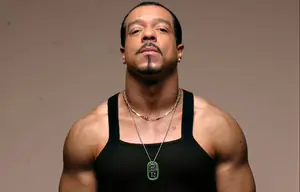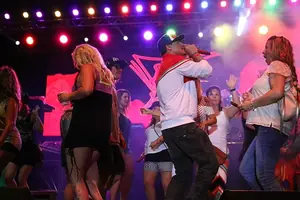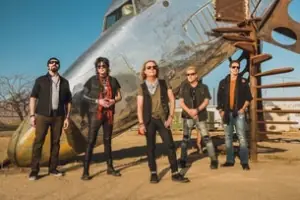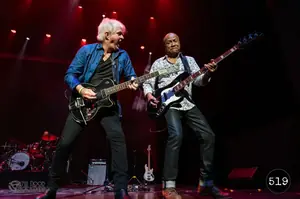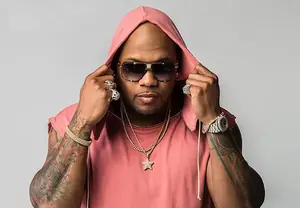

Standing on the concrete of Riverfront Festival Plaza, you can almost feel the ghost of the 1980s booming through the subwoofers. The humidity of a Windsor summer usually kills the vibe, but when that familiar snare hit from "It Takes Two" kicks in, the air just gets heavier. Rob Base is returning to the 519 on July 5 for Bluesfest Windsor, and he is bringing a specific brand of Harlem heat that hasn't cooled off since the Reagan era.
It is easy to dismiss the late 80s as a simpler time for hip hop, but that is a lazy man’s take. Base and his late partner, DJ E-Z Rock, were not just riding a wave; they were building the surfboard. Between 1988 and 1989, they dropped four singles that became the DNA of every wedding, club and sporting event for the next three decades. "It Takes Two," "Get On The Dance Floor" and "Joy and Pain" are more than just tracks. They are cultural artifacts.
We caught up with Base during his latest run of dates. The man has seen the industry flip inside out, yet he remains the focal point of the old school resurgence. We asked him about the 30th anniversary of his magnum opus and whether he saw this longevity coming.
"Definitely not in the beginning," Base says. "When we first did the record we thought it’d be a tri-state hit, we didn’t think it would travel around the world, the way it did. I’m really surprised and blessed that 30 years later, I’m still out here doing it. It’s a wonderful thing."
That "tri-state" mentality is what made early hip hop so raw. You weren't rapping for a global algorithm; you were rapping for the Bronx, Queens and Manhattan. But "It Takes Two" broke the seal. It utilized that iconic Lyn Collins "Think (About It)" sample in a way that bridged the gap between the gritty streets and the pop charts without selling its soul.
The brilliance of the track lies in its lack of pretension. It was designed to move bodies, not to solve geopolitical crises. When asked what was vibrating through his skull during the writing process, Base keeps it blunt.
"I definitely wanted to make a party record that everybody could get up and dance to and have a good time, as simple as that sounds, that was pretty much it," he says.
And it worked. The song has become a permanent fixture in the zeitgeist, most notably serving as the sonic backbone for *Lip Sync Battle*. Watching A-list celebrities struggle to match Base’s cadence in the opening credits is a bizarre full-circle moment for a kid who started out at block parties.
"It’s a good feeling," Base says. "When I first saw it, I was like wow, it’s 30 years later and people are still singing my song and having a good time dancing to the song. This is a blessing—that’s all I can say."
I definitely wanted to make a party record that everybody could get up and dance to and have a good time, as simple as that sounds, that was pretty much it.
There is a technical precision to the way Base flows over those Teddy Riley-adjacent New Jack Swing beats. It is a style that requires a certain level of breath control and charisma that often gets buried in today’s world of vocal processors and heavy reverb.
But the most jarring part of the Rob Base phenomenon is the demographic shift. You go to a show in Windsor and you see 50-year-olds reliving their youth alongside 19-year-olds who discovered the track on a TikTok dance challenge.
"When I see young kids that weren’t even born when the record came out, I really love that," Base says. "They come out to the shows, they might have 'It Takes Two' t-shirts on, and they know the lyrics word for word—it’s amazing!"
The *It Takes Two* album was a percussive beast. It was heavy on the 808s and even heavier on the lyricism. Some critics argue that this specific balance—the "lost art" of the party rap—has been suffocated by the moody, atmospheric trap that dominates the current charts. Base, however, is too much of a veteran to bite the hand that feeds the genre.
"I don’t know. I wouldn’t say that it’s a lost art form, music change over the years," Base says. "It was a different time and a different era; they just do it a little differently than the way we did it."
That diplomacy is classic Rob Base. But let’s be real: the era he represents was built on a different kind of labour. You couldn't fix a bad take in post-production back then. You had to have the lungs for it. Base was raised on a diet of Grandmaster Flash and The Furious Five, Jonzun Crew, Sugar Hill Gang and Kurtis Blow. These were the architects of the culture.
"I would definitely say all the guys, Grandmaster Flash—all of those guys from that era," Base says when discussing his early influences. "When I was a young guy coming up, I listened to them all the time, so they definitely influenced me."
The path from the sidewalk to the stage was literal for Base. There was no SoundCloud. There was only the park and the precarious power supply of a street lamp.
"Well I started out in my neighborhood," Base says. "There was a group called 'The Crash' and they used to come out into the park and DJ and rap on the mic and I used to watch those guys. Eventually I got my chance to get on the mic and I started doing it, so we would go to block parties, wherever the turntables and mics were outside, and we would go in and try to get on the mic. That’s basically how I started."
This was the era of the "hustle" before the word became a corporate buzzword. You had to be heard above the noise of the city. Discovery wasn't about an A&R guy scrolling through Instagram; it was about reputation. You had to be the best in the room, and the room was usually a borough.
"I was doing a lot of performing all over the Bronx and Harlem when it happened," Base says. "My manager was seeing what I was doing, and he heard around town who this Rob Base rapper was, and he just pulled me in. He said come to my office and he took me to the studio. We went to the studio and it was just history from then on in."
And history it was. Though his recording career with E-Z Rock was relatively brief, the impact was tectonic. E-Z Rock, born Rodney Bryce, passed away in 2014, leaving Base to carry the torch. It is a heavy burden, but one he handles with a professional grit.
If there is a critique to be made, it is that the industry often tries to bottle this era into a "nostalgia act" box. But seeing Base live at Riverfront Festival Plaza is a reminder that these songs still have teeth. They aren't just museum pieces. They are functional tools for crowd control.
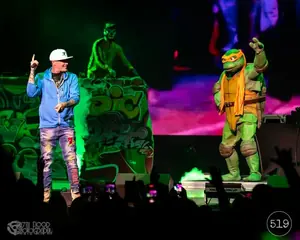
Rob Base is headlining a massive 90s music celebration at Bluesfest Windsor on July 5. The lineup is a fever dream for anyone who owned a Walkman: Vanilla Ice, 2 Live Crew, C+C Music Factory, Tone Loc, Young MC and DJ Scorpion.
The 90s Throwback night is just one of four massive nights at Bluesfest Windsor, taking over the Riverfront Festival Plaza on July 5 and 6 as well as July 12 and 13. If you want to see how it’s actually done, you should probably be there. Visit bluesfestwindsor.com for the full breakdown.