
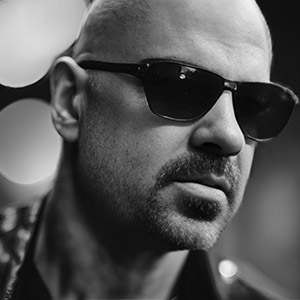
Standing on the concrete of the Riverfront Festival Plaza, you can almost feel the ghost of 1990 rattling the floorboards. The humidity off the Detroit River sticks to your skin like a club-room sweat, and the bass frequencies from the soundcheck are vibrating through the soles of my boots. It is the perfect setting for a man who defined an era of high-octane dance-pop with a voice that sounded like it was forged in a New York boiler room.
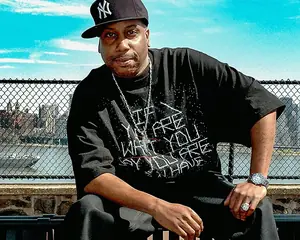
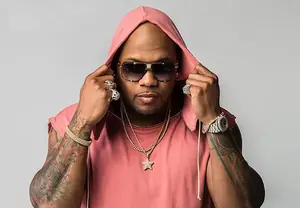
Freedom Williams is that voice. When C+C Music Factory dropped "Gonna Make You Sweat (Everybody Dance Now)" in late 1990, it was more than a chart-topper; it was a cultural shift that dragged hip-house into the suburban mainstream. But three decades later, the man behind the muscles and the rhymes is less interested in nostalgia and more focused on the biology of survival.
We are looking at nearly 30 years since those C+C Music Factory hits dominated the airwaves. I ask him if the weight of those three decades feels as heavy as the history suggests. He does not miss a beat.
"It doesn’t feel like 30 years because when you go to bed and wake up, your body’s rejuvenated," Williams says. "You don’t really think about what you did last week or last month because God put the forgetful thing in your head like a woman who had the baby. She always forgets the pain and has another one and then another one and every time she has one she said she would never do it again. Well memories are the same way. Time is the same way - it doesn’t really impact you as long as you stay healthy and you stay happy. You don’t really think about it."
There is a certain grit in that perspective. It is the outlook of a performer who has had to outrun the "one-hit wonder" label by simply outlasting the critics. And let’s be honest, there was a window in the late 90s and early 2000s where "Gonna Make You Sweat" felt like a relic of a neon-coloured past we were all trying to forget.
But music has a funny way of circling back. What was once "uncool" eventually becomes "classic" through the sheer force of persistence. Williams has watched this transition from the front row of his own career.
"Sometimes records have a tendency to come back in a different capacity than they were the first time, because when something is very new you’re still critiquing it," he notes. "When it stands the test of time, then you’re appreciating it. So that’s what we’re doing now."
And he is right. You cannot walk into a grocery store or a professional sports arena without hearing that iconic riff. It has become part of the sonic wallpaper of Western life. Williams points to a specific moment in television history as the barometer for how his work has aged.
"I remember the episode of King of Queens with Kevin James when he meets his wife - it’s 20 years earlier and they’re standing in front of a club and they play the whole version of Gonna Make You Sweat," Williams says. "He’s got that funny haircut from back in the 80s and then in the 90s they’re meeting each other. That’s what certain song does; it can remind you of a particular time in your life. So, when you first hear a song you’re looking at it new and fresh and then over time, it turns into appreciation. This is a song that’s just stands the test of time."
Originally there were two versions and one was all politics. So when I wrote Sweat, it was a little bit more current of the day of what was going on in the hood. ...At the time I was also homeless. I was just staying from place to place with some friends. I just wanted a hit record at that point.
But the polish of a multi-platinum record often hides the grime of its creation. The backstory of "Sweat" is not one of luxury studios and champagne. It was born out of a desperate need to eat and a creative process that was more about trial and error than some grand artistic vision.
"Originally there were two versions and one was all politics," Williams reveals. "So when I wrote Sweat, it was a little bit more current of the day of what was going on in the hood. I tweaked it, I didn’t know if I liked the tone with the beat, so I wrote it again. By the third time I just started repeating myself with stuff like 'dance ‘till you can’t dance ‘till you can’t dance no more'. I was like okay, I’ve run out of things to say. I just started repeating myself, so I had to break it up with 'jump to the rhythm jump jump to the rhythm jump'."
It is an honest admission. Most artists would try to claim some deep metaphorical meaning behind those lines. Freedom is more direct. He was tired, he was out of words, and he was struggling just to keep a roof over his head while the world was getting ready to dance to his voice.
"At the time I was also homeless," he admits. "I was just staying from place to place with some friends. I just wanted a hit record at that point."
That contrast is jarring. You have the most energetic, celebratory song of the decade being voiced by a man who did not have a permanent bed. It adds a layer of desperation to the track that most listeners never catch. But that hustle was baked into his DNA long before he met Robert Clivillés or David Cole.
Williams grew up in the petri dish of hip-hop. He was there when the genre was still a local New York secret, traded on hissing cassette tapes and performed on street corners before the industry figured out how to monetize it.
"I don’t remember but it was probably a mixed tape by Mathematical 5 from Queens, Double Trouble from Uptown, the Koch brothers from Harlem and mix tapes like that," Williams says when asked about his origins. "There was a guy that was able with the turntable by the name of MC Cartwright, in 1976 when I was a kid – he was dope. In 1978 when I was in the sixth or seventh grade, I knew this guy named Chris who would have school in Hollis where Run DMC was from and went to high school with them. I started rhyming with my man Chris in the sixth grade. In the fifth grade I was paying attention to it, but it really was in junior high school when I started travel to school at the back of the bus."
And that education on the back of the bus served him well when the business side of the music industry turned ugly. The history of C+C Music Factory is littered with legal battles, most notably the controversy over Martha Wash’s uncredited vocals in the "Sweat" video. But more recently, the fight has been over the very name of the group itself.
Williams eventually trademarked the C+C Music Factory name, a move that did not sit well with founding member Robert Clivillés. To Williams, it was a matter of who was actually doing the work and who was just sitting on the sidelines.
"Rob (Clivillés) was saying that I didn’t have the right to trademark it, but when he quit the business - and he admitted that he quit - he was harassing me for doing the shows," Williams explains. "He was telling me that he was never on the road with me and that he would only do the MTV awards and then go home. He never toured and never DJ’d for me, so why do I have to give him half my money. Most producers don’t take a cut of the artists. Dr. Dre don’t take Snoop’s cut or Tupac’s cut, but he always thought that he was entitled. When I was touring as C&C, he was trying to sue the agency and advise us that we couldn’t use the name, so I trademarked it. I was already the only one representing, so that’s when he got upset, but there’s nothing he can do about it at this point."
It is a cold, hard reality of the music business. If you leave the stage, someone else is going to stand on it. Williams has spent the last few decades being the face and the voice of that brand, keeping the songs alive in the hearts of fans who just want to hear the hits.
And he will be doing exactly that at Bluesfest Windsor on Jul. 5. He is part of a massive 90s celebration that feels like a high school reunion for the MTV generation. The lineup is a heavy-hitting roster of nostalgia: Vanilla Ice, 2 Live Crew, Tone Loc, Young MC and DJ Scorpion.
It is easy to be cynical about these package tours. But watching Freedom Williams perform, you realize it is not about the drama or the trademarks. It is about that one moment when the beat drops and several thousand people forget their age, their bills and their joint pain for three and a half minutes.
The festival takes place at the Riverfront Festival Plaza on Jul. 5 and 6, with a second weekend following on Jul. 12 and 13. If you are looking for a deep dive into the sounds that defined the end of the 20th century, you can find more information at bluesfestwindsor.com.
But if you are there on that Friday night, just keep an eye on Freedom. He is the one who survived the streets, the studios and the lawsuits to make sure you keep jumping to the rhythm. And honestly, he looks like he could do it for another 30 years.