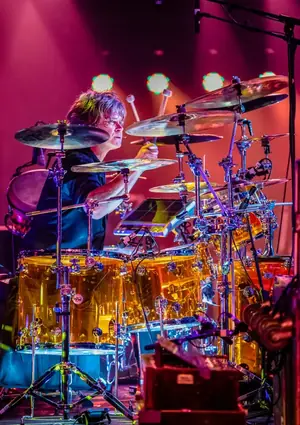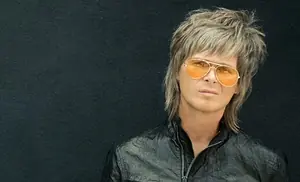

Sitting across from Jeff Burrows, you don’t just see a rock star who has toured the world with The Tea Party. You see a man who is visibly worn down by the digital grind, yet remains stubbornly committed to his city. We are at Good Time Charly, the air smelling of stale hops and potential, as he prepares to launch the 15th Annual Jeff Burrows Drum Marathon. This isn't just another gig. It is a grueling, 24-hour test of endurance that has been repackaged for the YouTube era, courtesy of LiUNA!625 and the Bluesfest Windsor channel.
The stakes are high because last year was a near-disaster. The transition from the sweaty, beer-soaked reality of a live bar to the sterile glow of a screen almost broke the tradition. Burrows is candid about the friction of moving a high-energy physical event into the virtual space.
"I really didn’t know how to go about it," Burrows says. "I had done The S’Aints show virtually and although it went smoothly and it looked great, there is a huge amount of effort that it takes to put it all together. For the live show we spend months not only picking the music for the album that particular year, which we couldn’t do last year, so we just did a best of Christmas songs."
The logistical nightmare of 2020 still hangs over him. It wasn't just the music; it was the entire infrastructure of charity. When you take away the physical bucket for donations and the face-to-face interaction, the momentum stalls.
"Then when we realized we couldn’t get together, and so on and so forth, it was just really tough trying to put it all together and people not knowing how to purchase the tickets," he explains. "I was really hesitant to do a drum marathon virtually because, again, it’s more about the preparation, the months long preparation to put them together."
And then there is the human element. For Burrows, the marathon isn't a solo flight. It is a partnership with Gary Demmans, a name synonymous with the event’s backbone. Trying to replicate that synergy through a monitor felt hollow.
"If I’m doing it virtually I’m doing it without our friend Gary Demmans and that proves to be difficult, because since we’re not really together, we’re not really doing anything," Burrows admits. "We did it last year. It was met with a modicum amount of success and we raised about half of what I was hoping or expecting. And then this year, since we were able to do it last year I figured okay, not the results I was hoping for but at least we can do it. I think I can do it. And then you need big sponsors because the productions of everything doesn’t cost pennies, it’s a venture that costs thousands of dollars to do, so gratitude to LiUNA!625 and we’re finally done."
But even with the backing of heavy hitters like LiUNA!625, the fatigue of the "new normal" is hitting a ceiling. Burrows is a performer who thrives on the vibration of a room, not the flicker of a camera lens.
"I’ve met my match when it comes to virtual productions because God bless the people at Media Street, God bless LiUNA, all the sponsors and everyone who’s helped to donate to it, but it’s just coming to a point where it’s tough to have to do anything else virtually," he says.
The recording process for this 15th anniversary was a marathon in itself, albeit a fragmented one. Instead of one straight shot of adrenaline, it was a multi-day slog at Media Street. The broadcast is set for Jul. 7, 8, 9 and 10, running from 4 pm until 10 pm each night.
"Yeah, it was recorded Monday, Tuesday, Wednesday, Thursday and I was at Media Street yesterday and I was doing some more promotions and stuff like recording and that and it’s looking really good," Burrows notes. "It’ll be out on the Bluesfest YouTube site on Jul 7, 8, 9 and 10 from 4 pm until 10 pm. So that’s kind of how we aligned it with the live performances for the camera."
Don't let the shorter broadcast windows fool you. The physical toll of "performing for the edit" is often more taxing than a straight 24-hour set. There is no hiding behind the haze of 3 am exhaustion when the cameras are rolling in high definition.
"We did four days in a row, six hours of recording, which turns into a twelve to thirteen hour day," he says. "They were long days. I hadn’t been that tired in a couple of years. I came home bagged every single night but excited. 24 hours straight ahead is a lot easier than four days in a row with twelve and thirteen hour days."
There is a technical honesty to Burrows' drumming that usually allows for minor slips in a live setting. But in a studio environment, the perfectionist takes over. The "jazz" of a live mistake becomes a "glaring error" when it's being archived.
"Well no, six or seven, you’ve got to count Aggie and Bill and the Sarafianos family, but yeah," he laughs, referencing the skeleton crew of supporters. "The differences too I guess is when I get tired at least in the 24 hour marathon, and I make mistakes here and there, we just call it jazz and no one’s the wiser, but if you make a glaring error when you’re recording you instinctively want to say stop, stop and then you know, you have to start over. Whereas if you’re doing it live, it is what it is. So you have to learn to live with those jazz moments, as I call them."
The recording did have one saving grace: the reopening of patios. As the garage doors at the venue swung open to the Stage Right side, a sliver of the old Windsor energy bled back in. It wasn't a packed house, but it was enough to remind him why he does this.
"Yeah, the patio was open so there’s two garage doors to the stage right side and that was nice," he says. "I mean, a lot of the usual suspects/supporters who come out regardless were there and they’re just showing support like God bless, right?"
For me, I thought, I’ve got this forum, I’ve got this platform, I’m on radio, I can talk about it and they can broadcast it for free for me because that’s what it was. I just thought pasta dinner fundraisers are awesome, bingo nights are awesome, but why not make it something that is in harmony with what I like to do.
One particular moment stood out, grounding the entire circus in reality. A friend, battling the brutal effects of radiation, made the trek from London just to see an hour of the set. It’s these stories that make the blisters on Burrows' hands worth it.
"I’ve got a friend who is literally dealing with radiation treatment in London and he went for his treatment and then his wife drove them to Windsor to catch an hour and I thought, oh my God, that’s dedication and a great friend so it was really nice," Burrows says. "The only thing again that it did was prolong the evening’s recording because I’d want to see everyone and say hi and it was such a great scene. And it was fun and as close as we can get so far to performing live."
The presence of other local talents like Crissi Cochrane provided the necessary "bumps" to keep the momentum from flagging during the long recording sessions.
"So literally hearing four, five or six people clap after Crissi Cochrane finishes a song, it was amazing," he recalls. "Those are the types of little bumps that get you through those longer nights. I just hope I don’t have to do it like that next year."
To understand the marathon, you have to go back to the hiatus of The Tea Party. Burrows found himself in the radio booth, staring at a platform he felt was being underutilized. He didn't want to just play records; he wanted to move the needle for the community.
"Well, way back when the Tea Party took time off and I ended up in radio, I just didn’t understand why the station I was on and other stations in our community weren’t out there using the modicum amount of fame or success that they had to champion causes," he says. "For me, I thought, well, I’ve got this forum, I’ve got this platform, I’m on radio, I can talk about it and they can broadcast it for free for me because that’s what it was. I just thought pasta dinner fundraisers are awesome, bingo nights are awesome, but why not make it something that is in harmony with what I like to do."
The early days were chaotic. The first marathon took place at the now-defunct Chubby Pickle, a venue that holds a certain grimy nostalgia for Windsor's music scene. It was a baptism by fire for both the drummer and the bands involved.
"So we did four sets of six hours with only four bands and it was at that bar called The Chubby Pickle back then, I don’t know what it’s called now," Burrows says. "But that was a long night, crazy long. Even the bands were excessively tired, especially if you’re singing for six hours, with a five minute break in there. I’ve always been community minded and I do selfishly enjoy raising funds for people, entities and charities in need, it was simple."
As he gets older, the physical toll becomes a central character in the story. There is a specific kind of pain that comes from sitting on a drum throne for 24 hours. Your back locks up, your hearing dulls and your head starts to throb.
"There’s a simple fix, I thought it’d be a lot easier to perform for 24 hours and it was in the first years but it’s getting more difficult now, especially with a virtual thing," he admits. "The one year I came in and The Tea Party were just off tour and I hit the stage and I could have probably gone another 24 hours, it was so nice. My back wasn’t sore, my butt wasn’t sore, my head wasn’t pounding and I could have just kept going, I felt great. But normally, even when I’m in good condition, because I try to get in shape for it, it’s a bit of a struggle, but that’s a part of it. It’s supposed to be like, this is what I’m doing, how about you donate some money, and we’re trying to offer the community something different."
In an era of skepticism regarding where charity dollars actually land, Burrows is refreshingly transparent. He isn't interested in the bloated overhead of national conglomerates. He wants the money to stay in the 519.
"You should always watch who and where your money is going to," he warns. "Even when I’m working with CMHA which is a national entity, they obviously have the Windsor Essex branch and there are branches across the country. Other than that, it’s pretty obvious that I’m local with what I raise but you should always be skeptical and people need to understand, don’t be afraid to say, look, I can’t help you out this time or something, it’s not a big deal. Charity is a strange thing. I never want anyone to feel guilty or be guilted into helping when you just can’t."
He is quick to point out that time is often more valuable than a cheque. For smaller organizations, a few hours of volunteer labour can outweigh a small donation.
"But if you have some time, time is as valuable or more valuable in many instances with what I’m doing," Burrows says. "And if you’ve got, you know, a spare three hours to help out a young charity or a young organization that can really make a difference in our community, then that’s the type of thing we do. I don’t want to get into some of the major charities that have CEOs and so on and so forth. You can read up on all of that if you like and I get it, it doesn’t seem fair, but the ones that I’m working with don’t really have chief executive officers that are making seven figures a year anyway. I can’t really say too much about it because I’m not very well versed in it but I know whom I deal with, it’s all nice and it’s all local."
This year, the focus remains sharp on mental health and recovery. The list of beneficiaries includes the CMHA Windsor, Maryvale, Harmony in Action, St. Clair College, House of Sophrosyne and In Honour of the Ones We Love.
"We’re sticking mostly with mental health but we’re getting of course the CMHA Windsor, Maryvale, which is teen mental health," he details. "We’re doing Harmony in Action which is adults with mental disabilities. We’re also doing St. Clair College and that is for their scholarship fund for whoever can’t afford that and it will have immense potential. House of Sophrosyne which is an all female addiction recovery program and they have offered really great services and In Honour of the Ones We Love, which is great. I love Anita and the work that they do, so primarily focused on those six."
The financial reality of the pandemic has made fundraising a steep climb. People are "tired" in every sense of the word—tired of screens, tired of isolation and tired of being asked for money when their own pockets are thin.
"I know we raised more than we did last year which was my hope because we doubled the time, we didn’t double the money because that’s quite difficult, especially a year into the pandemic where everyone is just, they’re tired, I’m tired, tired of virtual and tired of not going to events," Burrows explains. "So I know we did well, I think last year each charity received around $5200. And I think this year it’ll at least be $6500 or $7000. I’m not quite sure where that money has fallen yet."
To bridge the gap, the marathon has gone global. Thanks to a dedicated CMHA donation account, fans from across the ocean can chip in. It’s a strange perk of the digital age—a kid in Melbourne can fund mental health services in Windsor because they like the way Jeff hits a crash cymbal.
"I have gone through two separate Facebook fundraising events and I got the notice yesterday that the latest one was ending today so now that one’s done," he says. "But in order to continue receiving donations, the CMHA had set up a separate donation account right at their site Jeff Burrow’s 24 Hour Drum Marathon (cmha.ca). They set up an account earlier for me because some of my international friends weren’t able to donate to the Facebook one so this works from anywhere. So you can still do it in Canada which is great because that’s the majority of our donations, but anyone in the States, Australia, Europe, anywhere in the world can do so and they’re always really great. It’s nice again to have that little bit of fame or celebrity to be able to have friends from other parts of the world donate twenty bucks. They don’t have to do that."
When asked for a favourite memory from the last 15 years, Burrows doesn't point to a celebrity guest or a technical achievement. He points to a moment of near-collapse that was saved by a single text message from Wade Sharp.
"I don’t know if it was the favorite moment. It was a heartbreaking but hopeful moment," he reflects. "I finished year three and I was sitting with Gary Demmans after doing the 24 hours and I was just like, I don’t know if we can do this man because it’s two to three months of prep time and it’s going to Long & McQuade who hats off have helped me since year one and continue to donate equipment and money, the National side of things, but it’s so much work and it takes a lot out of me and I thought maybe I could just do something else."
The temptation to trade the drumsticks for a bingo caller's microphone was real. The exhaustion of the event often clouds the impact it has on the ground.
"Maybe I could just do a pasta dinner. Why don’t I just do some bingo nights," he says. "But I was sitting there and then I literally got a text that night while I was with Gary like one in the morning and we just finished the 24 hours and Wade Sharp had sent me a message that if it wasn’t for what we were doing at the time, and that was with Transition to Betterness, he wouldn’t have been able to deal with his previous wife’s illness and so on. He was so grateful and so genuine that I was like, Okay, I guess we are making a bit of a difference."
It’s a classic artist’s dilemma: questioning the value of the work in the face of sheer physical and mental drain.
"It’s weird because you want to do it and it is very hard and time consuming and sometimes you ask yourself, Am I making a difference?" Burrows asks. "Someone can walk in and God bless them if they’re a multimillionaire and they just cut a check for half a million dollars and great. And then I’m working my butt off for three months and wrapping it up with playing drums for 24 hours and here’s your $24,000 or whatever at the time and it just felt at the end of the day like is this even worth it?"
But the realization that "top of mind awareness" is just as vital as the cash is what keeps him in the seat. It’s about the visibility of the struggle.
"But then I got that message from Wade and then you know, not only does money make a difference but top of mind awareness makes a difference and I think that’s what put me back on track," he says. "I wasn’t falling by the wayside, I was just tired and that smacked me on the side of the head saying, how do you think people who are dying of cancer or are dealing with mental health issues are feeling when they’re not sleeping for three days in a row, and you’re complaining about being tired? You know, you just realize you don’t have anything to complain about. I’m healthy, I’ve got a great family and luck be told we haven’t had any major trauma or tragedy in our family. So that was kind of a wake up call. So I don’t know if it was the best memory but Wade continues to blow my mind and impress me every year. He’s such a community champ."
The comparison to the Jerry Lewis telethon is apt. There is a specific image of Lewis, sweat-soaked and delirious, being kept alive by the kids in wheelchairs. Burrows is the modern, rock-and-roll version of that weary showman.
"Right, it really is like that," Burrows concludes. "It’s not just the physical, it’s leading up to it starting in January I start getting anxious. I’m like, okay, what can we do? How can we do this? Where’s Gary? So it’ll help at least if we can go live again next year and I have my Gary back."
The 15th Annual Jeff Burrows Drum Marathon isn't just a broadcast; it's a testament to the stubbornness of the Windsor spirit. Catch it on the Bluesfest Windsor YouTube channel and, for the love of the arts, click that donate link. Jeff’s back can’t take much more of this without your help.
Get Tickets