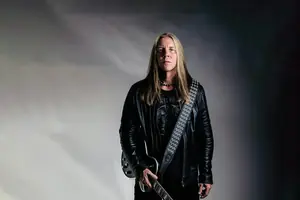

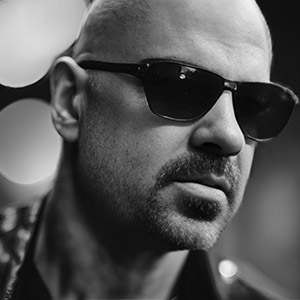
Listening back to these raw archival tapes from a 2009 conversation with Gunnar Nelson is like unearthing a time capsule. It captures a specific moment when the dust of the 90s had settled and the architects of melodic rock were figuring out their next act. Here was Gunnar, not just a survivor of the grunge apocalypse but a clear-eyed strategist, prepping a new record for Frontiers and reflecting on a legacy that was, even then, impossibly deep.
You can’t talk about Nelson without talking about family. It’s the entire premise. And Gunnar was acutely aware of the weight carried by that name, a name that represented a unique trifecta of pop culture success spanning three generations. It wasn’t just pressure; it was a standard. “My family's always had a really strong work ethic,” he says, the conviction clear in his voice. “We've always been perfectionists.”
This wasn't some manufactured talking point. It was a core belief system, a sense of professional duty inherited from his rock and roll pioneer father Ricky and his television icon grandparents Ozzie and Harriet. “I kinda feel my ancestors looking over my shoulder at all times, you know, making sure I'm actually doing the best I can do,” he admits. It’s a haunting and revealing line. For the Nelson twins, every chord struck and every lyric sung was being judged by ghosts.
The inevitable comparison to his father’s teen idol status was always there. But Gunnar is quick to draw a line. His father was a phenom at 16, a genuine product of the early television era. “My brother and I actually started our thing when we were 21,” he clarifies. A small but significant difference. The machinery of fame had evolved. Ricky Nelson navigated the world of screaming teenagers at live shows. Matthew and Gunnar had to navigate the 24-hour glare of MTV, a far more relentless and image-obsessed beast.
And that fame hit like a freight train. There’s no playbook for that kind of sudden ascent. “When you go from zero to hero overnight it's just really hard to make the adjustment,” Gunnar reflects. He speaks with the wisdom of someone who’s been through the fire, noting a fundamental truth of celebrity. “You also find out too that you're not the one that changes as much as the people around you change.” Friends fall away, unable to cope with a lifestyle that suddenly involves tour buses and screaming arenas instead of backyard barbecues.
Interestingly, his father offered little in the way of a roadmap. Experience, it turns out, is non-transferable. “I got to see for example what it's like to be in a different hotel room every night and how important keeping your sense of humor is,” he says. But that was it. The rest was a trial by fire, a lesson you have to learn on your own terms. “It's kind of like trying to talk to a guy about some girl that he shouldn't be with. You know he's got to find out for himself.”
Looking back, Gunnar’s pride in the band’s early days is palpable, especially regarding their live show. This is where the real expertise of the Nelson project lay, often buried beneath the polished production and photogenic image. “We always hired people who were way overqualified to play the kind of music that we wrote,” he states, name-checking monsters like drummer Bobby Rock and guitarist Brett Garsed. These weren’t just pretty faces; they were serious players who gave the band a credibility that critics often missed.
But for all their live prowess and platinum sales, they couldn’t stop the sea change. Gunnar’s description of the grunge takeover is brutally honest and captures the shockwave that hit the entire industry. “The music industry experienced the single largest paradigm shift in history when grunge came on the scene,” he says. “We went out, we did 205 shows and came back home and everybody was wearing flannel… everybody from that era basically found themselves without a job overnight by no fault of their own.”
I kinda feel my ancestors looking over my shoulder at all times, you know, making sure I'm actually doing the best I can do.
Their label, Geffen, famously signed both Nelson and Nirvana. The internal pivot must have been dizzying. One day you are the golden boys moving millions of units; the next, you are a relic of a bygone era. It was a corporate decision as much as a cultural one. And Nelson’s response was a masterclass in survival. They didn't just fade away. They went to work.
They launched their own label Stone Canyon Records and focused on markets in Europe and Asia where their brand of rock never went out of style. They released a staggering 10 albums in 10 years, servicing a dedicated fanbase while the American media ignored them. It was a smart, pragmatic move that kept them creatively engaged and financially solvent through the lean years.
Their musical identity was always defiantly positive, a stark contrast to the angst-ridden ethos of grunge and even the hedonistic snarl of their hair metal peers. “We made music. We started making music to get girls,” Gunnar says with a laugh. “And I think in general girls are more positive than guys are anyways.” This unapologetic, upbeat nature was their greatest commercial asset and, for some, their critical Achilles’ heel. Yet, he stands by it completely. “If you have a great attitude your life's gonna be a whole lot better.”
He holds a firm belief that quality ultimately endures, even if trends and fashions fade. “The bands I always listened to were bands that will never go away. They were bands like Heart and Queen and Boston and Foreigner and Bad Company,” he argues. “People could really sing and people can really write great songs. And I don't think that that is ever going to go out of fashion.” He saw the nascent comeback of melodic rock in 2009, a vindication of his philosophy.
But he was also a realist. He knew the cultural moment of the late 80s was gone for good. “I don't think that 80s music is going to be a lifestyle for the masses ever again,” he says, a remarkably prescient observation. “But I do think that the appreciation for really great melodic hard rock has never died and will always be there.” He understood their future was not in reclaiming the mainstream but in serving a loyal and dedicated niche.
This interview was, in essence, a preview of that strategy. He was promoting Lightning Strikes Twice, a new album for the Italian label Frontiers, which had become a sanctuary for classic rock acts. The mission was explicit: create a direct sequel to After the Rain, as if the grunge interruption never happened. It was a bold attempt to reclaim their narrative, bolstered by original drummer Bobby Rock and guitar virtuoso Neil Zaza.
Beyond the new album, they were curating their legacy, planning a live album from their first tour and a collection of the original demos that got them signed. This archival work, Before the Rain, was pure fan service, offering a glimpse into the creative process before the major label gloss was applied. It’s a playbook that countless legacy bands have since adopted.
Even the personal anecdotes from this time speak to a sense of maturation. The story of his iconic blonde hair is telling. He didn’t just cut it; he donated it to Locks of Love, a charity making wigs for young cancer patients. The symbol of his youthful fame was sacrificed for something more meaningful. “I was the world champion hair farmer of all time,” he jokes, before getting serious. “I don't have to prove myself to anybody anymore.”
This charitable impulse runs deep, rooted in a profoundly personal story about a young fan with cancer named Erin Vallowe, who became close with the band before she passed away. His subsequent work with St. Jude Children's Research Hospital was a way to honour her memory. It adds a layer of humanity that complicates the easy caricature of the 90s rock star.
And then there’s the candid frustration with touring Canada. It’s a classic road-dog complaint, but one that rings true for many American acts. “Your government is really strict on musicians,” he states bluntly. “It's a very musician unfriendly country… they see a guitar on our backs when we're coming through customs and we get the full body cavity search and you know they tax us so heavily on our merchandise we can't ever bring any records into the country.” It’s a rare look at the unglamorous logistical headaches that exist behind the curtain.
Looking back from more than a decade later, this conversation reveals Gunnar Nelson as a thoughtful and resilient artist. He was a man who understood his band’s history, its strengths and its place in a fractured music industry. There was no bitterness about the past, only a fierce dedication to the craft and a clear plan for the future. He wasn’t chasing ghosts or trends. He was simply getting on with the family business.
519 Magazine Archive: We are thrilled to officially unearth the Rockstar Weekly Digital Vault. This isn't just a re-post; it's a high-fidelity restoration of a pivotal era in music journalism. By pairing original print dates with modern retrospectives, we’re bridging the gap between historical rock-and-roll grit and the lightning-fast performance of today’s web. These stories—once locked in physical print and lost URLs—are now back, fully searchable, and optimized for a new generation of fans.
We are thrilled to officially unearth the 519 Magazine Digital Vault. This isn't just a re-post; it's a high-fidelity restoration of a pivotal era in music journalism. By pairing original print dates with modern retrospectives, we're bridging the gap between historical rock-and-roll grit and the lightning-fast performance of today's web. These stories—once locked in physical print and lost URLs—are now back, fully searchable, and optimized for a new generation of fans.