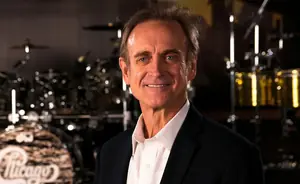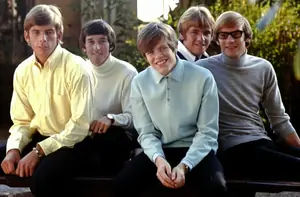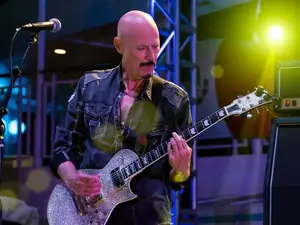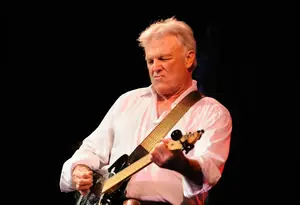
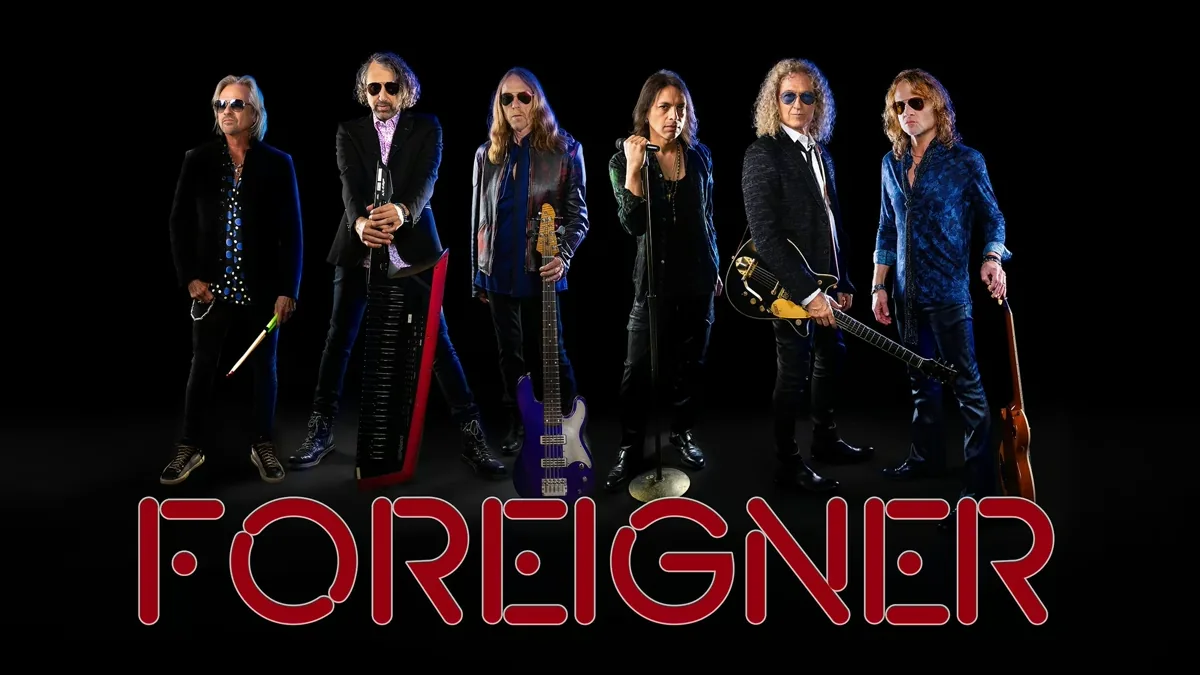

Looking back at these raw archival tapes from a 2009 conversation with Foreigner’s Tom Gimbel is like unearthing a time capsule. It’s Sept. 30, 2009. The band had just dropped Can’t Slow Down, their first studio album in 15 years and a line-in-the-sand moment for what many were calling Foreigner 2.0. The air was thick with skepticism. Could this new lineup, fronted by the then-unproven Kelly Hansen, possibly measure up to the monolithic legacy carved out by Lou Gramm? Gimbel, the band’s multi-instrumental utility man, was right in the centre of that storm.
The release of Can’t Slow Down was a high-stakes gamble. It wasn’t just a new record; it was a mission statement. The industry had shifted dramatically since their last outing. And the pressure to recapture that quintessential Foreigner sound, a blend of muscular guitar riffs and soaring melodic balladry, was immense. But Gimbel reveals it was less about reverse-engineering a classic formula and more about trusting the source.
“That’s a great question,” Gimbel says, considering the challenge. “I think that the sound is almost inherent, sort of automatic. It’s gonna be there because Mick’s writing the songs. He’s not the type to try and follow a trend or anything like that. He’s got this natural core of soul and talent that’s in there, and I think it almost happens in spite of whatever the musical climate is.” It’s a crucial insight. The sound wasn’t a target; it was Mick Jones’s DNA. The album was a direct result of his creative core, not a focus-grouped attempt to appease old fans.
And then there was the elephant in every room: Kelly Hansen. Replacing a voice as iconic as Lou Gramm’s is a fool's errand, a career-killer. Yet, somehow, Foreigner pulled it off. Gimbel’s recollection of Hansen’s recruitment is pure rock and roll kismet, a story that hinges on a persistent golf buddy. “My buddy Ricky Phillips, the bassist for Styx, he kept saying, ‘Kelly Hansen, man. Kelly Hansen, man.’ We were out there golfing, you know, you got a few hours to talk about it. Right?”
After Jones sifted through countless MP3s from singers across the globe, from France to Australia, Hansen’s voice cut through the noise. But the real test was the rehearsal room. “Once Mick had decided that he really liked Kelly’s voice the best of them all, we went into a rehearsal, and it just instantly clicked,” Gimbel recalls. “And it hasn’t stopped since. Kelly’s the classic overachiever. He’s continuing to get better. Like, every minute of the day, he continues to improve. It’s like watching this kind of skyrocket go up, and it just will not stop.”
This wasn’t just about hitting the notes. It was about honouring the memory of the songs for millions of fans. Gimbel understood the psychology of it perfectly. “He was walking into a position that was just ready to be ridiculed. And instead of that, against all odds, the audience just immediately accepts him and loves him because he does such a great job singing the songs,” he explains. “If you remember the songs a certain way and then the band delivers them in a way that satisfies that memory, people are just so fulfilled.”
But to understand the new, you have to respect the old. Gimbel, who had the rare experience of playing with both vocalists, speaks of Lou Gramm with a reverence reserved for rock royalty. He calls him a legend, one of the greatest rock voices ever. He also paints a picture of a man with a wicked, dry wit. The two singers, he notes, shared an unexpected trait: a mix of incredible kindness and sharp comedic timing.
Gimbel shares a story from his first meeting with Gramm, a kind of informal audition at a restaurant. “I said, ‘You know, I heard something that, like, we all think of that as the snow belt and it’s freezing and there’s 85 feet of snow. I heard that because of the global warming and so forth that the snow belts are shifting and it’s not quite as cold up there now.’ And he looked at me with a stone-straight face. He said, ‘Oh, yeah. It’s almost tropical.’” The table erupted. Gimbel was left cringing. It’s a perfect, humanizing moment that cuts through the rock star mythology.
And then we look at Mick, and he goes, ‘I do know music.’ We’re like, ‘75 million records sold. Yeah. I guess you do.’
The conversation then shifts to Gimbel’s own remarkable history, particularly his tenure with Aerosmith during their colossal Pump era. The story of how he landed the gig is itself a classic. Joe Perry, tired of slick demo tapes, called him directly. “He’s like, ‘You know, we’re getting all these demo tapes from these guys that are like synthesizers and multitracks and sequencers. We just want somebody that can play like a 12-bar blues on the piano.’ I said, ‘I can do that.’”
Gimbel promptly carried the phone over to his piano and banged out some boogie-woogie. The next thing he knew, he was on a plane to Vancouver, walking into Little Mountain Sound Studios where Aerosmith was recording with Bruce Fairbairn. His audition was a jam session with Steven Tyler on drums and Gimbel on sax. A wild call and response. It was pure, raw musicality.
But the experience, as thrilling as it was, came with a built-in glass ceiling. “With Aerosmith, it was difficult because you had the five original guys, and they needed a sixth guy to play keyboards and sing backgrounds. But it wasn’t like they were gonna have a sixth member of Aerosmith. That’s never gonna happen,” he admits. He was in a state of professional limbo, a hired gun. The dynamic couldn’t have been more different from what he found in Foreigner.
“When I got to Japan, they started asking, like, ‘You know, what about that guy?’ And that’s when the Aerosmith people went, ‘Oh, jeez. Put less light on him. Fewer sax solos for that kid.’ Leave him in the dark,” he says with a laugh. “And there again, with Foreigner, Mick and Lou, they’re like, ‘Man, take the spotlight. Go. Run with it.’ I would go out in the audience with a wireless microphone on my sax and run around the crowd. And, you know, they really wanted me or whoever to bring the house down. So you can see why it was just a better fit for me.”
This contrast defines Gimbel’s career arc. He wasn't just a sideman; he was a musician’s musician, a multi-instrumentalist whose passion bleeds through the tape. When asked his favourite instrument, he struggles to choose, comparing them to his children. He loves the organic nature of singing, the emotive power of the saxophone, the physical release of the drums and the orchestral scope of the piano.
He speaks about music with an almost spiritual awe, describing a symphony at Carnegie Hall. “The sound is so incredible in there. It’s like it comes up from the stage and hangs in the air. Like, the note is a giant note hanging in the air,” he gushes, still audibly floored by the memory. “A symphony orchestra has got to be one of the most beautiful sounds I’ve ever heard.” This isn't just a guy in a rock band; this is a lifer, completely consumed by the power of sound.
Back in the world of Foreigner, he describes a band of seasoned pros who know how to check their egos at the door. With producer and bassist Jeff Pilson often taking a leading role in arrangements, Gimbel learned to trust the process. “It’s easier for me to just kind of silence my own thoughts,” he explains. “What happens is I turn my thoughts off like a faucet. Because I’ve got these thoughts like, ‘Oh, no. What if we did this? What if we did that?’ And I’m saying, ‘Just don’t say anything. Let Jeff Pilson tell you what to do.’”
Ultimately, however, all roads lead back to Mick Jones. “Mick is always gonna be the musical director in that situation. And we’re extremely grateful to have somebody so incredibly gifted calling the shots,” Gimbel states. “And then we look at Mick, and he goes, ‘I do know music.’ We’re like, ‘75 million records sold. Yeah. I guess you do.’”
The interview also touches on the brief but notable tenure of Jason Bonham on drums. His departure wasn't acrimonious but a matter of logistics and life. The grueling tour schedule of nearly 100 shows a year was tough for a family man, and the ever-present possibility of a Led Zeppelin reunion meant he couldn't fully commit. Brian Tichy, a powerhouse drummer, stepped in seamlessly, cementing the lineup that would define this new era.
Listening to this conversation from 2009, it’s clear that Gimbel wasn't just doing press; he was documenting the rebirth of a legacy. He was articulating the delicate balance of honouring the past while forging a new future. He was a key part of the machine that ensured Foreigner didn't just become a nostalgia act but remained a vital, touring force.
His final thoughts on Canada feel particularly poignant, a nod to a certain tranquility he feels north of the border. “For Americans when we go to other countries that aren’t such warlike creatures, there’s a little bit more tranquility in the air,” he muses. “I sometimes feel that way when we jump across to Canada. It’s a wonderful feeling in the town and in the country.”
This interview captures a band at a crossroads, filled with uncertainty but driven by a deep respect for their craft and their founder’s vision. They weren't just slowing down; they were gearing up for a second act that, as we now know, would last for decades to come. And Tom Gimbel was the perfect witness to it all.
519 Magazine Archive: We are thrilled to officially unearth the Rockstar Weekly Digital Vault. This isn't just a re-post; it's a high-fidelity restoration of a pivotal era in music journalism. By pairing original print dates with modern retrospectives, we’re bridging the gap between historical rock-and-roll grit and the lightning-fast performance of today’s web. These stories—once locked in physical print and lost URLs—are now back, fully searchable, and optimized for a new generation of fans.
We are thrilled to officially unearth the 519 Magazine Digital Vault. This isn't just a re-post; it's a high-fidelity restoration of a pivotal era in music journalism. By pairing original print dates with modern retrospectives, we're bridging the gap between historical rock-and-roll grit and the lightning-fast performance of today's web. These stories—once locked in physical print and lost URLs—are now back, fully searchable, and optimized for a new generation of fans.