
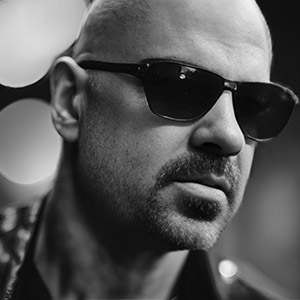
Looking back at these archival tapes from 2012 always hits differently. The audio hiss, the slight delay on the line, it all paints a picture of a time just before everything became impossibly slick. On this particular reel is William Shatner, fresh off being named Rockstar Weekly’s number one coolest Canadian, a title he meets with a perfect blend of sincere appreciation and wry self-deprecation. The man was in the middle of a late-career renaissance that would make artists half his age exhausted just watching.
He was prepping to host the Juno Awards, touring a one-man show that just conquered Broadway and had a new concept album, Searching for Major Tom, on the shelves. And when we crowned him, his response, after a beat, was pure Shatner. "Well, I am," he says. "And the reason I do that is I dress very lightly." It’s a throwaway line, but it’s the key to the whole man. He deflects with humour before diving into the philosophical deep end.
The conversation quickly turned to definitions. What is a rock star? What does it mean to be cool? Our interviewer offered a broad, corporate-friendly take about being a star in your own environment. Shatner cuts through it. “But don't they have to have rhythm and not have acne?” he asks, a jab at the superficiality of it all. But then he gets serious, seizing on the idea of what ‘cool’ truly means in a way that reframes his entire public persona.
“If being cool means you are immersed in the present day, you're in the moment, then it is the finest compliment of all,” Shatner explains, his cadence shifting from performer to philosopher. “Because living in the moment is the only way you can live since the past you can't do anything about, the future hasn't happened and you have no idea whether your next breath is your last or not.” This wasn't just talk. His entire career at that point was a masterclass in staying in the moment, in refusing to become a nostalgia act.
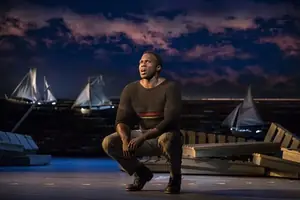
That philosophy was forged in the fire of his one-man show, Shatner’s World: We Just Live in It. Listening to him recount the experience is to hear an artist pushing himself to the absolute limit. He’d been on Broadway five decades prior, but this was a different beast entirely. It was terrifying. He knew the New York stage demanded more, a higher calibre of performance art that the successful Canadian run couldn't guarantee.
“When I was asked to come to Broadway, I realized I needed something different. They were gonna hold me to a higher standard,” he recalls. So he rebuilt the show. He obsessed over every word, every story, every pause. He likens it to editing a 5000-word article down to 3000, a perfect analogy for a writer. “How to use one word instead of two,” he says, detailing the brutal economy of the stage.
And the pressure was immense. Compounding the artistic anxiety, he was hit with a debilitating stomach flu the day before opening. He talks about doctors telling him he was down to one-third of his kidney function from dehydration. Lesser performers would have folded. But Shatner, channeling that ‘live in the moment’ ethos, compartmentalized the physical weakness and delivered.
“The power of the mind is extraordinary and I was able to focus,” he says. He describes the post-show tradition of going to Sardi’s, the iconic theatre-district restaurant, to await the reviews, dreading that a bad notice from The New York Times would ruin his meal. But the Times loved it. The validation was immense, proof that his ability to connect with an audience was sharper than ever.
The word fun does not apply to tour. I would not use the word fun on a tour.
But the glamour of a Broadway triumph stands in stark contrast to the reality of the road. When asked if the preceding Canadian tour was fun, his response is immediate and blunt. “The word fun does not apply to tour. I would not use the word fun on a tour.” He speaks with the authority of someone who knows the grind intimately, from the indignity of airport security to the gamble of a decent hotel mattress.
For him, the tour is a brutal logistical exercise. A mind-bending, back-breaking job where the only reprieve is the two hours on stage. “If you know about touring, you're always fatigued,” he states plainly. This wasn't a complaint. It was a statement of fact, a peek behind the curtain that demystifies the rock star life our magazine’s name evokes. The real work isn't the performance; it's everything you endure just to get to the performance.
His Canadian identity is a complex thread throughout the tape. He’s candid about his travel frustrations, even calling out a major airline by name. “Air Canada, you can put this in your article, is getting me because of that ridiculous rule,” he says, detailing a baffling booking policy that was forcing him into an unnecessary flight to get to the Junos in Ottawa. It’s a moment of raw, relatable anger that every Canadian has felt.
But beneath the frustration is a deep-seated pride. He speaks with genuine admiration for the nation’s creative output. “Canada, in my opinion, supplies an inordinate amount of talent of all kinds to the rest of the world, based on per capita,” he says. “There's something about being in Canada leads to creative people doing innovative things.” He saw himself as part of that tradition, a product of a system that fosters a unique kind of artistry.
His own musical journey began not in a studio but on a talk show couch. He recounts how, on The Mike Douglas Show, he decided to do more than just plug a project. He would perform lyrics. “I'm a trained actor. Iambic pentameter is familiar to me,” he says, explaining his logic. “Why can't I do this rhythmically with the tune carrying the melody line?” This wasn’t a gag; it was an artistic experiment, applying classical training to pop music.
That experiment led, decades later, to Searching for Major Tom. The label, Cleopatra Records, initially pitched a generic science fiction album. Shatner wasn't interested. But then he saw a narrative possibility, a way to connect disparate songs by artists that referenced David Bowie’s iconic character. It was an act of curation, of finding a story where none existed. The album tells the story of what happened to Major Tom after “Space Oddity.”
The one original track, “Struggle,” co-written with Adam Hamilton, is something he’s brutally honest about. It’s the album’s necessary fulcrum, the moment of the astronaut’s life-or-death crisis. Yet, his assessment is without ego. “It's not a great song, but it fills its purpose,” he admits. That’s the critique of a producer, not a frontman. He understands structure and function over vanity. It’s a moment of trustworthiness that grounds the entire project.
Of course, you can’t talk to Shatner without talking about Kirk. He’s not precious about it. He sees the character as a modern myth. “He's a mythological character who is a hero with all a hero's qualities of bravery and courage and strength and determination and a hero's less fine qualities, which we discover show by show.” He also confirms that in his own literary universe, through the novels he wrote, Kirk lives on.
The ultimate validation of that legacy came not from Paramount but from NASA. They asked him to provide the wake-up call for the final voyage of the space shuttle Discovery. He brings it up as the prime example of his own definition of cool. “Talk about living in the moment,” he says, the awe still present in his voice. “This was this most complex tool that mankind has ever made. And there were human beings in that tool that needed to be awakened in order to land. And they gave me the honor.”
Away from the stage and screen, he finds his zen-like moments with horses. He describes the unification of animal and man as a profound experience, a connection that goes beyond a simple hobby. It’s where the relentless pace of his life finds a moment of quiet. A sentimental memory of fishing with his father in the Laurentian Mountains provides another rare glimpse of the man behind the persona, a moment of heat, sun and loss that feels incredibly intimate.
The interview ends on a note of pure, uncut Shatner. When asked if the Priceline Negotiator is really dead, he delivers a perfect, on-brand soundbite. “It is my feeling that the Priceline Negotiator can never die.” It’s a plug, yes, but it’s also a statement about his own endurance. His characters may die, but he, and the ideas they represent, carry on.
Listening back, it’s clear our magazine got it right. In 2012, and even now, William Shatner’s coolness wasn't about being trendy. It was about his complete refusal to stop working, creating and engaging with the world on his own terms. He was living in the moment, and he was dragging the rest of us along with him.
519 Magazine Archive: We are thrilled to officially unearth the Rockstar Weekly Digital Vault. This isn't just a re-post; it's a high-fidelity restoration of a pivotal era in music journalism. By pairing original print dates with modern retrospectives, we’re bridging the gap between historical rock-and-roll grit and the lightning-fast performance of today’s web. These stories—once locked in physical print and lost URLs—are now back, fully searchable, and optimized for a new generation of fans.
We are thrilled to officially unearth the 519 Magazine Digital Vault. This isn't just a re-post; it's a high-fidelity restoration of a pivotal era in music journalism. By pairing original print dates with modern retrospectives, we're bridging the gap between historical rock-and-roll grit and the lightning-fast performance of today's web. These stories—once locked in physical print and lost URLs—are now back, fully searchable, and optimized for a new generation of fans.