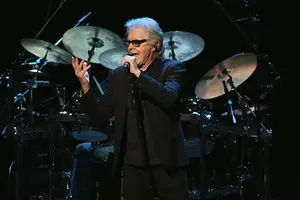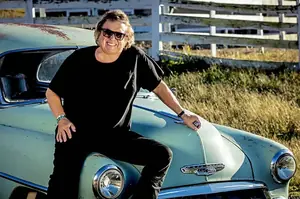
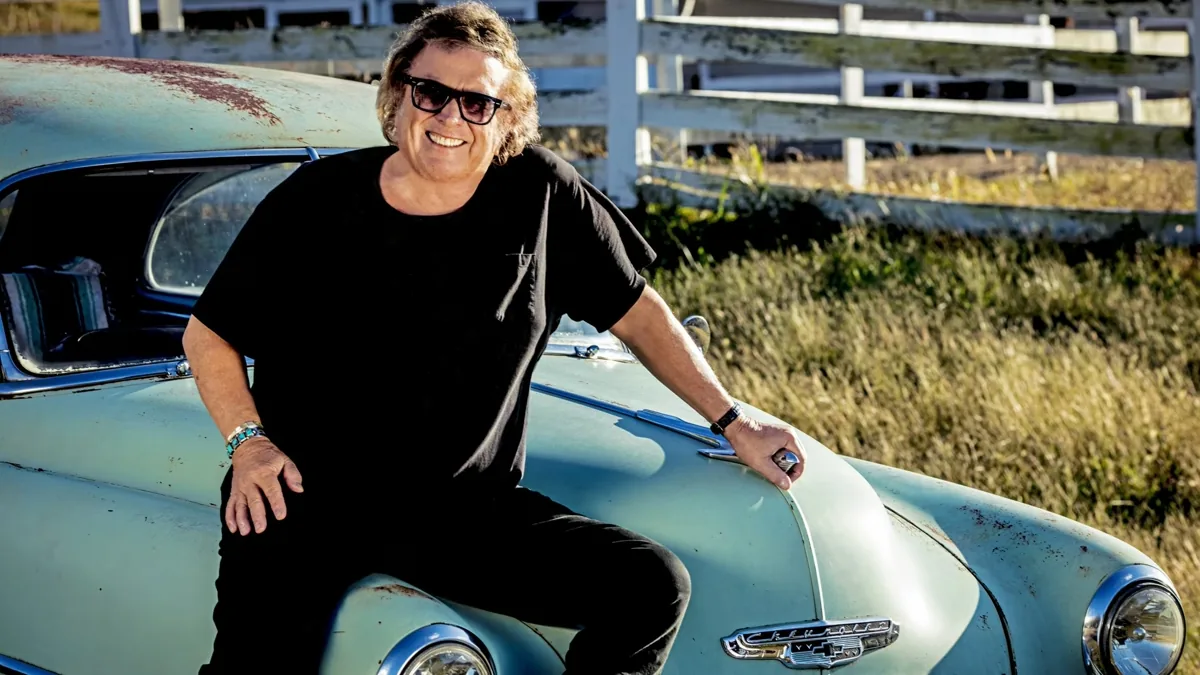
Looking back at the raw transcripts from our 2021 conversation with Don McLean is to witness an artist grappling with a half-century-old legacy. At the time, the entire industry was gearing up to celebrate the 50th anniversary of American Pie, an album and a title track that have become so ingrained in the cultural lexicon they feel less like pop music and more like a foundational text. But McLean himself wasn't on a simple victory lap. He was candid, sharp, and as ever, brutally unfiltered.
The anniversary was being marked by a flurry of activity that felt like a full-scale brand revival. A children's book, a documentary, and even a Broadway show were in the works. The book, he explained, was not some literal translation of his famously cryptic lyrics. It was something else entirely. "It's just an invented idea of a boy delivering a newspaper and finding a friend and getting the guitar and going off into the world, making a difference with his music," McLean says. "It's kind of my story but, you know, for little kids."
It’s a clever move, a fable designed to distill the McLean origin myth for a new generation without getting bogged down in the jester, the sacred store, or the sorrow of Buddy Holly. This wasn't about decoding the past. It was about cementing the legend for the future. He confirmed the book "doesn't parallel the song at all. It's a fable. It's its own thing." And that separation is key to understanding McLean's relationship with his own monolithic creation.
He seems acutely aware that the song outgrew him decades ago. It's not just a document of an era but, as he acknowledges, an anthem of American life itself. When asked if he ever tried to bottle that lightning twice, he was blunt. "No, I felt I did it, though I didn't really need to do it again," he states. "I really only write one song about one thing and that's it. You know, I don't really do things over and over, you know?"
This is a rare and admirable stance in an industry built on sequels and rewrites. McLean sees himself primarily as a singer, a song interpreter who occasionally writes when a compelling idea strikes. He’s not a factory. This artistic integrity is precisely why American Pie has the weight it does. It wasn’t engineered for ubiquity. It was a singular, ambitious vision.
And that ambition was still firing on all cylinders in 2021. He was deep into a new album called American Boys, a project that once again turned his focus toward the state of his nation. He speaks of his country with a complicated love, not blind patriotism. "I love my country, but I'm not one of those, you know, America right or wrong, you know. I believe that we need to be constantly corrected because America is unique, really, among all the countries of the world because it is an ongoing experiment of sorts."
This perspective informed his sharp turn into social commentary. Speaking during the pandemic, he foresaw a looming crisis with the end of stimulus packages, a sentiment that was mirrored here in Canada. "We have, you know, a lot of serious problems in America, and one of them is the homeless problem, which is gonna get much worse very soon," he warned. "Because all those stimulus checks are going to stop, and they're going to be able to kick people out of their apartments, and it's terrible, but unfortunately, a reckoning is coming."
I wanted to write a big song about America. And I wanted to write a new song about America that had never been written before. Not America the Beautiful or This Land Is Your Land or any kind of patriotic song, but something that was it would capture the the emotion of America and the craziness of America.
His words were prescient. He lamented that nobody in Washington was getting ahead of the problem, comparing the potential fallout to the 1930s. This wasn't just idle talk from a comfortable rock star. McLean puts his money where his mouth is through The Don McLean Foundation, which he established to funnel his considerable earnings into causes like homelessness, hunger, and poverty in his home state of Maine and beyond.
That income stream is formidable. He readily admits that four songs carry the financial weight: "American Pie," "And I Love You So," "Vincent," and "Castles in the Air." He notes that while "American Pie" is the most famous, "'And I Love You So' has been recorded by the most people." The distinction is crucial. It’s a portfolio of standards, not a single lottery ticket that has sustained his 50-year career.
This financial security perhaps fuels his most pointed opinions, particularly his disdain for artists who resent their own success. He doesn't just disagree with the sentiment; he finds it pathetic. "I think that anybody who has been given success in the music business and feels it's a cross to bear is an idiot," he says with zero hesitation. "Know? You're lucky to have anything at all. This is a very, very tough business."
It’s a brutal and necessary dose of reality. McLean sees his career not as a burden but as a winning hand. "You know, it has aces in it." He attributes his longevity not to one song but to a body of work and a relationship with his audience built over decades on stages around the world. To him, complaining about a hit song is the ultimate act of a spoiled and foolish mind.
His critique doesn't stop with ungrateful artists. It extends to the entire landscape of modern music, which he views as a creative wasteland. He pulls no punches, calling it "garbage with, you know, rhythm tracks and stuff that's said over and over again, like you're in a mental institution, and if you listen to it enough, it'll put you into a mental institution. It's sad. It really is. It's not music."
It's a classic take from a veteran of a different era, but it carries a certain weight. He traces the decline back to the disco era, which he believes ushered in a period of mindless hedonism over lyrical substance. "Once disco came in, we started down the mindless road of, you know, dancing, dancing, and snorting, snorting coke, coke, and looking good on the dance floor, and the hell with everything." He sees modern rap and pop as just an extension of that same ethos: music as pure rhythm delivery for a culture that has lost its direction.
Is he out of touch? Maybe. But his critique comes from a place of deep respect for the craft of songwriting, a craft he feels has been devalued in an era of short attention spans and algorithmic playlists. He pines for the days when music could connect on a deeper intellectual and emotional level.
Ultimately, what this conversation reveals is an artist defined by his own ambition. The same impulse that drove him to write a sprawling eight-minute epic about America's soul is the same one that fuels his unreleased oddities like "Aftermath," a song from the perspective of a murderer in a mental institution. He was never afraid of a big idea.
"I wanted to write a big song about America," he reflects on his most famous work. "And I wanted to write a new song about America that had never been written before. Not 'America the Beautiful' or 'This Land Is Your Land' or any kind of patriotic song, but something that would capture the emotion of America and the craziness of America."
He succeeded beyond his wildest dreams. And 50 years later, he was still here, still writing, still performing, and still raging against the dying of the light. The music may have died on that cold day in 1959, but Don McLean's defiant artistic spirit clearly had not.
519 Magazine Archive: We are thrilled to officially unearth the 519 Magazine Digital Vault. This isn't just a re-post; it's a high-fidelity restoration of a pivotal era in music journalism. By pairing original print dates with modern retrospectives, we’re bridging the gap between historical rock-and-roll grit and the lightning-fast performance of today’s web. These stories—once locked in physical print and lost URLs—are now back, fully searchable, and optimized for a new generation of fans.
We are thrilled to officially unearth the 519 Magazine Digital Vault. This isn't just a re-post; it's a high-fidelity restoration of a pivotal era in music journalism. By pairing original print dates with modern retrospectives, we're bridging the gap between historical rock-and-roll grit and the lightning-fast performance of today's web. These stories—once locked in physical print and lost URLs—are now back, fully searchable, and optimized for a new generation of fans.