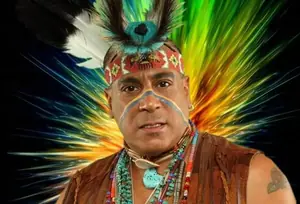
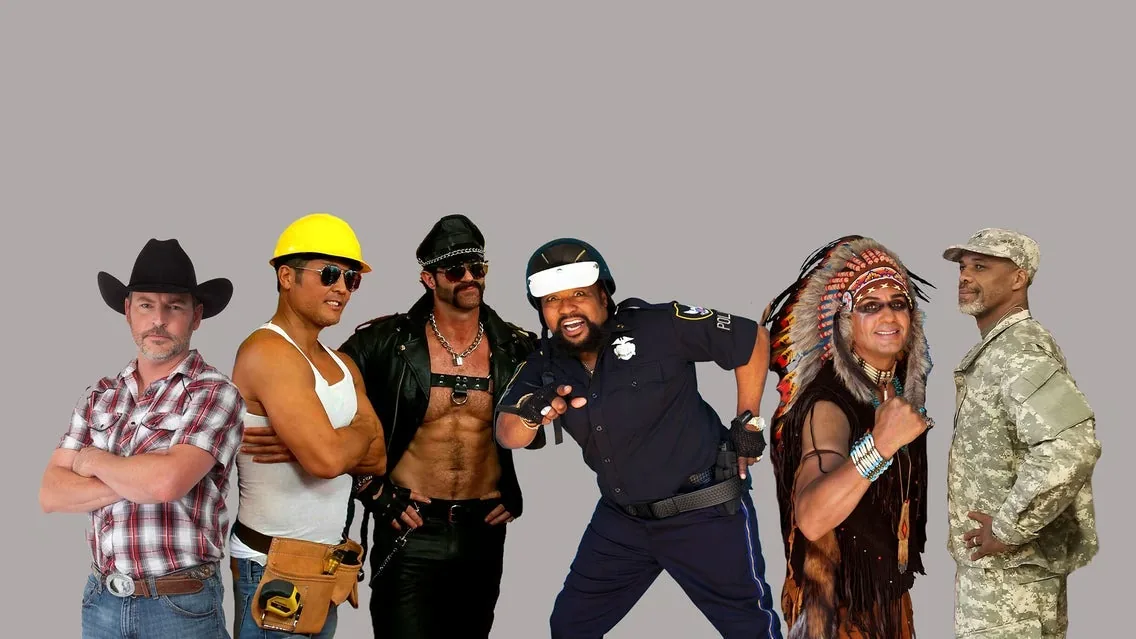
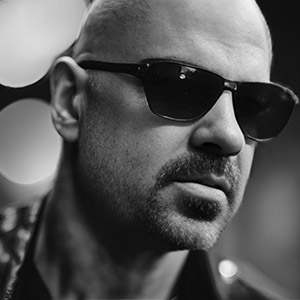
Looking at the raw transcripts from this 2021 conversation with Felipe Rose, you get a real sense of the cultural pressure cooker of the time. The world was just beginning to exhale after holding its breath for more than a year. And into that strange, tentative new dawn stepped the original Native American from the Village People, not with a nostalgia trip but with a declaration. His new solo track was called “Dance Again” and it was less a song title and more a direct order for a public starved of joy.
The timing was impeccable, almost cynically so if it weren’t born from such genuine pain. The cultural landscape was primed for a disco revival. Rose notes the moment perfectly. “In 2020, while we were all experiencing this, like, global consciousness at the same time, the clubs were empty,” he says. “And yet great music was being produced... Dua Lipa with ‘Levitating’ and BTS with ‘Dynamite’ and all of the Donna Summer remixes exploded around the world.” It was a bizarre paradox. The music was begging for a dance floor that didn’t exist.
But there was another, stranger element at play. The Village People’s own anthem “YMCA” had been co-opted by the Trump political machine, a phenomenon Rose admits was a “head scratcher.” This collision of new disco-pop and the weaponization of a classic created a unique space for an original architect of the sound to reclaim the narrative. The world was, consciously or not, waiting for an authentic voice from the era to weigh in.
The catalyst for “Dance Again” however wasn’t a market opportunity. It was born from staggering personal loss. Rose speaks of losing a gut-wrenching number of friends to COVID-19 and the subsequent depression that followed. The passing of legendary DJ Warren Gluck in June and his longtime producer Frosty Lawson in August sent him into a spiral. “I fell into a deep, deep state of depression,” he admits. The song became his therapy, a way to write himself out of the darkness.
“Let me just start writing about what I was feeling,” Rose explains of his process. “And that's when I realized, okay. Well, you know what? I wanna write about something that I know really well that a lot of people can identify with because I don't wanna write a song about depression. Come on. Right? So the one thing that I realized that we didn't do was dance.” And so the concept was born. It was a simple, profound truth. The most fundamental human expression of joy had been taken away.
He calls the song a “big giant finger to COVID” and it’s the perfect summation. It’s an act of defiance. Rose, collaborating with young producer Tyler Stafford and songwriter Ben Harrison, wasn’t just chasing a hit. He was building a life raft. “I knew when we wrote the song in January, I was looking to this moment because I knew they were talking vaccines, and then eventually, we're gonna open up and come out of our little holes,” he says. It was an act of profound faith in the future.
The production itself is a masterclass in threading the needle between homage and modernity. To achieve it, Rose looked to an unlikely source. “I love Post Malone, so why don't you give me some of what he uses?” he recalls telling his producer, specifically referencing the hit “Circles.” This led to a deep dive into the modern application of Auto-Tune, a tool still wildly misunderstood by the public.
Rose’s explanation of the technology is one of the most lucid you’ll hear from an artist. He wanted that sound, not as a vocal crutch but as an atmospheric texture. His producer explained that the modern concept of Auto-Tune “is not that you're trying to make the voice sound better than it is, is to make the voice sound softer and in presence in the room... Without Auto-Tune, he explained that it would be dry. It would be flat.” It’s about creating intimacy not perfection. It’s the difference between hearing a singer in the corner and feeling them singing right next to you.
The chemistry was very combustible. It was just not it was toxic. How I survived it this long... I think, tells the story of my life in having tenacity and having the spiritual guidance to just keep plowing.
In a bizarre twist of fate, Rose shares an anecdote about interviewing Michael Bublé who said the exact same thing, refusing to make an album without the tool for the same reasons. Then, even more bizarrely, he recounts bumping into Bublé at LaGuardia Airport. After introductions, the crooner confessed something amazing. When his own audiences are a bit stiff, he stops the show cold. “He does a rousing rendition of YMCA,” Rose says with a laugh. It’s a stunning testament to the song's universal power to get people on their feet.
That said, Rose has no desire to relive the group dynamic that produced those hits. His candour about his 40 years in the Village People is brutal and refreshing. “I'm not missing the group format of it a bit at all,” he states plainly. “I mean, I did it, and it was a lot of it was painful. A lot of it wasn't fun. When you're in a group situation, you have to take a backseat to everything. Your ideas are not welcome.”
He paints a picture of a creatively stifling and toxic environment, largely under the thumb of their “very, very controlling producer” Jacques Morali and complicated by the presence of the ex-lead singer. “The chemistry was very combustible. It was just not, it was toxic,” Rose says. “How I survived it this long... I think, tells the story of my life in having tenacity and having the spiritual guidance to just keep plowing.” His solo career isn’t a second act; it’s a liberation.
His story is one of navigating multiple infernos: getting through the death of disco, the AIDS crisis and the commercial belly-flop of their 1980 film Can’t Stop the Music. He rightly notes the movie was old news before it even came out, a time capsule of a moment that had already passed. He also reveals an incredible piece of New York film trivia: while they were shooting their campy musical in the Village, Al Pacino was simultaneously filming the dark, controversial thriller Cruising in the very same neighbourhood.
Like Kiss Meets the Phantom of the Park, the Village People movie has aged into a kind of campy, cult-classic comfort food. But Rose points out its staggering, unlikely success in one specific market. “In Australia, it is one of the biggest, biggest movies ever there in movie history,” he reveals. “And every year for New Year's Eve, they basically play the movie an hour and a half before the New Year rings in... on Channel 9.” It’s a wild legacy for a notorious flop.
Of course, you can’t discuss the Village People without discussing Casablanca Records, the label that defined 70s excess. Rose shares a priceless memory of Donna Summer visiting the office, where one of his bandmates noticed her wig was on crooked. After some nervous hesitation, they pointed it out. “She said, ‘oh god.’ And she, like, fixed the hat with the wig and turned it around,” he laughs. It’s a small humanizing moment amid the larger-than-life mythos of the label.
That mythos was built on image. When asked if the Village People ever considered dropping the costumes, like Kiss did in the 80s, Rose is quick to correct the record. “Well, we did that. We did that when we left Casablanca and went with RCA, and we did the Renaissance album,” he says. They adopted the New Romantic look happening in London, inspired by Steve Strange and George Michael. “It just was a disaster,” he says. “If it ain't broken, don't fix it.”
On the topic of the group’s inherent gay identity, Rose offers a perspective rooted in the era they existed in. They were not activists in the modern sense of the word. The subtext was everything. It was coded into the lyrics of songs like “San Francisco” or “Fire Island” but it was never spoken aloud in the mainstream. “I don't think that we were showcasing it... We weren't sitting on the Merv Griffin show or on Dick Clark [saying], ‘I'm a homosexual.’ I mean, we couldn't do that. It was a very different time,” he insists. “My private life was my own business.”
Most crucially, Rose clarifies that his iconic persona was never a character to begin with. It was an extension of his identity. “He is a real person. I mean, he is my father. My father is Native American, two tribes, Lakota and Apache,” he explains. “It wasn't a character. I dressed up in the village when I was really young with my long hair, braiding it, and walking around with my little cutoff shorts and moccasins.” He was simply bringing his authentic self to a global stage.
His journey from the “ghettos, from the bowels of the village” to international stardom is the stuff of legend. He checked all the boxes of a marginalized existence: biracial, gay, poor, a starving artist. That history, combined with a tumultuous relationship with his mother, forged the resilient artist speaking in 2021. He had survived everything the industry and life had thrown at him for more than 40 years.
And now, with “Dance Again” he was ready to reintroduce himself. He spoke of plans for a solo show that would see him start in his famous tribal gear, but slowly strip it away throughout the performance, ending the night as just himself, a man in jeans. It’s the perfect metaphor for his entire career. He is an artist finally stepping out from behind the icon, ready to define his own legacy.
519 Magazine Archive: We are thrilled to officially unearth the 519 Magazine Digital Vault. This isn't just a re-post; it's a high-fidelity restoration of a pivotal era in music journalism. By pairing original print dates with modern retrospectives, we’re bridging the gap between historical rock-and-roll grit and the lightning-fast performance of today’s web. These stories—once locked in physical print and lost URLs—are now back, fully searchable, and optimized for a new generation of fans.
We are thrilled to officially unearth the 519 Magazine Digital Vault. This isn't just a re-post; it's a high-fidelity restoration of a pivotal era in music journalism. By pairing original print dates with modern retrospectives, we're bridging the gap between historical rock-and-roll grit and the lightning-fast performance of today's web. These stories—once locked in physical print and lost URLs—are now back, fully searchable, and optimized for a new generation of fans.