
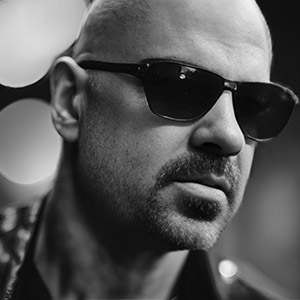
Felipe Rose is leaning into his screen from his home office, and even through a digital lens, the man carries the sort of gravity you only get from four decades in the trenches of global superstardom. Most people see the headdress and the war paint of the disco era’s most enduring "Indian" archetype, but that is a reductive view of a New Yorker who survived the collapse of Casablanca Records and the literal death of a genre. He is 67 now, looking remarkably lean and sharp, possessing a clarity that only comes after you have buried enough friends to fill a stadium.
We are talking because Rose has decided to stop looking in the rearview mirror. After the forced hibernation of the pandemic, he dropped "Dance Again", a track that feels like a necessary exhale after a long, suffocating hold. It is a post-isolation party anthem born from a visceral need for human proximity. But Rose is not just some legacy act chasing a ghost. He is re-inventing his sonic profile for a world that has moved far beyond the four-on-the-floor simplicity of 1978.
"The song is called 'Dance Again'. It basically came out of my desire to want to go back to the clubs to dance because in 2020 while we were all experiencing this global consciousness at the same time, the clubs were empty, and yet, great music was being produced and great music was coming out like Dua Lipa with 'Levitating' and BTS with 'Dynamite' and all of the Donna Summer remixes exploded around the world," Rose says.
His eyes light up when he mentions the modern pop landscape. He is a student of the game, not a bitter relic. He watched the world shift while he was locked away with only his cat for company. And he watched as his most famous contribution to the cultural lexicon, "YMCA", was hijacked by a political circus he never asked for.
"Then suddenly, you have people gravitating on TikTok and social media, playing disco. Then of course, as you well know, 'YMCA' took on a life of its own, with the Trump phenomenon and that became a head scratcher, you were kind of wondering, why, so I just realized that it was the best thing for me to do, and the best way for me to deal with a lockdown living by myself with my cat," he says.
The lockdown was not just about boredom; it was about survival and the heavy toll of grief. Rose was watching his social circle evaporate as the virus tore through the New York creative community. It was a brutal stretch that nearly broke his creative spirit.
"I started working on a full length show from all of the music I’ve recorded, and my Native American award winning music, and put together a couple of medleys. Then I started losing a lot of friends, a lot of people I know due to the COVID-19 and I don’t know if you’re familiar with a one on Legendary DJ Warren Gluck who passed away in June. I thought, okay, that’s pretty much it for me," Rose says.
The hits kept coming. In Aug., he lost Frosty Lawson, his longtime producer and a man who understood the nuances of Rose’s solo voice. The loss sent him into a spiral.
"In August, I lost my longtime producer, Frosty Lawson, and I fell into a deep, deep state of depression. Coming out of that, and going into the winter of 2020. In November, it was just better to sit up, and let’s just take stock of it all and let me just start writing about what I was feeling. I started writing in song form. That’s when I realized, okay, you know, what I want to write about is something that I know really well that a lot of people can identify with, because I didn’t want to write a song about depression, come on, right. So the one thing that I realized that we didn’t do was dance, I said, let me write something and let’s dance again," he says.
The result is a track that feels like a middle finger to the misery of the previous year. It is defiant. To get the sound right, Rose sought out a collaborator who did not carry the baggage of the disco era. He found Tyler Sarfer, a 24-year-old producer who brought a contemporary edge to the session.
"I took that idea to my young producer, Tyler Sarfer, who is 24 years old. He’s a genius, and another songwriter, friend of mine, Ben Harrison, and I told him that I wanted to go into the studio on my birthday of this year and that I wanted to record. So we did that. Booked the session and went there without a mask on or social distanced, and we wrote in five hours and we came up with the song," Rose says.
The timing of the release was almost prophetic. As the world began to squint at the sunlight and consider reopening, "Dance Again" landed as a manifesto for the return to the floor.
"It is, I love that. It’s like a giant no, you’re not gonna do this to us. Wow. Looking back, I knew when we wrote the song in January, I was looking to this moment, because I knew they were talking vaccines, and that eventually we’re going to open up and come back out. Come on, come out of our little holes, right out of little cocoons or bubbles and then I realized, okay, well, here we are," Rose says.
But the industry remains a strange beast. Rose initially pushed the track out under his own name, sans the bells and whistles of a major label machine. He wanted the music to stand on its own, but the "Felipe Rose" brand carries too much weight to stay under the radar for long.
"When the song came out, they pre-released it on the distribution label that I put it on, but I put it on just as Felipe Rose, like, no big deal. Then what I realized, Oh, my God, and I didn’t send a picture and a bio and when they received that they freaked out, oh my god, this guy’s not an independent artist. This guy’s huge. They released it without letting me know and then suddenly, it was out all over the internet, all over the world and everyone’s going, oh, wow, this is really great. But people were not putting two and two together. So we uploaded one of the pictures of my Native image and the bio, and people, oh my god, then they got it," he says.
The track itself is a fascinating hybrid. It has the DNA of a throwback, but the skin is purely modern. Rose insisted on using heavy vocal processing, a move that might surprise those who expect a raw, 70s soul vocal. He is fascinated by the way modern stars like Post Malone occupy the "space" of a recording.
"That’s what I wanted to do. I wanted Tyler to give me certain elements of what music is today, and how would a vocalist like me sound by myself without a group? Basically, his question to me was, well, how do you want to sound? I said, Well, I love Post Malone, so why don’t you give me some of what he uses. And I saw it in an interview that he was doing for 'Circles', which I’m madly in love with that song," Rose says.
Michael Bublé said, 'When my audience gets a little, they don’t want to really get into the show. At the beginning of the show, they just want to sit there comfortable, with their lavish asses on their seat.' He then stops his show, and he does a round of a rousing rendition of 'YMCA'.
He is not using tech to hide a failing voice; he is using it as an aesthetic choice. It is about the "presence" of the vocal in the room, something he feels is missing from dry, unprocessed recordings.
"In that interview, they asked him, why is your sound so good, and he said, it’s called auto-tune. So I told my producer, I want to auto-tune and I want a lot of that. Tyler basically explained that my concept of auto-tune is not that you’re trying to make the voice sound better than it is, is to make the voice sound softer in the presence in the room. That’s how we hear music on the radio today, and on podcasts, and without auto-tune it would be dry, it would be flat. It wouldn’t be in the room. It’s like he’s just in the corner over there singing. So auto-tune the way they used auto-tune today, just like in the beginning, over 10 years ago was Cher with 'Believe', and that’s why it sounds like a robot. But she was brilliant with it and got away with it," he says.
It is a sentiment echoed by other titans of the industry. Rose recalls a chance encounter with Michael Bublé at LaGuardia Airport that validated his approach to production and the enduring power of his legacy hits.
"You hear yourself in the room, it’s like, I’ll play the song, then I can just stand still and it’s like, I can hear Felipe standing next to me singing. That’s what it sounds like. That’s what it feels like. I was at LaGuardia Airport and I saw Bublé in front of me putting his stuff in the bin, and I heard one of the guys behind me say 'There’s Michael Bublé' and I said, 'I know I know'. So when we were gathering our things, I’m like 'Hey, Michael, I love you, man.' And he goes, 'Oh, yeah, thank you'. , and then I introduce myself and he goes, 'Holy Shit, I love you guys'," Rose says.
Bublé, it turns out, uses "YMCA" as a tactical weapon during his jazz-pop spectacles to wake up audiences that might be getting a little too comfortable in their premium seats.
"He said 'You know, when my audience gets a little like, they don’t want to really get into the show. At the beginning of the show, they just want to sit there comfortable, with their lavish asses on their seat. He then stops his show, and he does a round of a rousing rendition of YMCA' and I said, 'Do you really?' Michael says 'Yes, he gets some going with that'," Rose says.
While the legacy of the Village People is a gold mine, the reality of being in the group was often less than harmonious. Rose has been solo for five years now, and he is not looking back with any longing for the group dynamic. He describes a culture of control and toxicity that would have crushed a lesser artist.
"I am not missing the group format of that, at all. I mean, I did it, a lot of it was painful. A lot of it wasn’t fun. When you’re in a group situation, you take backseat to everything, your ideas are not welcomed, or they’re not ever imagined. We were also under the helm of a very, very controlling producer, and ex-producer who basically lives vicariously through us as if they were the stars, and Jacques Murali," he says.
The internal politics were just as brutal. The chemistry between the members and the leadership was often at a breaking point.
"Then of course, we had the ex-lead singer, and that’s a whole other planet to itself. So, the chemistry was very combustible, it was toxic. How I survived this long, and got through it, I think it tells the story of my life and in having tenacity and having the spiritual guidance, to just keep plowing, getting through disco, the death of disco, the AIDS crisis, marching straight through that fire," he says.
Rose’s survival is a feat of sheer will. He took over as president of the corporation and co-founder, trying to keep the brand polished even as the industry turned its back on disco in the early 80s.
"As sad as all of that was coming through into the 90s, and really taking the group as president of the corporation and as one of the co-founders, and then really instilling those members that were with me, let’s make the show better. Let’s keep the show always fluffed up, I know we’re not a new group, but we can sound and look good and look new on stage," he says.
Then there is the film. *Can't Stop the Music* is a piece of camp history that was DOA when it hit American theatres. It was a victim of bad timing and a production that felt out of step with the gritty reality of New York in the late 70s.
"Finally, after all of those changes, and with disco dying and the movie flopping in the US, 'Can’t Stop the Music' because the movie was old even before it came out. It should have come out two years after we hit the scene. Then the interesting thing is that when 'Can’t Stop the Music' was filming in the village 'Cruising' with Al Pacino was filming in the village. That movie was also a train wreck because you had the likes of Nancy Walker directing her first feature motion picture," Rose says.
Despite the initial failure, the movie found a bizarre, enduring life in Australia. It has become a New Year’s Eve staple, a televised tradition that keeps the Village People relevant for new generations of fans Down Under.
"It does. It absolutely does. The interesting thing is that in Australia, it is one of the biggest movies ever there and in movie history, and every year for New Year’s Eve, they basically play the movie an hour and a half before the New Year rings in. So they play it on Channel Nine every New Year’s Eve. That’s crazy, isn’t it? It’s fun, though that you have generations after generations after generations watching it and then rediscovering The Village People all over again," he says.
The transition from disco icons to cult legends was paved with albums like *Live and Sleazy*, a record that captured the group at the peak of their powers just as the floor was dropping out from under the genre.
"There was good music in there. That was the pinnacle of when disco, the format and the industry started to collapse under us, and we had 'Rock and Roll Is Back Again' in that album, and 'Sleazy' by David Hodo. There was a lot of good music for that album. It’s just sad that the industry panics, collapses under us with the soundtrack of the movie, so you just keep marching on. But for us, we were very lucky that we had a worldwide following. So we were able to just move across the waters and go through Italy and Southeast Asia, and South America. That’s what we did for years, we toured internationally," he says.
Rose’s time at Casablanca Records is the stuff of industry myth. The label, run by Neil Bogart, was the epicentre of excess and hit-making. Rose remembers the casual encounters with legends like Donna Summer, including a humanizing moment involving a misaligned hairpiece.
"Yeah, I do. One funny memory was when we were at the office at Neil Bogart’s office. We were doing television and radio and doing tower record in store and lots of interviews in their conference rooms. They would have teen magazines coming into to interview us, as well, 16 magazine and all that. Neil called Donna Summer, who lived on fountain Avenue, not far from the office, and he said 'I’ve got the boys here'," Rose says.
He continues the story with a grin. "We saw her when we she was filming 'Thank God, It’s Friday', and we went into her dressing room. But she was in such a mood, because people just kept coming in and out in and out. And so she apologized that she wasn’t really up to feeling friendly, because she was working and we understood that. She made up for that and came to see us at the office. She showed up with her big Applejack hat and former jeans, and she always had a camera. While we’re standing there looking at her, one of the guys said to me, who’s going to tell her and I said what, he said, her wig is crooked. And I said well you tell her and we went back and forth. Then she said what’s going on, so I said your wig is crooked, and she said, Oh God, and she fixed the hat with the wig and turned it around. And so that was a really funny moment with us and her."
The conversation shifts to the group’s sexuality. The Village People are often cited as the band that snuck gay culture into the living rooms of middle America. But Rose is quick to clarify that they weren't activists in the modern sense. They were performers living in a time that demanded a certain level of discretion.
"I don’t think that we were showcasing it, I mean, we flaunted the sexual aspect of it on stage. And we didn’t take ourselves serious. But we weren’t endorsing it like the way the kids do today. We weren’t doing that, we weren’t sitting on The Merv Griffin Show, or on Dick Clark. I’m a homosexual. I mean, we couldn’t do that, it was a very different time. I always felt that my private life was my own business, and also, in the climate that we were living in, there was no real room for that kind of talk, because we were really selling music," he says.
Perhaps the most misunderstood part of Rose’s persona is the "Indian" character. For Rose, it was never a costume pulled from a wardrobe rack. It was a direct tribute to his lineage. He is a man of Lakota, Apache, Puerto Rican and Italian descent.
"He is a real person. He is my father. My father is a Native American of two tribes, Lakota and Apache and my mother’s Puerto Rican and Italian, so I’m very mixed. Because they both have mixed parents, so I’m mixed. With me it wasn’t a character I dressed up in the village when I was really young, with my long hair braiding it and walking around with my little cut off shorts and moccasins up to my knees, with my fringe jacket and a little necklace and carrying my dad’s bag," he says.
His early days in the West Village were spent in the company of icons like Marsha P. Johnson and Sylvia Rivera. He was a starving artist in the truest sense, dancing in clubs and trying to find his footing in a city that was as dangerous as it was creative.
"Running into Marsha P. Johnson and Sylvia Rivera, and going to The Pink Tea Cup with them to eat breakfast, I was dancing in The Advil and also was with a dance company. To look back at my life then and to see where I came from. I literally came from the ghettos from the bowels of the village, and then was catapulted into this huge international world famous group. At that time you check the boxes, like biracial, gay, poor, artist, starving, all that was me," Rose says.
He credits his longevity to a disciplined lifestyle that stood in stark contrast to the hedonism of the era. While others were getting lost in the haze of Studio 54, Rose was always looking at his watch, focused on the next flight and the next show.
"Through that, and through that new journey, I was able to define myself as who I was, and becoming who I was and becoming the artist, very discipline, and still I live a very disciplined life. I think that’s why I still look young because I take really good care of myself and it’s not to say that I didn’t party like everyone else did in the club. It’s just with me, I always have to look at the time, I gotta go to the airport I can stay at the same or I can’t stay in the club at Studio 54 till 9, 10 in the morning, because I have to go, I have to pack, I have to leave. So I was always saying goodbye, See you later and with no family, and the guys, we became family, we toured the world and I grew up and became a man on the road and I stayed with the group for 40 years until it sadly ended really bad," Rose says.
He pauses, a lifetime of gold records and airport lounges flashing behind his eyes. The group ended in a mess of litigation and bad blood, but Felipe Rose is still here. He is still dancing.
"At the end of the day there are no regrets," he says.