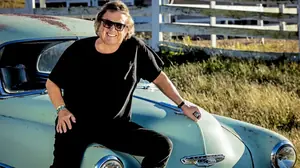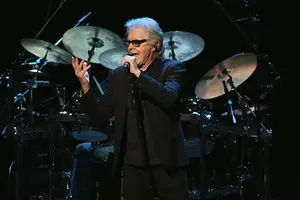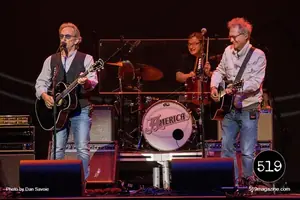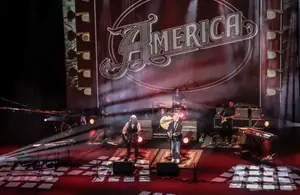
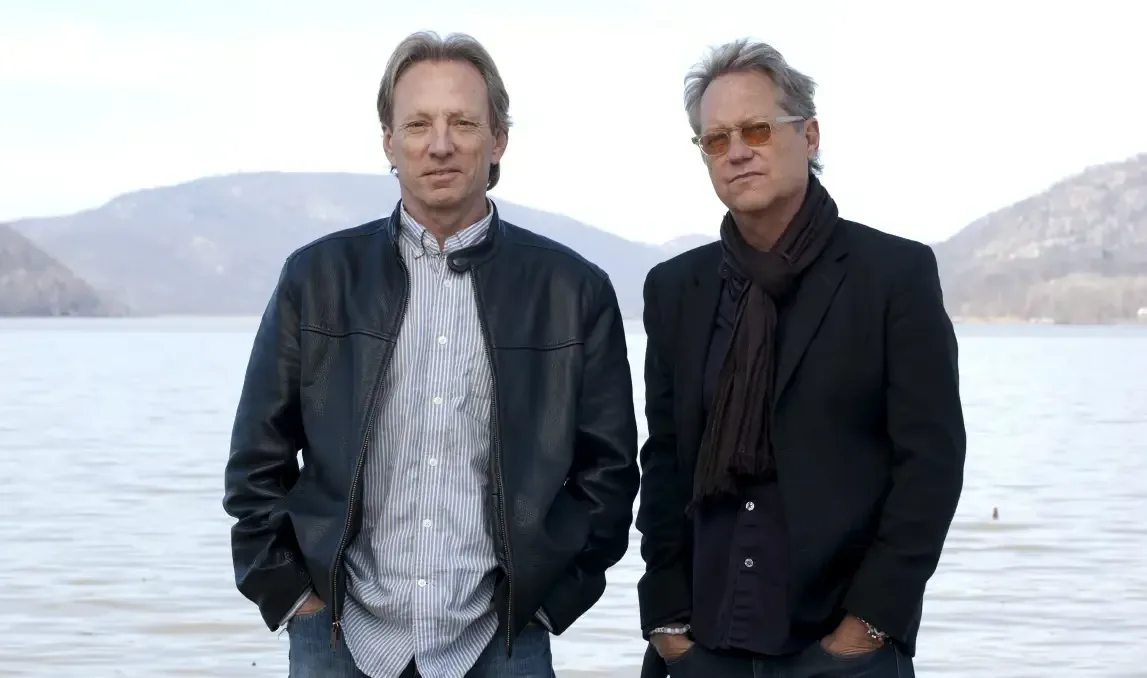

Revisiting this conversation from January 17, 2020 feels like opening a time capsule from the world right before everything changed. On the line was Gerry Beckley, co-founder of America, a band then staring down the barrel of its 50th anniversary. Half a century. It is a number so immense it defies rock and roll logic, a defiant middle finger to the industry’s built-in obsolescence. Most bands are lucky to get five years, let alone 50.
And that’s the thing. Nobody ever plans for this kind of longevity. It just happens. Beckley is refreshingly blunt about the absurdity of it all. Looking back at the raw transcripts from our chat, he admits there was no grand strategy. “I don't think it's unusual that at the start of something like this, you would sit down and go, you know what, let's make a fifty year plan,” he says with a knowing dryness. But they never did. They were just kids in London trying to get a record deal.
He concedes that with a bit of foresight they might have mapped out five years. But five decades? It was simply beyond comprehension for three American expats navigating the British music scene of 1970. This wasn't a corporate venture. It was a creative collision, a moment of pure unfiltered ambition without the suffocating weight of long-term expectations.
But with five decades comes an avalanche of material. For years the America vaults remained largely sealed. Beckley explains that the band was too busy looking forward, still recording new music, to properly curate its past. That changed when they brought in their friend Jeff Larson as an official archivist, a role that has become indispensable for legacy acts. It was Larson who began sifting through boxes and hard drives, revealing the sheer volume of unreleased gold.
This archival deep dive led to a flurry of retrospective releases. Warner Brothers dropped a comprehensive 50th anniversary collection and Capitol Records reissued its entire run of the band’s albums. It was a necessary and long-overdue acknowledgement of a catalogue that often gets reduced to a handful of radio staples. But even then Beckley was hinting at more.
He spoke of a far more intensive project from the UK-based label Gonzo Multimedia, a multi-disc set including video and other rarities. This is the modern currency of classic rock bands: not just repackaging the hits but providing a granular look into the creative process for the die-hards who have stuck around for the entire ride. It is about servicing the base and cementing the legacy.
Beckley is also candid about the band’s commercial peaks and valleys. He acknowledges a clear demarcation between the Warner Brothers years and the Capitol Records era of the 1980s. “Honestly, the Capitol years didn't sell as well as the Warner's years,” he states. While songs like “You Can Do Magic” were significant hits, the albums themselves didn't receive the same attention.
He attributes this to a shift in their creative process. The Capitol Records albums were often helmed by different outside producers, resulting in a less cohesive body of work compared to the records they either self-produced or created with the legendary Sir George Martin. “Dewey and I were, I would say, a little, in general, less involved in those,” Beckley admits. It is a fascinating look at how the producer-driven sound of the ‘80s could sometimes sideline a band’s core identity, even when delivering chart success.
The piano that you hear in the middle of Lonely People is actually the two of us with four hands on the piano. It's a duet of both of us.
Going back to the very beginning, the name itself was a piece of clever branding. Three Americans in London calling themselves America. It was a backstory baked right into the moniker. Beckley recalls how the band Chicago had set a precedent by naming themselves after a place. It was a simple and direct way to communicate their story to an audience that knew nothing about them.
Their path to a record deal was just as direct and old-school. No polished demos, no elaborate press kits. They simply walked into the Warner Brothers UK office in London and played live for the executives. Beckley recounts how vice president Ian Ralfini later confessed it was one of the hardest things he ever had to do not to just “whip out a contract right away.” They played future cornerstones like “Riverside,” “I Need You,” and “Sandman.” They were signed on the spot. It's a romantic music industry tale that feels like it belongs to another century entirely.
And Canada played a fascinating role in their story. Before America ever played a show in the United States, their very first North American gig was a warm-up date at a college in Kitchener, Ontario. A hastily arranged club tour had them cutting their teeth north of the border, an interesting footnote in a career that would become synonymous with a certain brand of sun-drenched California folk rock.
The Canadian connection runs deeper still. Beckley spoke at length about their history of recording songs by Canadian writers. He details how “Right Before Your Eyes,” written by Ian Thomas, was brought to them by A&R man Bobby Colomby. He also discusses “Special Girl” from the pens of Eddie Schwartz and David Tyson. Beckley's take on interpreting outside material is telling. “No matter what you do, when you perform it, it becomes yours,” he explains. “You put your signature on it whether you want to or not.”
Of course, no discussion of America is complete without the story of “A Horse with No Name.” It is one of rock’s great happy accidents. The song wasn't even on the original UK pressing of their debut album. The record was done, finished. But the label felt it needed something more. Beckley still seems amazed by it. “The label came to us with a very unusual request of, do you have anything else?” he recalls. “Nowadays, the label after making the commitment of finance and time would not then right away go back to a band and say, no, what else you got?”
They went back into the studio and cut a few new tracks, including Dewey Bunnell’s mesmerizing two-chord wonder. When Warner Brothers in the US decided to release the album, they pressed 100,000 copies before realizing the massive hit single wasn't actually on the LP. That initial pressing without “Horse” is now a prized collector’s item, a physical artifact of a near-miss that became a career-defining moment.
But the true highlight of their 50 years, according to Beckley, was the period spent with Sir George Martin. They made seven albums with The Beatles’ iconic producer. When asked to summarize the experience, Beckley offers a single perfect word: “focus.” Martin was the steady hand that reined in the creative chaos of three young musicians flush with success and unlimited studio budgets.
Yet Martin was never an autocrat. While the band’s arrangements were often well-established before entering the studio, Martin’s contributions were surgical and brilliant. He conceived of and played the iconic piano lick in “Tin Man.” More astonishingly, Beckley reveals the barrelhouse piano break in “Lonely People” is a four-handed duet between himself and Martin. It is a moment of pure collaborative genius, a story that adds another layer of magic to a beloved classic.
The creative dynamic within the band itself was unique. Despite the distinct songwriting voices of Beckley, Bunnell, and Dan Peek, there was an unspoken system of support. Beckley describes himself as the go-to guy for a middle section. “I was kind of the guy for a bridge,” he says. “So if somebody needed a bridge, I might write the bridge for somebody else's tune, but it wouldn't show up in the credits.”
This lack of ego is perhaps the secret ingredient to their longevity. It allowed the songs to be the primary focus rather than individual credit. It is a chemistry that has sustained Beckley and Bunnell through lineup changes, shifting musical trends, and the simple passage of time.
When asked to define the band with a single song, Beckley doesn't choose the ubiquitous “A Horse with No Name.” Instead, he and Bunnell agree on another track. “I think Dewey and I usually pick the same one, which is Ventura Highway,” he says. It is the perfect choice. More than any other song, it encapsulates the breezy acoustic textures and intricate vocal harmonies that are the true signature of America’s sound. It is the sound of a journey that, for all its twists and turns, has never really ended.
519 Magazine Archive: We are thrilled to officially unearth the 519 Magazine Digital Vault. This isn't just a re-post; it's a high-fidelity restoration of a pivotal era in music journalism. By pairing original print dates with modern retrospectives, we’re bridging the gap between historical rock-and-roll grit and the lightning-fast performance of today’s web. These stories—once locked in physical print and lost URLs—are now back, fully searchable, and optimized for a new generation of fans.
We are thrilled to officially unearth the 519 Magazine Digital Vault. This isn't just a re-post; it's a high-fidelity restoration of a pivotal era in music journalism. By pairing original print dates with modern retrospectives, we're bridging the gap between historical rock-and-roll grit and the lightning-fast performance of today's web. These stories—once locked in physical print and lost URLs—are now back, fully searchable, and optimized for a new generation of fans.