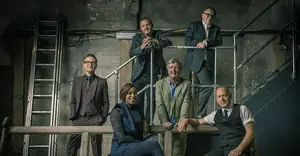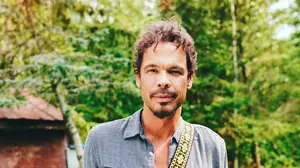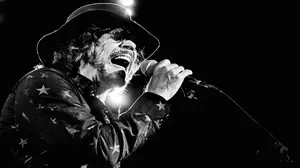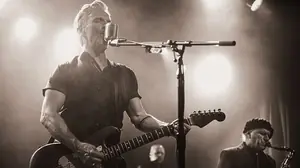
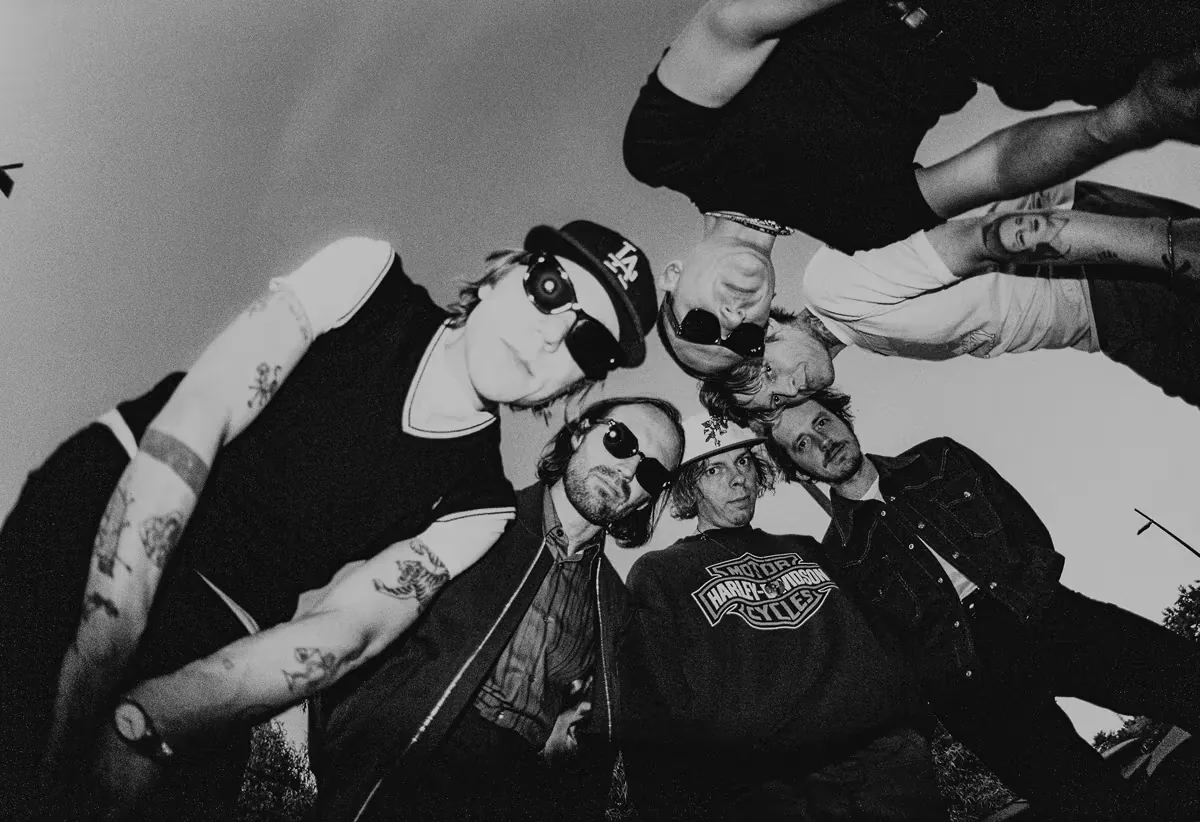

Listening back to this raw archival tape from Jun. 15, 2011, is like tapping into a live wire. On the line is Cage The Elephant guitarist Brad Shultz, fresh off the release of their second album, Thank You, Happy Birthday. The record was a jagged chaotic masterpiece that had just shocked everyone by hitting number one on the iTunes chart. The band was electric, a bundle of Kentucky-bred energy about to be unleashed on the world via two of the biggest tours of the year.
And Shultz, as he says himself, is a talker. The energy is immediate. Even through the faint crackle of a phone line that drops out mid-sentence, you can hear the grin in his voice as he recounts the story of how they landed the opening slot for the Foo Fighters. It’s a tale that perfectly encapsulates the band’s mix of prankster charm and undeniable talent.
It all started at BBC Radio 1's Big Weekend in England. The band, knowing Dave Grohl was on the bill, decided to send him a note. But this wasn't some fawning letter from a young band to a rock god. It was pure Cage The Elephant.
“We were just joking around and Matt put in the note, he was like, ‘Sorry we couldn’t stick around to watch your show,’” Shultz recalls. “‘We really wanted to watch you all, but we have a sadistic tour manager that’s making us get back on the bus and leave. If we don’t leave, he’s gonna tie us to a chair and burn us with cigarettes.’”
They passed the note to Grohl’s tour manager, adding they’d see them at the KROQ Weenie Roast in Los Angeles. Then came the panic. “We looked up the KROQ Weenie Roast line, we’d heard they were playing, but they weren’t listed on the thing,” Shultz says. “So we’re like, ‘Oh my god, that note looks so stupid now.’”
But fate, and a secret headliner slot, intervened. The Foo Fighters were indeed the unannounced special guests. “They all came up and watched the last two songs of our set,” he says. Grohl’s post-show verdict was direct and life-changing. He wanted them on tour. Shultz admits they were skeptical, figuring it was just a nice gesture. “And a week and a half later, we get an email that says, ‘Grohl has invited you to join the Foo Fighters tour.’ I was literally jumping with excitement. I was just like, ‘Oh my god.’”
A Grohl co-sign in 2011 wasn’t just a good look; it was a rocket booster. It was validation from the centre of the rock universe. For a band still carving out its identity beyond the breakout success of “Ain’t No Rest for the Wicked,” this was everything.
And as if that wasn’t enough, they were also heading out with The Black Keys. In retrospect, it was a perfect storm of garage rock revival, two bands from the American heartland carrying the torch for raw, blues-drenched guitar music. The pairing felt less like an industry calculation and more like a cultural necessity.
Canada, however, wasn’t new territory. Shultz is quick to point out the country’s role in their early days. “The very first major tour that we had done was with Queens of the Stone Age and it was from Toronto all the way to Vancouver,” he says. “So, really, the first major tour we’ve done was a Canadian tour.” The country was a proving ground, a place where they honed their craft and, apparently, developed a taste for poutine.
We were just joking around, and Matt put in the note, ‘Sorry we couldn’t stick around to watch your show. We really wanted to watch you all, but we have a sadistic tour manager that’s making us get back on the bus and leave. If we don’t leave, he’s gonna tie us to a chair and burn us with cigarettes.’
That grounding was critical, especially when success hit so suddenly with the new album. Hearing that Thank You, Happy Birthday went to number one was a shock. “We were like, ‘No way. Is this right? Are you sure it’s not like number one on iTunes specialty list or something?’” Shultz remembers. This wasn't false modesty. It was a worldview forged in the crucible of the UK music scene.
After signing their first record deal, the young band from Bowling Green, Kentucky thought they had it made. “We’re like, ‘Oh, yes. We’ve made it. We’ve arrived,’” he says with a knowing laugh. “And then, you know, we got over there and we’re playing to, you know, five people a night. I think at that point, we realized that you don’t ever really arrive and never to really expect anything. You know, just kinda go with the flow.”
That philosophy bled into the album itself, a record that felt spontaneous and gloriously unhinged. Even its title, a tribute to three of their fathers who share birthdays around the same day, had a simple, personal touch that belied the sonic chaos within.
Nowhere is that chaos more beautifully harnessed than on the lead single, “Shake Me Down.” It’s a song that almost never happened. “It was missing something,” Shultz explains. The band had decided to shelve it, not wanting to force a square peg into a round hole. They were about to start a completely different track when inspiration struck.
“I realized that we could actually mix the song that we were starting with ‘Shake Me Down,’” he says. “I don’t know what triggered the thought, but I was like, ‘Oh my god.’ I went and got Matt and we put those two songs together and it just filled the missing voice.” The resurrected track became the perfect ambassador for the album's sound, a sprawling piece that defied conventional structure.
The production choices were just as unconventional. That distinct, brittle drum sound? It came from a place of pure experimentation. “Part of that the drum tracks were recorded on a little toy set, like a child’s playing drum set,” Shultz reveals. “It has a really papery thin drum heads, so it gives it a really trashy sound.” It’s a brilliant, lo-fi solution that gives the song its signature texture, a move that nods to the Phil Spector-esque wall of sound they were chasing.
The only real critique one could level is that the album’s wild swings in tone can sometimes feel jarring, a collection of brilliant moments rather than a completely cohesive statement. But that was the point. It was a snapshot of a band refusing to be pigeonholed, and “Shake Me Down” was their thesis.
That spirit of finding beauty in unexpected places extended to the album’s artwork, designed by their friend Clint Colburn. The CD packaging featured a die-cut logo, revealing a more complex piece of art underneath. “His whole thing was to start with something that looked very minimal, very simple, and it became something more grand,” Shultz says. It was a clever, tactile experience in an age of disappearing physical media.
Even the band’s name has a story rooted in random, chaotic energy. It came from an encounter with a mentally ill homeless man in Decatur, Georgia, who was ranting, “You have to cage the elephant. The elephant must be caged.” The phrase stuck, a perfect moniker for a band whose music always felt like it was trying to contain a massive, untamable force.
As the interview winds down, the conversation turns to their live show, the place where that force is truly set free. Shultz promises “an honest performance.” He bristles at the idea of a pre-planned, contrived show. “We usually play it by ear and try to keep everything as natural and as spontaneous as we possibly can,” he says. “We definitely feed off the energy of crowds.”
He touches on the fundamental difference between their current role and their ultimate goal. Playing a 30-minute opening slot is a rush, but it’s over just as they’re hitting their stride. “When you’re doing a headlining show, you definitely have more time to get yourself into a groove,” he reflects. “You have a lot more time to just lose yourself in the music.”
Listening to him speak in 2011, you hear a musician and a band on the exact precipice he describes. They were no longer just the opening act, but they were still getting used to the view from the main stage. This conversation is a time capsule, capturing the moment a very good band, full of humility, humour and a healthy dose of Kentucky chaos, was about to become great.
519 Magazine Archive: We are thrilled to officially unearth the Rockstar Weekly Digital Vault. This isn't just a re-post; it's a high-fidelity restoration of a pivotal era in music journalism. By pairing original print dates with modern retrospectives, we’re bridging the gap between historical rock-and-roll grit and the lightning-fast performance of today’s web. These stories—once locked in physical print and lost URLs—are now back, fully searchable, and optimized for a new generation of fans.

We are thrilled to officially unearth the 519 Magazine Digital Vault. This isn't just a re-post; it's a high-fidelity restoration of a pivotal era in music journalism. By pairing original print dates with modern retrospectives, we're bridging the gap between historical rock-and-roll grit and the lightning-fast performance of today's web. These stories—once locked in physical print and lost URLs—are now back, fully searchable, and optimized for a new generation of fans.