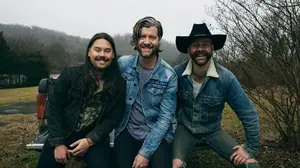
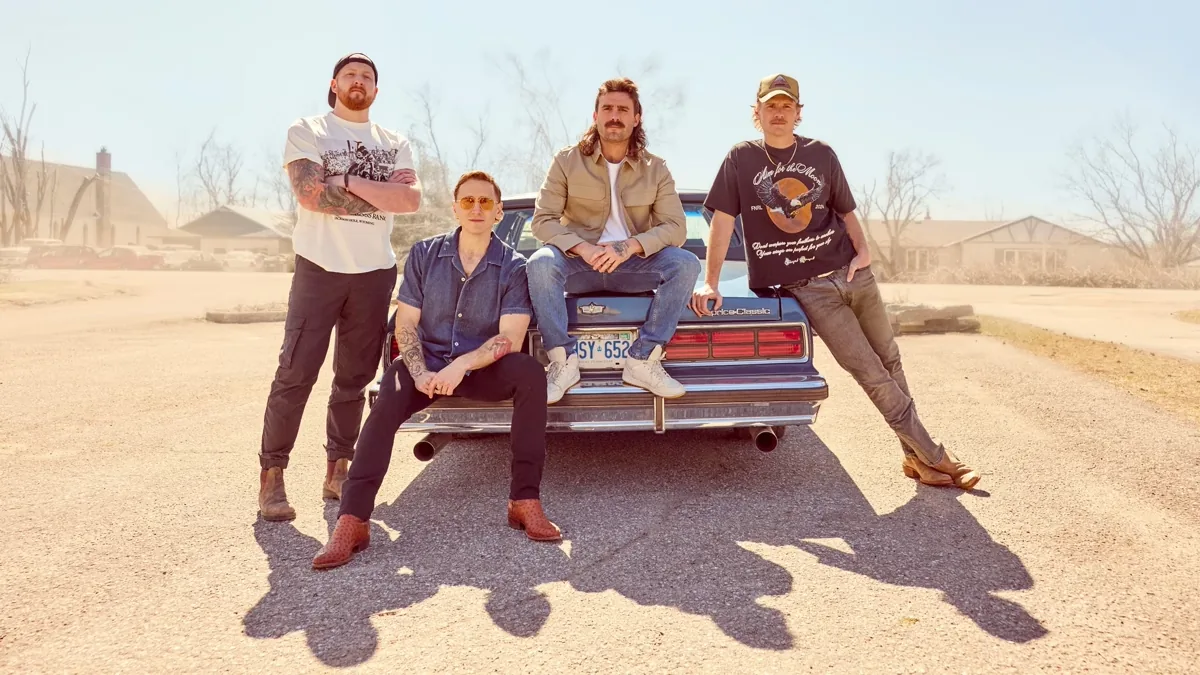
Revisiting the raw transcripts from our May 2022 sit-down with James Barker is to look back at a precise moment of industry whiplash. The world was just cracking open again. The silence of the pandemic was being replaced by the roar of amplifiers and the pent-up energy of two years of isolation. And James Barker Band was standing right at the epicentre of the Canadian country music comeback, preparing to hit the road with Dallas Smith for what was less a tour and more a declaration of survival.
It was a monster lineup. A stacked bill designed to pull fans back into arenas with an irresistible force. Barker himself seemed to grasp the scale of the operation. “We're calling it the festival on wheels because it seems like there's, like, more people on that than most festivals have in a day,” he says. He wasn’t wrong. This tour was a strategic consolidation of Canadian country’s biggest assets, a travelling roadshow meant to reignite a market that had been forcibly put on ice. It was the industry betting big that the appetite for live music was ravenous.
But the two years prior were a story of adaptation. Barker, speaking from a “gloomy Nashville,” painted a picture of a creative process forced into the digital age. The pivot to Zoom songwriting sessions was a universal story for Music City, but Barker’s take reveals the pragmatic engine behind the art. It worked. It had to work. “It's forced everybody to adapt to, you know, modern technology,” he explains. “And, you know, it actually works.”
That pragmatism is the key to understanding the band’s trajectory during that period. There was no time for artistic languishing. It was about output and engagement. This wasn’t just about staying sharp; it was about staying relevant when the primary vehicle for relevancy—the live show—was gone.
And nothing proves that point more than the story of “Wasting Whiskey.” The track wasn't born in a focus group or hand-picked by an A&R suit. It was a direct consequence of the new digital reality. Barker’s casual mention of teasing a demo on TikTok and watching it explode to 1.2 million views overnight isn’t just an anecdote; it’s a case study in modern music marketing. The power had shifted. The audience was now the A&R department.
“We thought, well, I mean, it'd be foolish for us... to not just freaking release that song,” Barker admits. The statement is blunt and brutally honest. In an era of instant digital distribution, sitting on a viral hit is malpractice. The band recognized the data, trusted the audience’s gut reaction and executed. It was a shrewd move that bypassed the old gatekeepers entirely.
The band’s move to Nashville years earlier laid the groundwork for this kind of sharp, decisive thinking. Barker’s ambition was baked in early, a dream sparked by reading about Keith Urban in a guitar magazine as a kid. But the reality of Nashville he describes isn't about glamour. It's about pressure. It’s about a relentless, unspoken standard of excellence that permeates the entire city.
We're calling it the festival on wheels because it seems like there's, like, more people on that than most most festivals have in a day.
“You gotta be present to win is what they say, and it's so true because people are just so good here,” he says, capturing the city’s ethos perfectly. This is the Nashville effect. It’s a creative crucible where the sheer density of talent forces you to elevate your game or get left behind. Every bartender is a killer songwriter and every Uber driver is a session-level guitarist. Complacency is not an option.
Barker’s perspective on this pressure is telling. He frames it not as a cutthroat competition but as a constant source of inspiration. He speaks of seeing a great writer’s round and feeling fired up to write better songs, not to beat the other guy but to meet the standard. It’s a subtle but critical distinction that separates the pros from the hobbyists.
This is where the polish on the band’s post-Nashville work comes from. It's a direct result of the environment. “I don't wanna write a bad song because I don't wanna have to show people a bad song,” Barker confesses. “Because I know people down here will recognize if I've been lazy in one area or not.” That fear of being exposed, of not living up to the city’s musical pedigree, is a powerful motivator. It refines your melodic choices, your lyrical hooks, and your entire creative process.
Of course, this is the classic Nashville trade-off. The grit of an Ontario bar band gets sanded down and lacquered with a commercial sheen. The songs become tighter, more focused, and radio-ready. But sometimes, in that process, a little bit of the chaotic, unpredictable energy gets lost. It's the price of admission to the big leagues.
The collaboration with Dierks Bentley on “New Old Trucks” was their official hall pass. Landing a feature from a hero isn’t just a “pinch me moment”; it’s a strategic co-sign that validates your place in the Nashville hierarchy. Earning their fourth number one with that track was the confirmation they needed. It was proof that the move, the grind, and the endless writing sessions were paying off in a measurable way.
Yet for all the talk of Nashville, the Ontario identity remains stubbornly intact. Barker’s nostalgia is palpable when he talks about home. It’s not just family he misses; it’s the sensory details. The smell of a hayfield, the unique feeling of home. And, most critically, the coffee. “What we miss is iced cappuccinos because that's what we really miss because you can't... well, there's no Tim Hortons.” It’s a quintessentially Canadian lament and a reminder that no matter how much success they find south of the border, their roots are firmly planted in Ontario soil.
This duality defines their brand. They are the small-town boys who made it in the big city. They can write a slick Nashville hit but they still understand the cultural significance of a Tim Hortons run. This is why their persona as a “summer band” works so well. It taps directly into the Ontario cottage-country ethos of good times, lakes, and having a beer. It’s not a contrived image; it’s an authentic reflection of their identity and a brilliant piece of marketing.
Perhaps the most surprising revelation from the conversation is Barker’s deep appreciation for Jimi Hendrix. He speaks with genuine excitement about discovering Hendrix’s Nashville history, a part of the city’s lore that exists far outside the country music bubble. It reveals a depth to his musicianship that isn't always front-and-centre in the band’s radio singles. He's a guitar nerd at heart.
The playful suggestion of lighting a guitar on fire feels like more than just a joke. It hints at a rock-and-roll spirit simmering beneath the surface of the polished country star. It’s a reminder that artists are often more complex than their genre tag allows. You have to wonder what a James Barker Band record would sound like if they let that Hendrix influence run wild for a few tracks.
Ultimately, this 2022 snapshot captures a band in perfect stride. They had successfully navigated a global crisis, leveraged new technology to their advantage, solidified their status in Nashville and were about to embark on a tour that would cement their place at the top of Canadian country. They were a band that understood the game and knew exactly how to play it.
519 Magazine Archive: We are thrilled to officially unearth the 519 Magazine Digital Vault. This isn't just a re-post; it's a high-fidelity restoration of a pivotal era in music journalism. By pairing original print dates with modern retrospectives, we’re bridging the gap between historical rock-and-roll grit and the lightning-fast performance of today’s web. These stories—once locked in physical print and lost URLs—are now back, fully searchable, and optimized for a new generation of fans.
We are thrilled to officially unearth the 519 Magazine Digital Vault. This isn't just a re-post; it's a high-fidelity restoration of a pivotal era in music journalism. By pairing original print dates with modern retrospectives, we're bridging the gap between historical rock-and-roll grit and the lightning-fast performance of today's web. These stories—once locked in physical print and lost URLs—are now back, fully searchable, and optimized for a new generation of fans.