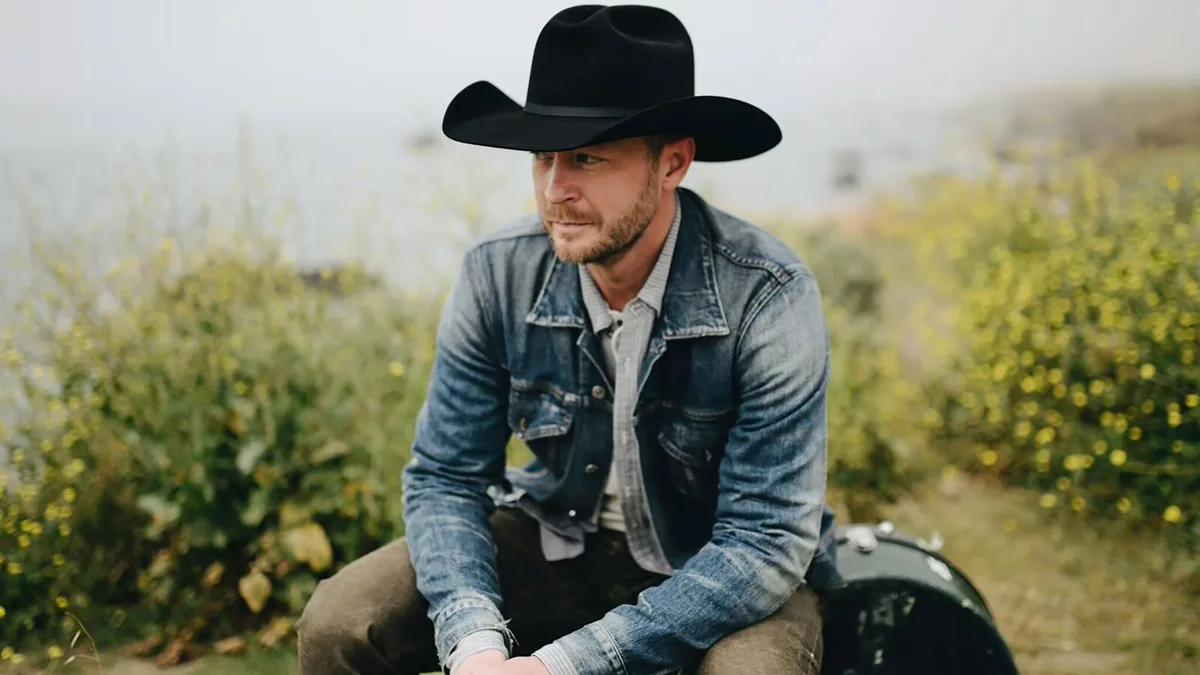

Looking at the raw transcripts from this Jan. 23, 2019, conversation with Paul Brandt is a study in perspective. Here was an artist two decades deep into a hall-of-fame career not resting on laurels but actively deconstructing his own narrative. The occasion was his ambitious dual-EP project The Journey, a concept that cleaved his career into two distinct halves: the Nashville years and the Alberta homecoming. It was a bold move, one that forced a look back at the machinery of stardom and the personal cost of the road.
Brandt was candid about the project's genesis, which felt less like a marketing gimmick and more like a necessary artistic reckoning. The central idea was a clever inversion of his own mythology. “I was thinking about what I was gonna write next and I thought about Alberta Bound and what a highlight that's been for me in my career,” he says. “And then for some reason I'm a bit ADD. I jump all over the place. I started thinking, well, what if I wrote that song in reverse? What would happen?”
The result was “YYC BNA,” a track that flipped the script on his iconic anthem. It was a song about the relentless commute between his Calgary home and the Nashville music machine, a life lived between two worlds. And it perfectly captured the duality he was exploring. “I always kinda had this feeling that my career had sort of two different eras to it to this point. And I think that spending a decade in Nashville and then deciding to make the move back to Alberta, it was sort of Part A and Part B.”
But that journey wasn't just geographical; it was measured in air miles and time away from home. The early days were a blur of relentless touring, a punishing schedule that defined the industry at the time. “We were doing 180 shows a year for a good three years or so and just going nonstop,” Brandt recalls. “I think I was probably platinum or Diamond or whatever on about three or four different airlines at that time.” It was a grind that forged a career but also set the stage for a later re-evaluation of his priorities.
The conversation pivoted to the realities of that life on the road, particularly with a family back home. This wasn't the sanitized version of tour life. It was raw and honest. Brandt describes his then-recent tours with Dean Brody as a “grand experiment,” being the first he’d done without his family. Technology helped bridge the distance, but it also created moments of profound emotional whiplash. “It's always tough for me if I'm playing a song like ‘Rich Man’ and someone from the crew holds up a FaceTime iPad on the side stage and I see my two little kids watching me sing. And I'm singing a song about the most important things in life and how I wanna be around my family. That can be emotional.”
And in a moment of brilliant parental humility, he punctures the myth of the rock star dad. He recounts playing the Scotiabank Saddledome, ready to unveil a giant inflatable rubber duck for his hit “Convoy,” a moment designed for maximum cool factor. “I look over to the side stage. I'm thinking my kids are gonna think I am so cool. This is so awesome. And they're both on their devices playing video games. They could care less.” It’s a grounding, hilarious, and deeply relatable anecdote.
The weight of sustained success is a recurring theme. Brandt’s debut My Heart Has a History was a breakout smash, creating immediate and immense pressure. His method for coping is telling. “I generally don't hang up awards in my workspace. You know, the gold records and multi-platinum records and the Junos and CCMAs and all that kind of stuff,” he admits. “They're sitting in boxes usually in my barn somewhere. It's not that I don't appreciate them. It's just I don't want that specter hanging over my shoulder of, ‘Okay, you did this. Now you gotta do that.’”
I look over to the side stage. I'm thinking my kids are gonna think I am so cool. This is so awesome. And they're both on their devices like playing video games. Like, they could care less.
This wasn't just about managing expectations; it was about survival. He speaks with startling frankness about the darker moments that the public never sees. “There were times where I thought my career was over. There were times where I doubted whether or not I was going to make it to the next project or not,” Brandt confesses. “It seems like it started at My Heart Has a History and I just kept on rocking, but there were some dark times and difficult times.”
Perhaps no period tested him more than the era following his departure from his major label in the early 2000s. It led to Small Towns and Big Dreams, an acoustic project born from uncertainty. He decided to tour small venues in places like Weyburn, Yorkton, and Morden. The risk was enormous. After selling a million records on his debut, he presold only a thousand copies of the new album on that tour. “I thought to myself, ‘I'm dead. This is it. This is my worst nightmare.’”
But the industry calculus was wrong. The album found an audience. Radio played the live acoustic tracks, something that never happens. He was asked to host the CCMAs as an unsigned artist, another impossibility. And then he won Album of the Year. “It was the people in those small towns who packed out those places right to the rafters. And I think because, especially in the rural communities where farming is a part of the lifestyle, they knew what I was risking. And if it didn't work, I was done, and they showed up.” The emotion in his voice, even years later, is unmistakable.
This sense of community and responsibility fuels his extensive philanthropic work. The conversation delves deep into his initiative, Not In My City, an organization fighting human trafficking. Its origins are harrowing, stemming from a trip to Cambodia where he and his wife Liz witnessed the brutal reality of child exploitation. “We saw some of these kids that were only five years old. And it was just heartbreaking.”
Bringing that awareness back to Canada was a shock to the system. He learned it was one of the fastest-growing crimes in the country. “The youngest victim that I've met in Canada was only seven years old when she was being trafficked. And I thought to myself, the first time that I was face to face with a young trafficking victim, what am I gonna tell my daughter? What am I gonna tell my son that I did about this someday?” It’s a question that clearly drives him.
His broader philanthropic philosophy is articulated through the Buckspring Foundation, which evolved from his Build It Forward television series. The core idea is elegant and powerful: pairing need with need. “It's amazing when you've suffered and you've been through something difficult, how you can use that suffering to try and help someone else, and it gives the suffering purpose.”
Faith is the bedrock of this work, but Brandt’s approach is nuanced, shaped by his unique upbringing. He describes his first church experience as one where instruments were forbidden, a cappella music the only outlet. This paradoxically honed his skills as a lyricist and poet. But he also witnessed a heavy-handed dogma that repelled him. He recalls seeing church members preaching at people struggling with addiction and thinking, even as a child, “Why don't we just buy them a sandwich? Why don't we just love these people and try and help them in some way that is practical?”
That ethos directly informs his artistic identity. He has no interest in being siloed into a specific genre or market. The distinction for him is critical. “I didn't wanna necessarily be a Christian country music singer. I wanted to be a country music singer who also happened to be a Christian,” he explains. “It's a very subtle difference, but I didn't think that my faith had to be something that necessarily put me in a specific lane when it came to my music.” It’s a statement of purpose that has defined his entire career, allowing him to connect with a broad audience without compromising his core beliefs.
Revisiting this 2019 dialogue, it’s clear Paul Brandt had already built something more enduring than a collection of hit singles. He had crafted a career of substance, navigating the treacherous waters of fame, family, and faith with a quiet integrity. The journey from Nashville back to Alberta was more than a career move; it was a conscious decision to define success on his own terms.
519 Magazine Archive: We are thrilled to officially unearth the 519 Magazine Digital Vault. This isn't just a re-post; it's a high-fidelity restoration of a pivotal era in music journalism. By pairing original print dates with modern retrospectives, we’re bridging the gap between historical rock-and-roll grit and the lightning-fast performance of today’s web. These stories—once locked in physical print and lost URLs—are now back, fully searchable, and optimized for a new generation of fans.
We are thrilled to officially unearth the 519 Magazine Digital Vault. This isn't just a re-post; it's a high-fidelity restoration of a pivotal era in music journalism. By pairing original print dates with modern retrospectives, we're bridging the gap between historical rock-and-roll grit and the lightning-fast performance of today's web. These stories—once locked in physical print and lost URLs—are now back, fully searchable, and optimized for a new generation of fans.