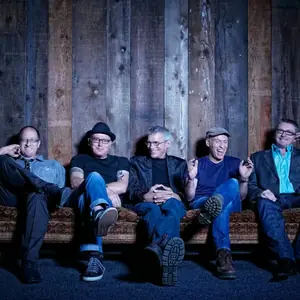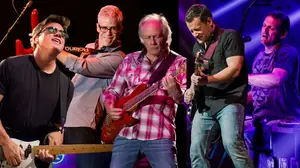

Holding the physical CD re-release of *Gotta Move*, you can almost feel the grit of the Winnipeg club circuit from 1980. The Pumps were supposed to be the next great Canadian export, a quartet with enough high-voltage energy to light up the Prairies. They had the hooks, the hair and the heavy-hitting management. But the industry is a fickle beast, and for four decades, their debut album remained a relic of the vinyl era, never officially digitized until now.
This record was not some basement demo. It was tracked at the legendary Le Studio in Morin-Heights, the same hallowed ground where Rush crafted *Moving Pictures* and Sarah McLachlan found her voice for *Fumbling Towards Ecstasy*. The pedigree is undeniable. The Pumps were touring as openers for the likes of Prism, Triumph and AC/DC, often pulling off the impossible feat of an encore as the first act on the bill. And yet, the massive stardom predicted by critics never quite materialized.
Forty years after the fact, *Gotta Move* is finally hitting the shelves on CD. I sat down with founding member, singer, songwriter and producer Chris Burke-Gaffney to figure out why one of Canada’s most promising rock outfits spent so long in the shadows. We talked about the missed opportunities and the strange turns of a career that eventually led him to manage some of the biggest names in the country.
I asked him how this specific release finally came to fruition after so much time.
"It’s never been released on CD and I wasn’t sure if there was going to be a great deal of interest in it," Burke-Gaffney says. "There were requests on our Facebook pages asking when were we going to play again and where they could get copies of our album but Greg Campbell, one of our merch guys was really pushing for it and we did it. I’m really surprised and flattered at the great response to it. We stopped playing as The Pumps and Orphan back in the mid 80s and I kept busy in the music business as a producer and manager. In the late 90s there was a benefit for Gary MacLean of the comedic group MacLean & MacLean and we got back together to play along with other Winnipeg bands like Streetheart, Harlequin and we had a super great time and thought we should see if there was any interest in us doing some shows. We’d only do a couple shows a year but it’s been a lot of fun."
The history of the band is a bit of a shell game. When the group parted ways with PolyGram Records, they didn't just fade away; they mutated. They merged with the band Orphan and carried that moniker forward, a move that arguably diluted the brand equity they had built as The Pumps. It was a classic case of record label "wisdom" interfering with organic growth.
"It really was the same band," he explains. "Lou Petrovich left The Pumps and we replaced him with Steve McGovern and we were still called The Pumps and then we got out of our deal with PolyGram and we got a new deal with CBS which is Sony now and Portrait in the U.S. Some genius at the record company thought that we should change the name because The Pumps sounded too new wave and we were basically a rock band. In retrospect I don’t know if that was a great idea because we’d sold 50,000 records as The Pumps and had a pretty good following in Canada at least."
It is a familiar story in the Canadian music industry. A band builds a loyal following, moves 50,000 units—a gold record in those days—and then gets rebranded by a suit who thinks he knows better. But the rebranding was only part of the problem. The real tragedy of The Pumps was a lack of physical product in stores when the iron was hottest.
"It’s funny you ask that, there was actually a documentary done on the band and the angle of the story is why the band never became as popular as many people thought because when we were first signed there was a big buzz in the industry," Burke-Gaffney says. "When people ask me that question I feel like I’m making an excuse for not making it big, there are lots of reasons. PolyGram Records in Canada; it was their first or second domestic signing. I remember we did a tour in The Maritimes and we had a top 10 song and we were opening for Prism and at that time Prism was huge, they were playing Maple Leaf Gardens and places like that but we had no records in the stores even if people heard us on the radio and loved us. We saw people singing along to our songs at the shows but the record company hadn’t shipped any records to the stores. When it came time to do our second album, the record company kind of stalled for two years when we had all this momentum going."
That momentum is a fragile thing. If you want to see the autopsy of a career that almost was, Burke-Gaffney points to the documentary *Just a Little Success*, which is currently living on YouTube. It is a cautionary tale for any artist who thinks a signature on a contract is the finish line.
But Burke-Gaffney didn't let the frustration of the PolyGram years bury him. Instead, he pivoted into the business side of the glass. He became a manager and producer, eventually discovering Chantal Kreviazuk. It was a career shift born out of necessity and a desire to stay off the highway once he started a family.
We got encores every single night on that tour. Now, when you talk about AC/DC, everybody loves AC/DC and respects them, but when they first came out there were a lot of people who felt they were too simple and formulaic. They didn’t realize they had a sound and perfected it like nobody else, so we got better reviews, although I certainly don’t think we were a better band or anything like that.
"When I got into my mid 30s I had kids by this time and I didn’t want to keep going on the road all the time so I ended up putting a house band together in Winnipeg and we played two separate clubs and that’s how I was staying alive and I still wanted to be a songwriter," he says. "I felt like I was a better songwriter than when I was signed to a record deal. I started a recording studio because I wanted to be a producer and the club where I was playing allowed me to have the second floor so that’s where I started my first recording studio. When we were playing at one of these clubs, Chantal used to come out and see the band and she came up to me and said, 'Did you write Miracle by Orphans?' and I said yeah and she said, 'Well, I’m a piano player and I really want to try a career at it and I was wondering if you’d help me out?'"
That chance meeting changed the trajectory of both their lives. Kreviazuk wasn't just another club singer; she was a powerhouse. Burke-Gaffney saw the potential immediately.
"So she jumped up on stage and I thought, 'What an incredible singer,'" he recalls. "I invited her to my house to write some songs and we wrote about a dozen songs. I sent them out to some people in the record industry and the response was really phenomenal, we had two record companies that wanted to sign her. So she said to me, would you be my manager and I thought wow, that’s the last thing I ever thought I wanted to do but there was nobody else around here and I knew some people so I said yeah, I’ll do it. At that point, even though I was a manager I still wanted to stay on the creative side and produce records and write songs so I called my company CBG Artist Development because basically what I was doing was finding artists and helping them write songs and produce records for them and get them record deals. I did that with Chantal, I did it with McMaster & James who got signed to BMG and also Kyle Riabko who got signed to Columbia Records. I started making more money than I ever made in bands so that’s how I transitioned. I’m doing less management now and I’m mostly writing and producing for people. The management thing got very hard because as soon as the digital thing came and people were downloading, the record companies spent less money on artists. It’s very, very hard now to get a record deal for an artist."
The transition from The Pumps to Orphan was not just a name change; it was a sonic shift. The material that was originally intended for a second Pumps album eventually found its way onto Orphan’s debut.
"We were still called the Pumps and one of them was called 'Steel & Iron' and our biggest song as Orphans was a song called 'Miracle' which was a top 10 in Canada and we were still called The Pumps when we wrote that song and I think Lou Petrovich was still in the band," Burke-Gaffney notes. "When Steve joined the band he was a different style guitar player, a little heavier, thicker sounded, more of a minor key player and I think that’s reflected in the Orphans recordings."
One of the most legendary chapters in The Pumps' history is their stint opening for AC/DC during the *Back in Black* era. This was 1980, the moment the Aussies were becoming the biggest band on the planet. For a young Winnipeg band, it was a trial by fire.
"That was a great time," Burke-Gaffney says. "It was the first tour with Brian Johnson as a singer. One of the things I remember most about them is how they were so confident and calm because we had opened for a lot of bands like Prism and Triumph and Toronto and a lot of times they weren’t that generous with the stage. They wouldn’t give us much room on the stage or many lights where AC/DC gave us all their lights, all their P.A. and we were allowed to turn it up as loud as we wanted and they pushed their drums back off the stage. The guys came into our dressing room after the second show in Calgary and at first I wasn’t sure who they were because they just walked in and I’d seen pictures of them but never met them and I’m thinking who are these guys? Then I realized oh my God, these are the guys from AC/DC and they introduced themselves and were super friendly and really confident. The other thing I remember is the roadies had an oxygen mask and Angus Young would run off stage and they’d put an oxygen mask over his face two or three times during the set."
The Pumps weren't just taking up space on that tour; they were winning over the crowds. In Edmonton, they were even called back for an encore—a rarity for an opening act, especially one playing before a juggernaut like AC/DC.
"Yeah we did, we got encores every single night on that tour," he says. "Now when you talk about AC/DC everybody loves AC/DC and respects them but when they first came out there were a lot of people who felt they were too simple and formulaic. They didn’t realize they had a sound and perfected it like nobody else so we got better reviews, although I certainly don’t think we were a better band or anything like that. At the time we were considered an up-and-coming band and the media were pretty good to us."
The current resurgence of classic rock has breathed new life into bands like The Pumps. The festival circuit in Canada remains a robust market for the sounds of the 70s and 80s, driven by a combination of nostalgia and a younger generation discovering the hits.
"I feel like that started happening maybe in the early 2000s," Burke-Gaffney observes. "There were a couple of stations playing classic rock and all of a sudden those stations became very popular. I think a big part of it is the baby boomer thing. There are just so many people of that age group and I think the 60s, 70s and 80s were a turning point in music. When other stations saw how popular those stations were, others started popping up all over and also our kids started picking up on it too. It’s amazing how many 18-year-olds like Led Zeppelin and The Beatles. Sometimes I play bass for the band Harlequin who had a lot of hits across Canada and those classic rock festivals where you see Harlequin, Prism, April Wine, Honeymoon Suite and other classic rock bands that are still playing, those festivals are super well attended."
The *Gotta Move* re-release isn't just a straight port of the original album. It includes bonus tracks that give fans a glimpse into the different eras of the band.
"There are a couple of live tracks, 'Steel & Iron' which was recorded with Lou Petrovich on guitar and 'Bust The T.V.' was recorded in Toronto with Steve on guitar," he explains. "We also did an acoustic version of 'Coffee with the Queen'."
As for new material, Burke-Gaffney is keeping his options open. He has been busy with a solo project under a pseudonym, allowing him to experiment outside the confines of the classic rock genre.
"Yes, I have thought about it," he says regarding new Pumps music. "Almost 10 years ago we decided to put a Best Of album out and it’s the best of The Pumps and Orphans. As far as a new Pumps or Orphan record, I wouldn’t rule it out. I actually have another record out called Bucky Cromwell. That’s my own personal record that I released last year during the pandemic and it’s on Spotify. I’m having fun with that and most people don’t realize it’s me and I did that on purpose because it’s not really a classic rock record, it’s more of a modern pop record. I’m producing a lot of other bands but I wouldn’t rule out doing another Pumps or Orphan record at some point."
For now, live shows remain a casual affair. The band is content playing a few select dates rather than grinding it out on a full-scale tour.
"We like playing a couple times a year," Burke-Gaffney says. "The guys in the band don’t really want to go on the road too much. We don’t have any dates lined up this year, Manitoba has just started opening up some venues because of COVID-19. I have been playing some dates with Harlequin. We played PEI two weekends ago and we’re playing Saskatoon and then a show in Winnipeg."
The Pumps may never have become the global icons people predicted in 1980, but the music on *Gotta Move* holds up. It is a sharp, punchy reminder of a time when Winnipeg was the centre of the Canadian rock universe. And with this CD release, the record finally gets the digital life it deserved decades ago.